A Year of Lessons: 2024’s Most Impactful Loss Events and What They Taught Us
Introduction Reflecting on the significant loss events of 2024 offers valuable insights for improving risk management strategies in 2025. From natural disasters and cybersecurity risks to industrial...
Introduction
Reflecting on the significant loss events of 2024 offers valuable insights for improving risk management strategies in 2025. From natural disasters and cybersecurity risks to industrial incidents, these events underscore the importance of preparation and adaptation.

Case Study 1: Wildland Fires in the Northeastern United States and in Eastern Canada
Notable Fires
- Jennings Creek Fire: Located along the New York-New Jersey border, this wildfire burned over 5,000 acres and damaged over 200 structures. The fire prompted evacuations and significantly impacted air quality in nearby areas.
- Hawthorne Fire: In Connecticut, the Hawthorne Fire tragically claimed the life of a firefighter and severely damaged commercial properties. This fire was one of 70 reported in the state during late October, underscoring the intensity of the wildfire season in the region.
- Great Barrington Fire: In Massachusetts, the Great Barrington Fire burned approximately 1,100 acres by November 20, 2024. Significant rainfall and snowfall on November 21 helped reduce the fire threat. This incident underscored the increasing wildfire risks in the Northeast.
- Jasper Wildfire: The Jasper wildfire in Alberta resulted in insured losses of approximately $880 million. This is the ninth most expensive natural disaster for insurers in Canadian history.
Key Lessons
- Wildfires have expanded beyond traditionally fire-prone areas like the West. The 2024 fires in the Northeastern states highlighted the increasing risk in the region due to drought and changing weather patterns. These events highlighted the threat of wildfires in all wildland-urban interface (WUI) areas. The WUI presents unique challenges for firefighting. Firefighters must deal with the dangers posed by both the natural environment and the built environment.
- Businesses in wildfire-prone areas must actively assess fire risks and implement risk mitigation measures. These measures include creating defensible space, relocating combustible yard storage, and using fire-resistant building materials.
- The cumulative effect of these wildfire events has led to increased insurance premiums for commercial properties, particularly in high-risk areas. Businesses are facing higher costs to obtain coverage, reflecting the growing risks associated with these disasters.

Case Study 2: Ransomware and Botched Software Updates
Change Healthcare Ransomware Attack
- Incident Details: On February 21, 2024, Change Healthcare, a subsidiary of UnitedHealth Group, suffered a ransomware attack attributed to the ALPHV/BlackCat group. This breach disrupted electronic payments and medical claims processing nationwide, affecting pharmacies, healthcare providers, and patients. The attack led to operational disruptions and financial losses, with healthcare providers reportedly losing up to $100 million per day.
- Insurance Implications: The substantial financial impact of this attack underscored the critical importance of cyber insurance for healthcare organizations. It highlighted the need for comprehensive coverage to mitigate losses from cyber incidents. It also served as a reminder to insurers to reassess policy terms, coverage limits, and premiums for clients in the healthcare sector.
CrowdStrike Software Update Incident
- Incident Details: In mid-2024, a botched software update from CrowdStrike, a cybersecurity firm, caused widespread technological outages. This incident grounded planes and disrupted businesses globally, revealing vulnerabilities in technological infrastructures.
- Insurance Implications: The event highlighted the complexities of cyber insurance coverage, particularly concerning operational disruptions caused by software failures. Many affected parties discovered that their insurance policies did not cover such incidents, prompting a reevaluation of policy inclusions and exclusions related to software-induced outages.
Key Lessons
- It is time to implement zero-trust security frameworks. The “never trust, always verify” principle actively ensures that no users, devices, and networks, whether inside or outside the organization, are trusted by default. It requires continuous validation of every access point request, regardless of its origin.
- There is a growing importance of identity and access management, micro-segmentation of networks, continuous monitoring, context-based and adaptive access policies, encryption, and to assume that there is already a breach.
- Organizations must secure their software update mechanisms and ensure that updates are signed and validated before installation. This includes implementing integrity checks for the updates and using secure delivery channels (e.g., TLS encryption).
- Companies need to adopt a more comprehensive approach to supply chain security. This includes auditing the security practices of vendors and third-party providers, implementing security controls that detect unusual behavior, and ensuring that there is a robust incident response plan for supply chain attacks.
- Organizations should prioritize patch management and ensure that they are running the latest versions of security software. This includes having a process in place to test and deploy patches in a timely manner.
Case Study 3: Flooding in Hurricane-Prone Regions
Hurricane Milton
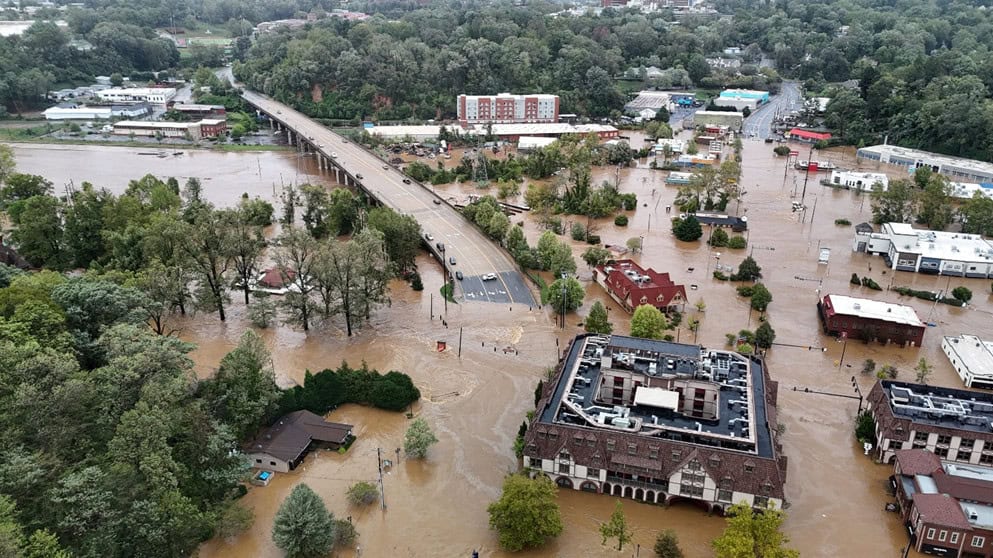
- Impact: Hurricane Milton made landfall in Florida, affecting over 235,000 commercial properties, including industrial spaces, retail properties, office buildings, apartment buildings, and hotels. A sinkhole in Orange City collapsed US 17/92, damaging or destroying major roads in the area. The storm's path exposed approximately $1.1 trillion worth of commercial real estate to dangerous winds and flooding.
- Estimated Losses: Industry-wide insured wind and flood losses from Hurricane Milton were estimated between $17 billion and $28 billion. Total damages, including uninsured properties, ranged from $21 billion to $34 billion.
Hurricane Helene
- Impact: Helene's torrential rains affected regions including Florida, Georgia, South Carolina, North Carolina, and parts of Tennessee and Virginia. The storm resulted in significant damage to commercial properties, with many businesses lacking adequate flood insurance due to outdated federal flood zone maps.
- Estimated Losses: The National Flood Insurance Program (NFIP) reported a loss ratio exceeding 200% for 2024, with combined losses from flood events, including those caused by Hurricanes Helene and Milton, estimated between $8.2 billion and $10.5 billion.
Key Lessons
- Both hurricanes caused significant flooding in areas not typically prone to severe inundation, especially inland regions that had avoided major flooding for decades.
- Governments and businesses must prepare for extreme weather events that go beyond historical expectations. This includes investing in flood-resistant infrastructure, floodplain management, and updating flood risk models.
- Authorities must improve communication about the specific threats that hurricanes pose, particularly the risks of flooding. This includes clearer messaging that emphasizes flood risks, which can be just as catastrophic as wind losses. Integrating flood forecasting systems into the early warning framework is crucial.
- More widespread adoption of risk assessments and planning for response and recovery can greatly enhance decision-making. Organizations should invest in training and deploying these tools to improve damage assessment, resource allocation, and communication.
Case Study 4: Commercial fires
Lineage Cold Storage Warehouse Fire, Finley, WA
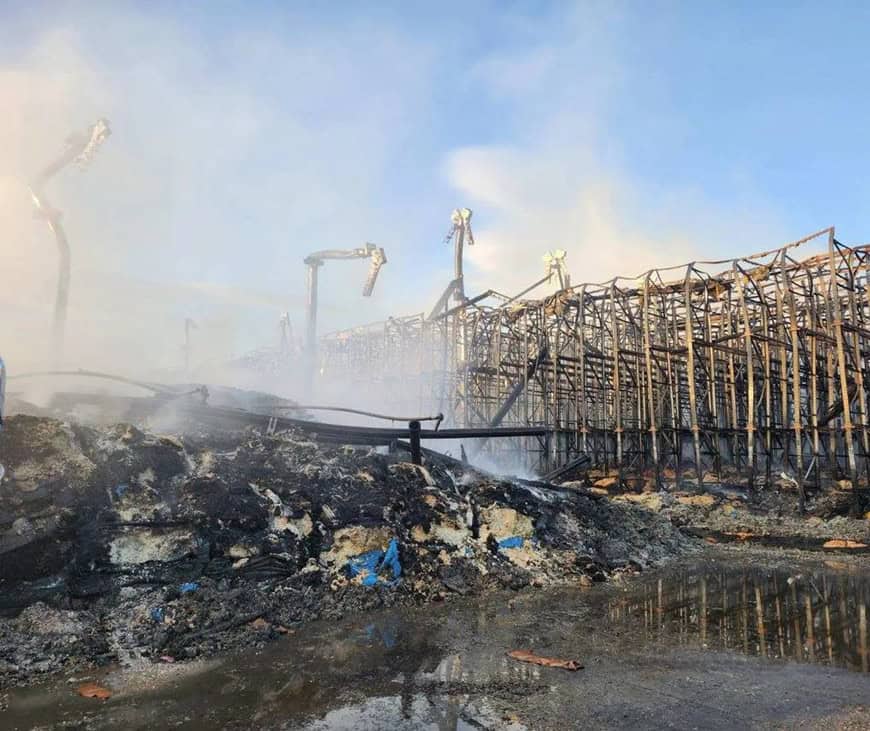
- Incident Details: A fire started in a 525,000-square-foot warehouse storing frozen vegetables and other perishables which are generally Class II through Class III commodities. Despite sprinkler activation, the fire spread rapidly, leading to a total loss of the building. The fire continued to smolder for several weeks due to structural instability and challenges in accessing the burning materials.
- Key Lessons: This incident underscored the challenges of extinguishing fires in cold storage facilities, particularly when combustible construction materials and structural instability hinder interior access. Although food products have relatively low combustibility, fires in deep multiple-row racks can be shielded from ceiling-level sprinklers. Without proper longitudinal flue spaces and clear aisles, fires can spread horizontally unchecked, activating many sprinklers. This can deplete the water supply and overwhelm the system, compromising the facility's fire suppression capabilities.
Missouri Battery Recycling Plant Fire, Fredericktown, MO
- Incident Details: A massive fire erupted at a facility processing and recycling lithium-ion batteries, emphasizing the fire safety threats associated with handling such materials. The plant was recognized as one of the largest lithium-ion battery recycling facilities globally.
- Key Lessons: The use of PFAS-containing firefighting foams, while effective in suppressing fires, can lead to significant environmental damage. This underscores the necessity for environmentally friendly fire suppression alternatives and comprehensive environmental impact assessments in emergency response planning. The incident may prompt a re-evaluation of safety regulations and oversight for battery recycling facilities, particularly concerning the storage and processing of lithium-ion batteries and the materials used in fire suppression.
Conclusion
The events of 2024 served as stark reminders of the dynamic and interconnected risks faced by businesses, communities, and governments. From wildland fires in regions not traditionally considered fire-prone to the evolving threats of cyberattacks and extreme weather, these incidents underscore the need for proactive, adaptive strategies in risk management and resilience planning.
Key takeaways include the importance of leveraging emerging technologies, such as zero-trust security frameworks and advanced flood modeling, while also revisiting traditional approaches to fire safety, infrastructure resilience, and community preparedness. Collaboration among stakeholders—governments, insurers, businesses, and communities—will be essential to address these risks effectively.
As we look to 2025, the lessons of 2024 emphasize the value of foresight, innovation, and agility in mitigating losses and protecting lives and assets. Now is the time to act. Contact Risk Logic today to learn how our expert risk engineering services can help you identify vulnerabilities, implement effective strategies, and build a safer, more resilient future. Together, we can meet the challenges of an increasingly unpredictable world head-on.
Resources
https://abcnews.go.com/GMA/News/video/thousands-acres-burned-east-coast-wildfires-115763103
https://apnews.com/article/new-jersey-forest-fires-426ee055e5aff6fe18f646b0c5c7643c
https://www.reinsurancene.ws/total-nfip-losses-from-2024-flood-events-could-reach-10-5bn-neptune/
Read more in: