Preventing Liquid Damage in High-Rise Buildings: Updated Technical Guidance Based on FM Data Sheets
St Regis Chicago, Third Tallest Tower in Chicago In a high-rise building, it’s not the dramatic disasters you should fear most — it’s the tiny, sneaky ones. A loose fitting, a cracked pipe, or an...

In a high-rise building, it’s not the dramatic disasters you should fear most — it’s the tiny, sneaky ones. A loose fitting, a cracked pipe, or an overflowing drain on the 40th floor can quickly turn into a multi-million-dollar slip-and-slide for everyone below.
Fire needs fuel to spread. Water just needs gravity and a bad attitude. It has no respect for boundaries — it flows, soaks, seeps, and ruins everything it touches, one floor at a time. Left unchecked, a simple leak can shut down offices, flood critical equipment, and turn "luxury" into "liability" overnight.
Fortunately, preventing liquid damage in high-rise buildings isn’t magic — it’s good engineering. This article breaks down proven strategies, updated technical guidance based on FM Data Sheets (DS), and new technology you can use to keep water where it belongs — and keep yourself out of the headlines.
Understanding the Liquid Damage Risk in High-Rise Buildings
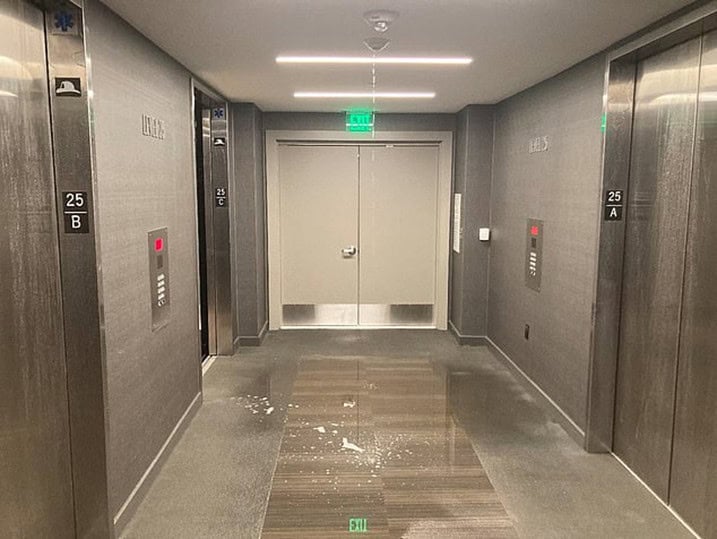
High-rise buildings inherently concentrate risk:
- Vertical stacking of critical equipment and occupied floors means leaks can impact multiple levels.
- Complex piping networks (domestic water, chilled water, heating hot water, HVAC condensate, roof drains, etc.) traverse large vertical and horizontal distances, increasing exposure points.
- High equipment density, especially in and near mechanical and electrical rooms, can amplify the consequences of a single leak.
- Emergency response (e.g., manual shutoff) is often delayed due to a lack of prompt notification and access challenges.
In many losses investigated by insurance carriers and forensic engineers, water damage was traced to:
- Burst domestic water pipes
- Failed chilled water or hydronic heating systems
- Blocked or damaged roof drains
- Leaking mechanical equipment (e.g., cooling towers, boilers)
- Failed fire protection systems (e.g., broken sprinkler pipes)
Given these exposures, a proactive, multi-layered protection strategy is necessary.
Water-Tight Floor Construction

Requirements and Best Practices
FM DS 1-3, High Rises, Section 2.1.23 recommends the use of water-tight floors, curbs, and drains for key areas. Specifically, these should be provided in:
- Mechanical equipment rooms
- HVAC rooms
- Rooms storing ignitable or combustible liquids
- Electrical rooms housing critical or high-value equipment
Key design features for these areas should include:
- Seamless, non-porous flooring (e.g., epoxy or liquid-applied waterproofing membranes)
- Integral floor curbs, at least 4 inches (100 mm) high, around sensitive rooms or equipment
- Floor slopes toward properly sized floor drains to promote drainage
- Waterproof door thresholds or water-tight doors where needed (especially near elevator shafts or critical electrical rooms)
Benefits:
- Helps contain leaks or flooding within the room of origin
- Limits the spread to adjacent or lower floors
- Protects critical mechanical and electrical infrastructure
Some jurisdictions now require mechanical rooms above the 3rd floor to incorporate secondary containment or waterproofing features.
Proper Drainage Systems

Plumbing and Mechanical Drainage
FM DS 1-3 Sections 2.1.24–2.1.26 and FM DS 1-24, Protection Against Liquid Damage in Light-Hazard Occupancies Section 2.1.10 emphasize the need for closed drainage systems:
- Avoid open-floor drains or surface-mounted drainage into sinks, which are prone to clogging and overflow.
- Use sealed piping to direct wastewater to sanitary or storm systems.
- Install floor drains in all rooms where water spillage could occur (mechanical rooms, janitorial closets, pump rooms, restrooms).
Recommendations:
- Drainage systems should be appropriately sized for both normal and emergency conditions.
- Conduct regular flow tests on drainage piping.
- Use corrosion-resistant materials (e.g., stainless steel, PVC) where chemical exposure or condensation may be present.
Roof Drainage Systems
Roof drainage represents a significant exposure, particularly in high-rise buildings with large flat roofs.
FM DS 1-54, Roof Loads and Drainage, provides criteria:
- Primary roof drains must be sized for the local design rainfall intensity (typically based on a 100-year storm event).
- Secondary (overflow) drainage must be installed to prevent excessive ponding if the primary system becomes blocked.
Design Tip: Roof areas prone to clogging (e.g., near trees or mechanical equipment) should incorporate overflow scuppers or emergency drains sized to handle full rainfall load.
Blocked roof drains are a frequent cause of building water damage. Facility staff should perform monthly visual inspections, especially during the fall or after windstorms.
Maintenance and Emergency Response

Routine Inspections
Effective maintenance programs should include:
- Quarterly roof inspections, focusing on membrane condition, flashing, and roof drains
- Monthly storm drain inspections, clearing debris from roof drains, scuppers, and downspouts
- Annual exercising of valves, for all domestic and chilled water isolation valves
- Quarterly testing of leak detection systems and flow monitoring alarms
- Visual inspection of mechanical rooms, plumbing chases, and tenant spaces for signs of leaks, corrosion, or moisture intrusion
Domestic water, fire protection, and mechanical piping systems should be included in the building's Preventive Maintenance (PM) schedule.
Emergency Planning
Written emergency response plans should:
- Identify the location and type of all control valves.
- Specify escalation procedures in the event of a leak.
- Assign responsibilities for immediate leak mitigation (e.g., shutting valves, isolating power, deploying wet vacuums).
- Integrate leak detection alarms into building management system (BMS) monitoring dashboards.
Training maintenance and security staff on leak response procedures can reduce the extent of losses during an event.
Leak Detection and Flow Monitoring: 2024 Updates to FM Data Sheet 1-24
FM DS 1-24 was revised in July 2024 to incorporate more detailed guidance on leak detection technology.
Liquid Flow Detection Systems
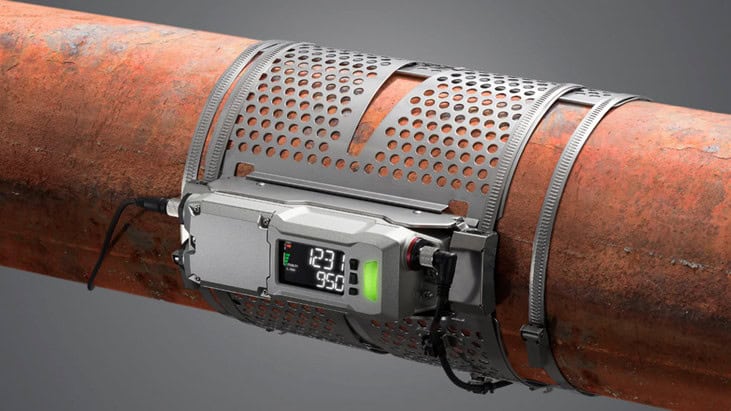
Flow detection systems use ultrasonic or turbine-based sensors installed on the building's water mains and major branch piping. They monitor real-time usage patterns and trigger alarms based on deviations from expected flow profiles.
FM DS 1-24 Section 2.3.2 recommends:
- Installing FM Approved flow detection systems at incoming domestic water lines and makeup water lines for closed-loop systems (e.g., chilled water loops).
- Installing floor-level flow detection for offices, hotels, and residential/condominiums.
Operation:
- Systems may alarm to a constantly attended location (e.g., security control center) or to a monitored building management system (BMS).
- Options include remote-controlled shutoff valves or automatic shutoff in response to high-flow alarms.
Proper programming of alarm thresholds is critical to avoid nuisance trips while still providing effective early detection.
Point Source Leak Detection
Point source detectors (also called "spot detectors") sense water accumulation at discrete locations:
- Installed at low points of mechanical rooms
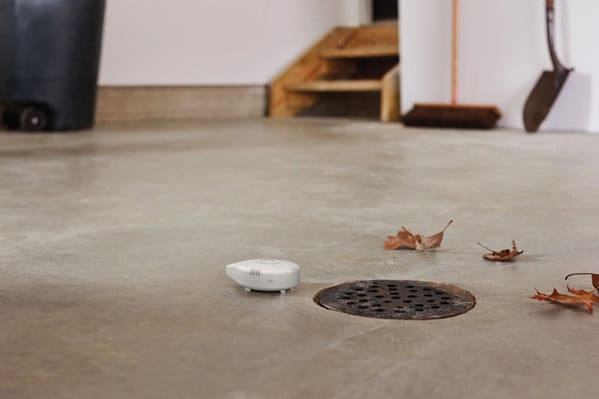
- In HVAC equipment condensate pans
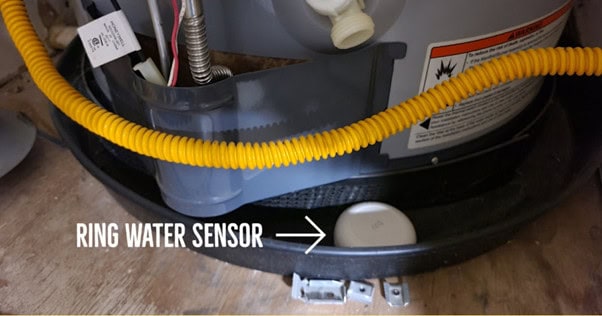
- Inside sink bases or appliance enclosures
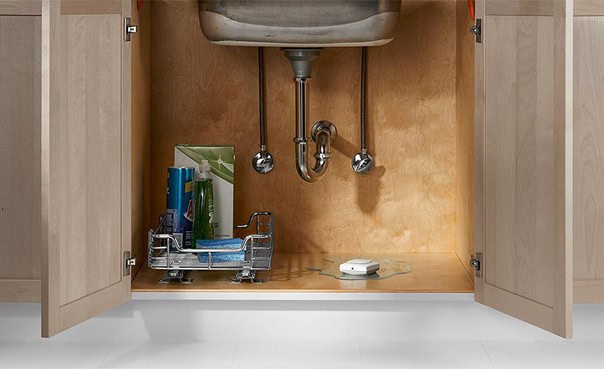
- In sump pump basins
The detectors typically use moisture probes or electrodes to signal the presence of standing water. They should be installed inside any curbed areas to detect overflow promptly.
Linear Leak Detection (Cable-Type Sensors)
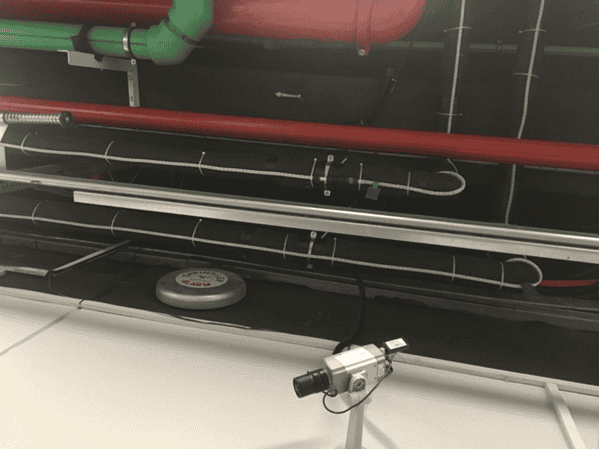
Linear sensing cables detect moisture along their entire length:
- Ideal for detecting leaks from overhead piping (chilled water, sprinkler mains, etc.).
- Commonly installed above sensitive equipment rooms, data centers, electrical vaults, or high-value tenant areas.
- Cables should be secured to the underside of piping or run within cable trays crossing multiple rooms.
Proper termination, control panels, and integration with the BMS allow for room-by-room leak monitoring.
Combining Leak Detection Technologies
Using a combination of:
- Flow detection (monitoring entire systems),
- Point source detectors (protecting critical equipment areas), and
- Linear cable detection (monitoring piping runs)
provides redundant protection and early notification of even small leaks before they escalate.
Conclusion
High-rise buildings carry a heightened risk of costly liquid damage events due to their vertical stacking, complex mechanical systems, and the potential for water to migrate across many floors.
Following FM’s recommendations — particularly those in DS 1-3, DS 1-24, and DS 1-54 — and implementing updated leak detection technologies provides a strong risk reduction strategy.
A layered approach should include:
- Water-tight construction in key areas
- Proper drainage design with secondary overflow provisions
- Regular inspections and valve maintenance
- Written emergency plans and staff training
- Early warning through flow monitoring and leak detection sensors
Taking proactive measures today can significantly reduce future loss potential and disruption.
For assistance with evaluating your building’s liquid damage exposure or implementing these recommendations, contact Risk Logic to schedule a comprehensive property risk survey. A general liquid damage prevention checklist is available in our September 2023 article.

