Artificial Intelligence in Insurance and Property Risk Engineering: Implications for Property Loss Prevention
Artificial Intelligence is transforming property risk engineering by improving how risks are identified, analyzed, and prioritized to reduce loss.
Artificial intelligence is rapidly reshaping many industries, including insurance and property risk engineering, with direct implications for how property loss is identified, evaluated, and mitigated. AI is changing how risks are identified, quantified, and prioritized, particularly where large volumes of inspection, claims, and sensor data influence property loss outcomes.
Today, over 70% of leading insurers report integrating AI tools into underwriting and risk assessment approaches, a significant shift from the adoption levels (30%) reported five years ago. This shift reflects the growing reliance on data-driven tools to support evaluation of property exposures, while reinforcing the need for engineering judgment in loss prevention decisions. As machine learning continues to evolve, its impact on pricing, underwriting accuracy, loss prevention, and property risk engineering will continue to accelerate.
AI has broad applications across insurance operations and property risk engineering activities, particularly in assessment, documentation, and hazard identification. Because insurance and risk engineering rely heavily on data and analysis, artificial intelligence is increasingly used to streamline internal processes, support risk engineering assessments, and enhance predictive modeling related to property loss.
AI Adoption and Growth in Insurance
Artificial intelligence and machine learning have been adopted by most large insurers to support automation of underwriting, claims management, fraud detection, and customer service functions. Claims departments increasingly use algorithms to analyze claim submissions, reducing processing time for routine cases and improving the consistency of loss data used for future risk evaluation. In 2025, many insurers cite customer experience as a priority, with routine property claims handled more quickly through automation, allowing greater focus on complex and high-severity losses.
The following estimates illustrate how AI-driven tools are influencing operational efficiency, with indirect impacts on data quality and risk selection related to property loss:
Process% Efficiency/ ReductionClaims AutomationUp to 70%Fraud Detection+28%Underwriting Accuracy+54%Claim Frequency-25%
Over the past five to ten years, AI adoption has expanded globally, with North America leading overall insurance AI market share, followed by Europe and Asia Pacific. As of 2025, the insurance AI sector is estimated at approximately $3.9 billion, reflecting rapid growth driven by underwriting, claims, and risk assessment applications. Forecasts are predicting this sector to grow to $30+ billion by 2029.
RegionAI Market Share (Insurance)North America44%ΓÇïEurope28%ΓÇïAsia Pacific25%ΓÇïLatin America2.4%ΓÇïMiddle East/Africa0.6%ΓÇï
AI Tools in Risk Engineering
While early AI benefits were primarily realized through internal process automation, AI and machine learning are increasingly deployed during field risk engineering surveys to support hazard identification and loss prevention analysis.
Virtual Site Assessments
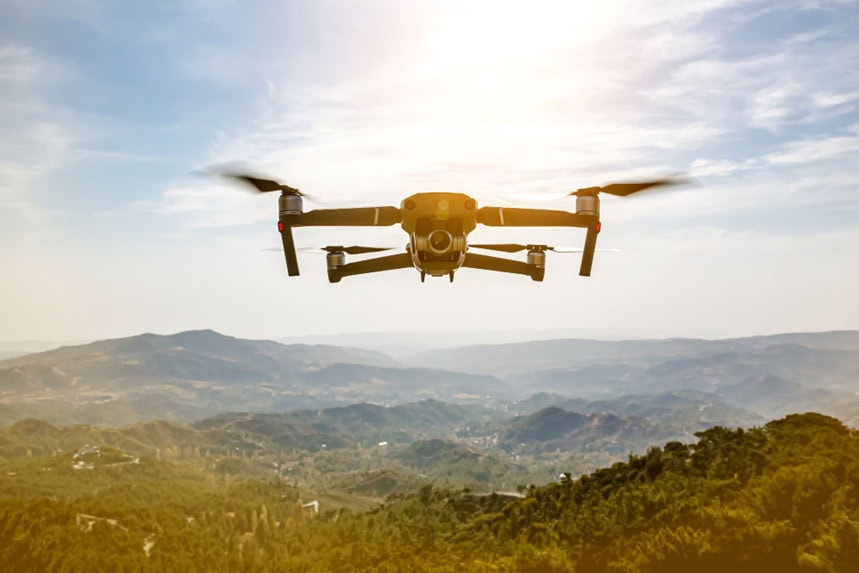
Developments in artificial intelligence are improving the quality of virtual site assessments and enhancing the efficiency and consistency of on-site risk assessments performed by field engineers. For example, drone companies like Loveland Innovations, Zeitview, and Inspekt AI are utilizing drone operators to detect specific hazards in the field.
The application of high-resolution imagery, infrared, and thermal data enables earlier identification of conditions that may contribute to property loss when left unaddressed. This technology is already being utilized to detect potential hazards such as degradation of roofing systems, façade issues, corrosion, and structural deterioration.
Physical Risk Engineering Surveys
Field engineers are also beginning to leverage AI and machine learning in multiple ways during field assessments. Photos or videos captured during field surveys or from CCTV systems can be analyzed by AI tools to identify conditions such as blocked fire exits, poor housekeeping, improper storage of combustibles, and other deficiencies that increase property loss potential. These tools are also used by facilities and engineering staff as part of ongoing risk management efforts to monitor conditions between formal risk engineering visits.
Another application of AI in the field is mobile audio recording, used throughout the survey and in discussions with on-site leadership (if approved by all parties). This improves efficiency by enabling AI tools to summarize site discussions, support draft risk documentation, and highlight potential areas requiring engineering review, such as maintenance gaps, occupancy changes, and natural peril exposures.
*It is critical to understand that AI functions only as a supporting tool to improve efficiency and assist with preliminary analysis. Final analysis, conclusions, and recommendations must always be developed and validated by qualified risk engineers to ensure alignment with property loss prevention objectives.
Natural Perils Modeling and Early Detection as Decision-Support Tools
Natural peril modeling, prediction, and detection have improved through AI implementation and are increasingly used as decision-support tools in evaluating wildfire risk and response planning.
Wildfire detection and response tools have improved detection speed and situational awareness, supporting earlier decision-making related to emergency response coordination and loss mitigation planning. There are already technologies being utilized such as ALERTCalifornia and ALERTWest, each hosting over 1,000 high-definition cameras throughout key areas in the US.
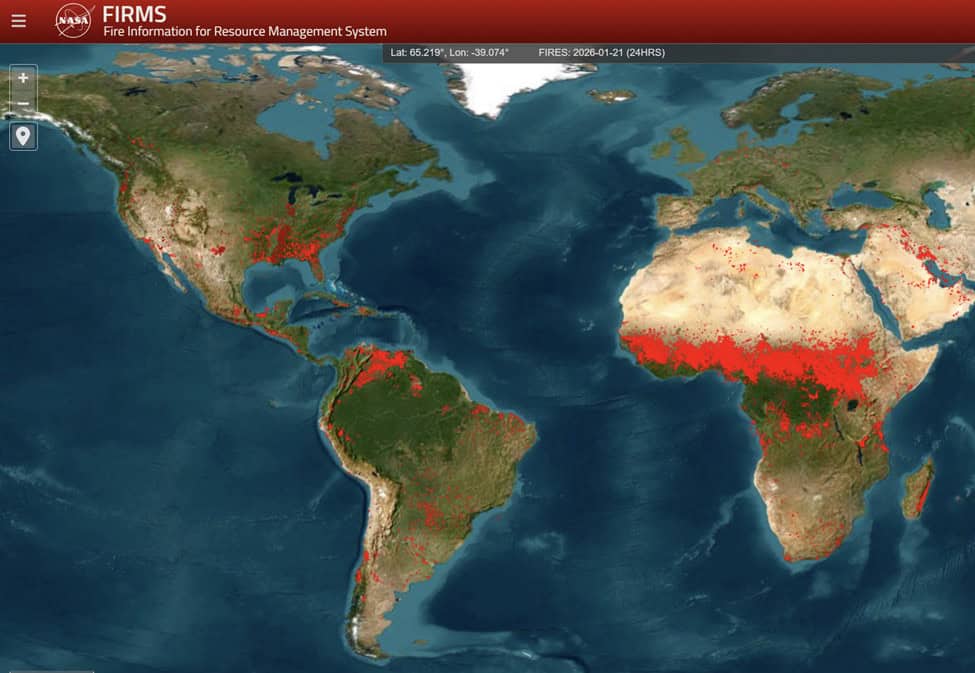
Globally, satellite systems such as NASA FIRMS utilize satellites and AI tools to produce near real-time global fire maps. Satellite-mounted instruments such as MODIS (Moderate Resolution Imaging Spectroradiometer) and VIIRS (Visible Infrared Imaging Radiometer Suite) detection thermal anomalies, identifying hotspots within three hours of observation.
These tools enhance visibility and timing but do not replace site-specific evaluation, defensible space management, or engineering assessment of construction, protection features, and operational readiness.
From a loss prevention standpoint, the greatest value of AI-enabled field tools lies in their ability to improve consistency and coverage rather than replace engineering analysis. By identifying common deficiencies earlier and more frequently, these tools can support better prioritization of corrective actions, particularly for high-frequency loss drivers such as housekeeping, ignition source control, and protection system impairments. When used between formal surveys, AI-supported monitoring can also help identify deteriorating conditions that may otherwise go unnoticed, reducing the likelihood that minor deficiencies escalate into significant property losses. The effectiveness of these tools, however, remains dependent on timely follow-up, corrective action, and verification by qualified personnel.
AI Governance, Data Quality, and Loss Prevention Risk
While AI-enabled tools offer measurable efficiency gains, their effectiveness in property loss prevention is highly dependent on data quality, governance, and appropriate use. Inaccurate inputs, incomplete datasets, or unvalidated assumptions can result in false confidence, mis-prioritized hazards, or overlooked loss drivers. From a risk engineering perspective, this represents a new category of exposure that must be actively managed.
AI models used in underwriting and risk assessment often rely heavily on historical claims data, imagery libraries, and third-party datasets. These sources may not fully reflect current site conditions, recent process changes, impairment history, or evolving occupancy hazards. Without appropriate validation, AI outputs may unintentionally reinforce outdated assumptions or normalize substandard conditions that contribute to property loss.
There is also risk associated with over-automation. Automated hazard identification tools may correctly flag visible deficiencies while failing to identify systemic issues such as inadequate management of change, poor impairment control practices, or lack of emergency response planning. These elements remain difficult to quantify and require on-site engineering judgment to assess loss severity potential.
Effective governance is therefore essential. AI outputs should be treated as decision-support inputs rather than conclusions. Risk engineering organizations should establish clear protocols defining where AI may assist, where human review is mandatory, and how discrepancies between AI findings and field observations are resolved.
Documentation standards should clearly distinguish between AI-assisted observations and engineer-validated recommendations.
When appropriately governed, AI can enhance consistency, improve documentation quality, and allow risk engineers to focus more time on high-impact loss scenarios. When poorly governed, it introduces new blind spots that can increase loss potential. Maintaining disciplined oversight ensures AI strengthens, rather than undermines, established property loss prevention practices.
The Future of AI in Our Industry
The pace of change in artificial intelligence presents both opportunity and risk for the insurance and property risk engineering industries. While continued advances in data processing, modeling, and automation are expected, the value of these tools will be determined by how effectively they are integrated into established loss prevention frameworks.
AI will continue to support faster analysis and broader visibility across portfolios; however, it will not eliminate the need for site-specific evaluation, engineering judgment, or disciplined risk management practices. The most effective applications will be those that enhance decision quality without obscuring critical loss drivers.
As adoption increases, risk engineering organizations must focus on governance, validation, and clear accountability to ensure AI strengthens property loss prevention rather than introducing new blind spots.
Summary
Artificial intelligence is becoming embedded across insurance and property risk engineering functions, increasing both analytical capability and operational complexity. The organizations that will see measurable loss reduction are those that apply AI within disciplined risk engineering frameworks, supported by data validation, clear governance, and qualified engineering review. As AI adoption expands, maintaining focus on fundamental loss drivers, site-specific conditions, and execution of corrective actions remains essential to controlling property loss outcomes. To discuss how AI-enabled tools can be aligned with established property loss prevention practices, contact Risk Logic today.
Read more in: