Fire Protection Freeze Risks Highlighted in Dallas Library Event
A burst fire protection line at the Kleberg‑Rylie Branch Library caused extensive water damage and a full facility shutdown, underscoring the Fire Protection Freeze Risks that can turn cold‑weather events into major property losses.
In January 2026, a severe winter weather event impacted the Kleberg-Rylie Branch Library in Dallas, Texas, resulting in extensive water damage and the indefinite closure of the facility. Freezing temperatures caused a fire protection line to burst, releasing water throughout the building while it was unoccupied. The Dallas Fire-Rescue Department and municipal teams responded to assess conditions and secure the property, but the damage had already spread across the structure. No injuries were reported; however, the facility sustained major damage to both building systems and contents. The Kleberg‑Rylie Library freeze event underscores the Fire Protection Freeze Risks that can lead to significant exposure and widespread water system failures during cold weather.
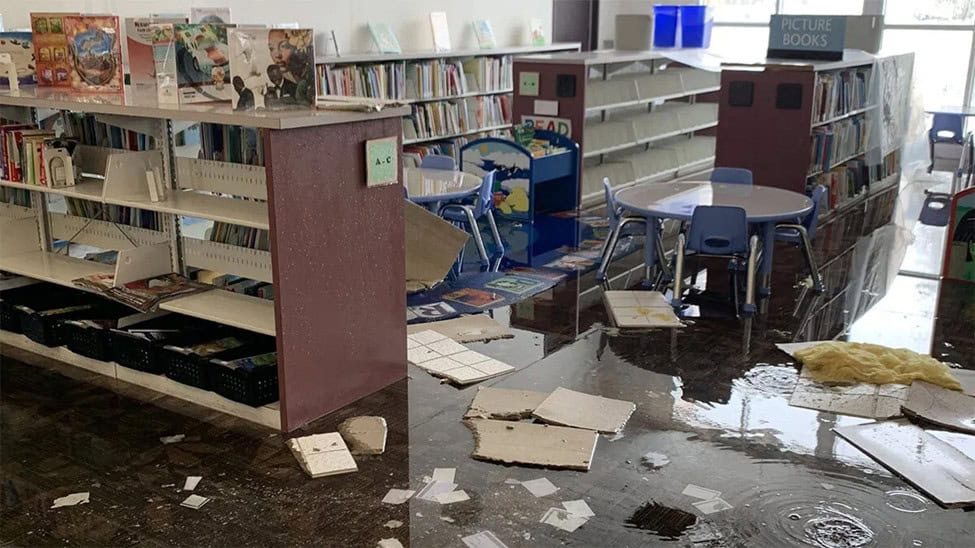
Dallas Library Loses 38,000 Books, Furniture in Winter Storm.
Incident Overview & Risk Factors
The primary loss driver was a freeze-related failure of a fire suppression line, resulting in uncontrolled water discharge across the building. Without active occupancy or monitoring, the leak remained undetected for an extended period, allowing water to migrate through floors, walls, and interior finishes. This delay significantly increased the severity of the loss.
Public buildings such as libraries often contain large open areas, suspended ceilings, and extensive finish materials that facilitate water spread. In this case, moisture intrusion required the removal of flooring and sections of drywall due to saturation and potential long-term degradation. The absence of adequate freeze protection measures, such as insulation, heat tracing, or temperature monitoring, likely contributed to system vulnerability.
The contents exposure further amplified the loss. Tens of thousands of books, media, and furnishings were damaged or destroyed, demonstrating how water events can quickly escalate from a system failure to a full operational disruption. This pattern is consistent with freeze events, in which fire protection systems become a source of loss rather than a mitigation tool.
Property Loss & Insurance Implications
Freeze-related water losses typically result in complex, high-severity claims. In this case, damage extended across structural elements, interior finishes, and contents, requiring coordinated remediation and reconstruction efforts. Moisture migration beyond visible areas increases both scope and cost, particularly when demolition is required to address concealed damage.
For public entities, content loss represents a critical exposure. The destruction of books and educational materials not only causes financial losses but also service interruptions that can extend recovery timelines. Procurement processes, funding approvals, and replacement logistics often delay restoration compared to private sector facilities.
Key property and insurance considerations include:
Increased repair scope due to hidden moisture and material saturation
Environmental risks such as mold growth requiring testing and remediation
Business interruption or service disruption impacts for community facilities
Retained losses due to deductibles or self-insured retentions in municipal programs
FM and NFPA guidance emphasize the importance of protecting wet pipe systems from freezing conditions, particularly in unoccupied or intermittently heated buildings. Failure to implement these protections can result in losses that exceed typical fire-related damage.
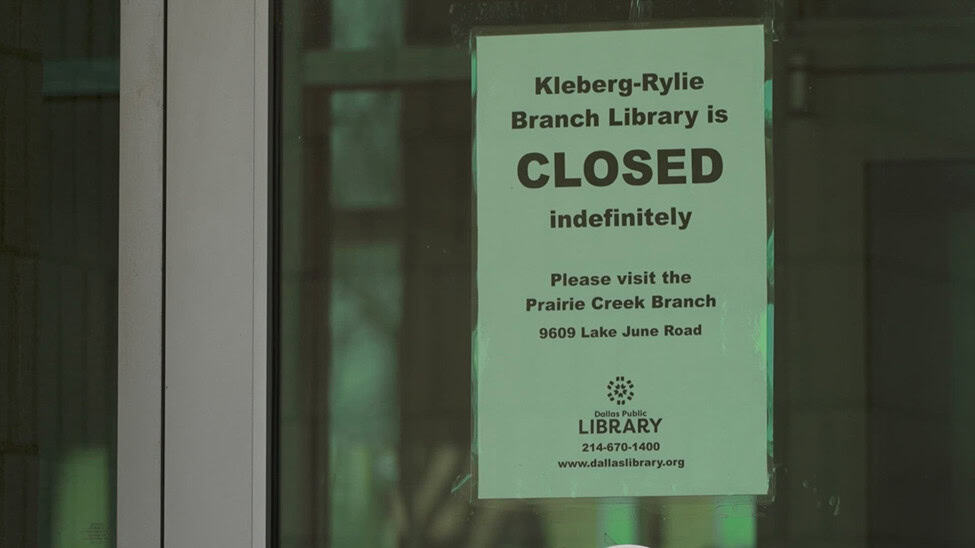
A notice to community members of the indefinite closure of Kleberg-Rylie Library.
Risk Logic Perspective: Freeze Risk
Freeze-related failures in fire protection systems remain a persistent and preventable source of property loss. Facilities in regions not accustomed to sustained cold temperatures are particularly vulnerable due to limited winterization measures.
Effective risk management strategies should include:
Conducting freeze risk assessments for all fire protection piping systems
Installing temperature monitoring and alarm systems in vulnerable areas
Implementing heat tracing or insulation for exposed piping
Establishing inspection protocols during facility closures or extreme weather events
Verifying system design compliance with NFPA 13 requirements for freeze protection
Facilities should also integrate freeze preparedness into broader impairment management programs, ensuring that any system vulnerability is identified and addressed before a weather event occurs.
Risk Logic engineers help facilities identify fire hazards and implement tailored loss prevention strategies. Contact Risk Logic to evaluate freeze protection measures and strengthen system resilience.
Bottom Line
Freeze-related failures in fire protection systems can quickly turn a protective asset into a primary source of loss, making proactive winterization and monitoring essential to prevent widespread water damage.