Multi‑Unit Fire Spread Risks: Lessons from the North Houston Apartment Incident
Multi‑unit fire spread risks highlighted by the North Houston apartment incident, emphasizing detection, compartmentation, and loss‑prevention lessons.
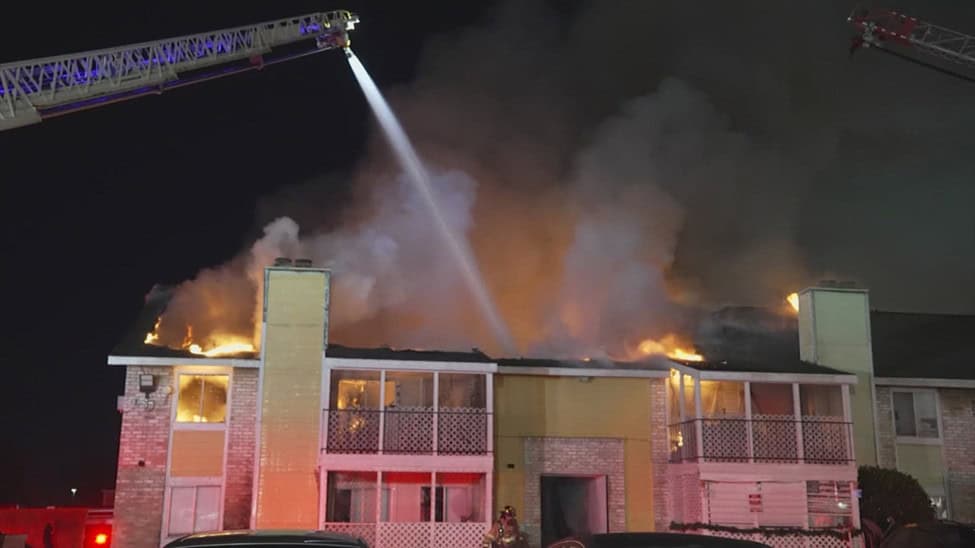
Aerial master streams deployed as fire extends across the roofline of a multi-unit apartment building in north Houston.
A North Houston apartment fire damaged multiple residential units and displaced tenants during the early morning hours of January 15, 2026, underscoring significant multi‑unit fire spread risks and ongoing property‑loss challenges in large multi‑family occupancies. The fire occurred in the Greater Greenspoint area near Greens Road, close to Bush Intercontinental Airport, and was reported shortly after 3:30 a.m.
The Houston Fire Department upgraded the incident to a second-alarm response due to visible fire conditions involving multiple apartment units. Firefighters worked for several hours to control the blaze, extinguish hotspots, and prevent rekindling. Approximately 10 apartment units sustained fire, smoke, and water damage. No civilian or firefighter injuries were reported, but residents were evacuated. The fire remains under investigation.
Why the Fire Spread
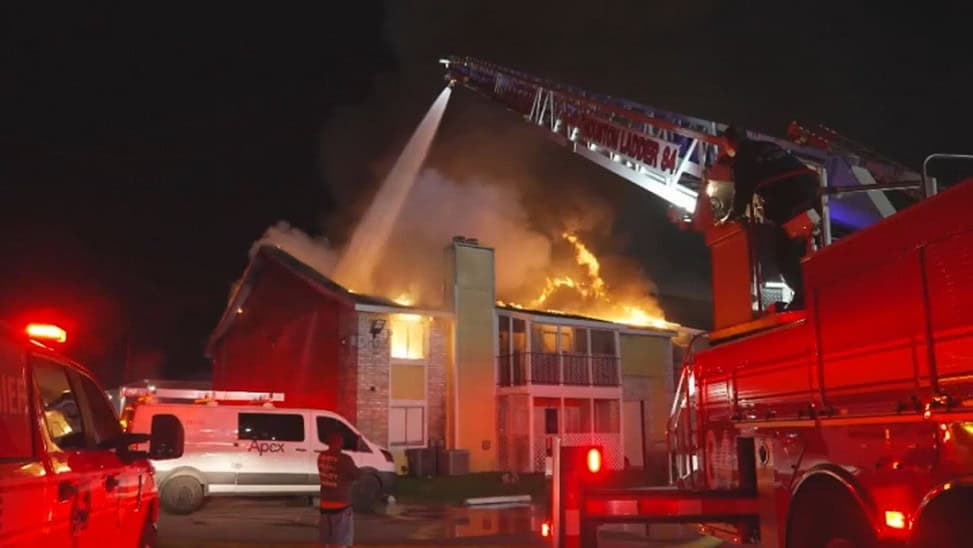
Second-alarm response underway as ladder trucks protect exposures and suppress roof-level fire spread.
The scale of damage reflects several common drivers of multi-family residential fires that routinely amplify losses once a fire escapes the unit of origin.
Building configuration and shared construction played a central role. Apartment complexes with interconnected units, common attic spaces, and shared wall assemblies allow fire, smoke, and heat to migrate rapidly when compartmentation is compromised. Once flames extended beyond a single unit, suppression demands increased significantly.
Time of ignition was another critical factor. Fires originating during pre-dawn hours often burn longer before detection, particularly if occupants are asleep or units are unoccupied. This delay allows fires to grow unchecked, increasing the likelihood of multi-unit involvement before the first engine arrives.
Finally, operational complexity contributed to escalation. Protecting multiple exposures simultaneously requires additional staffing, apparatus, and command coordination. The second-alarm upgrade was necessary and indicated how quickly residential fires can outpace baseline response capabilities.
Implications for Property Loss Prevention
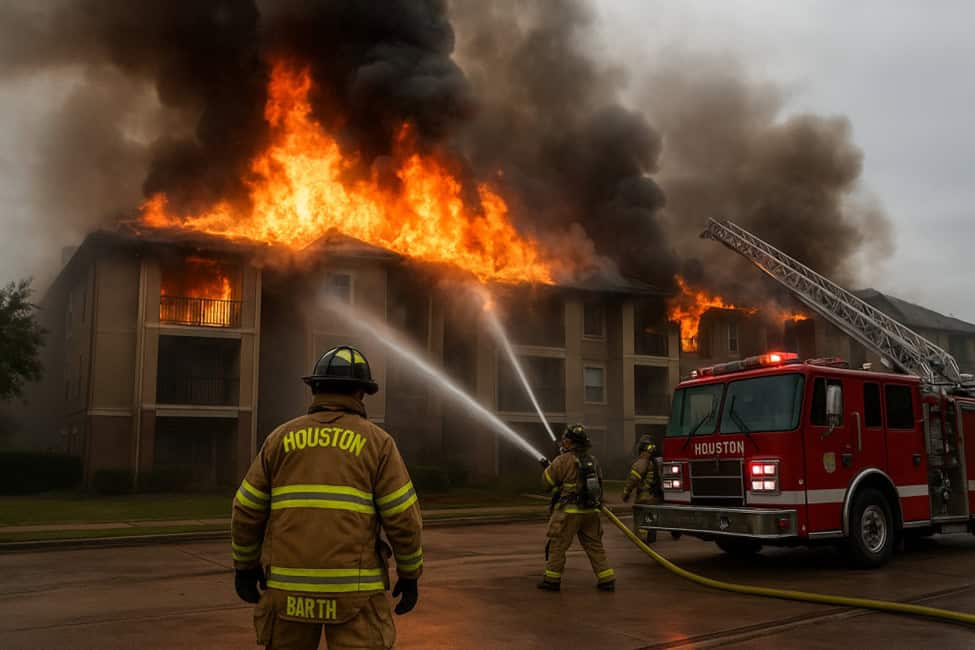
Houston firefighters battle heavy fire involvement along the top floor and attic space of the apartment complex.
For insurers, property owners, and risk managers, this North Houston apartment fire reinforces persistent vulnerabilities in multi-unit residential risk profiles.
Fire detection and suppression systems remain the most effective loss controls. Smoke detection, particularly interconnected alarms, and automatic sprinkler protection can significantly limit fire growth before flashover, especially during overnight hours when occupant response is delayed.
Compartmentation integrity is equally critical. Fire-resistive wall and floor assemblies, properly sealed penetrations, and protected attic spaces reduce horizontal and vertical fire spread. Deficiencies in these areas directly correlate with more severe losses and greater displacement exposure.
From an insurance perspective, secondary loss drivers, including tenant displacement, loss of rental income, and temporary housing costs, can rival or exceed direct fire damage. Events like these underscore the need for accurate valuation, realistic business interruption assumptions, and robust emergency planning.
Practical Takeaways
Risk managers and property owners should prioritize the following controls to reduce multi-unit residential fire losses:
Verify full compliance with NFPA 13 or NFPA 13R sprinkler requirements, including ongoing inspection, testing, and maintenance.
Confirm interconnected smoke alarm coverage within units and common areas, with documented testing programs.
Inspect fire-rated separations, attic firestopping, and utility penetrations for breaches that enable fire spread.
Evaluate emergency response plans, evacuation signage, and resident communication procedures.
Incorporate displacement and loss-of-rent scenarios into insurance program design and continuity planning.
These actions move the needle from reactive response to proactive risk control.
Risk Logic engineers help residential owners, insurers, and risk managers identify residential fire vulnerabilities and implement practical, code-aligned loss prevention strategies. Contact Risk Logic to evaluate multi-family exposures before the next loss occurs.
Bottom Line
Multi-unit residential fires that start undetected during overnight hours can escalate rapidly, emphasizing that early detection, compartmentation, and suppression systems are essential to controlling property loss severity.