Oelwein Industrial Fire Highlights Risks of Roof Fires
A roof fire at Ashley Industrial Molding in Oelwein, Iowa Industrial Fire Highlights Risks of Roof Fires.
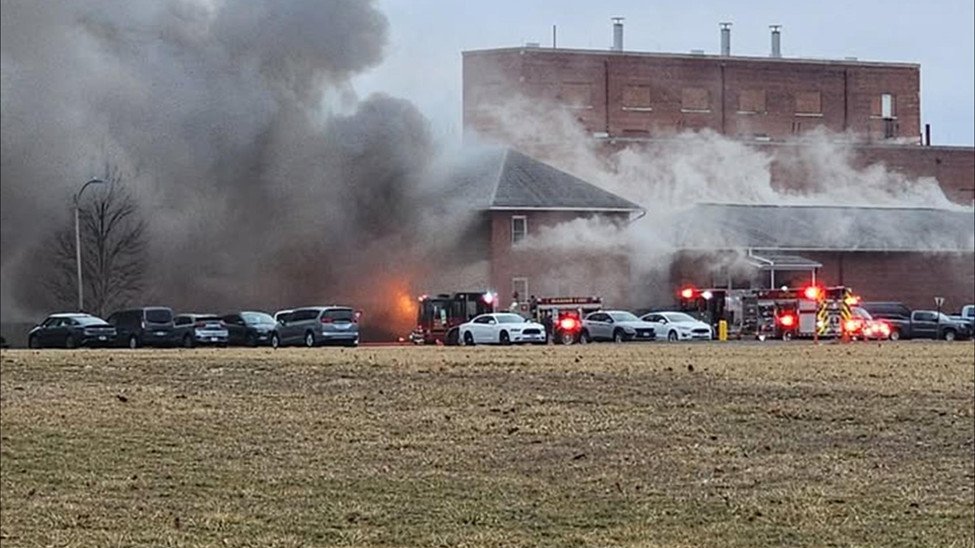
On the evening of February 20, 2026, firefighters responded to a roof fire at Ashley Industrial Molding in Oelwein, Iowa, located on the 900 block of 2nd Avenue SE. Crews from the Oelwein Fire Department, supported by Hazleton mutual aid units, arrived to find smoke and flames emerging from the roof of the industrial facility. Firefighters worked for approximately three hours to contain the blaze, ultimately limiting damage primarily to the roof area.
The fire created operational challenges due to the building’s roof construction and slippery conditions that complicated access for firefighters. Local street crews assisted by spreading sand around the site to improve footing and apparatus stability. No injuries were reported, and firefighters prevented the fire from spreading further into the structure or surrounding properties.
The Oelwein industrial fire highlights risks associated with roof fires and demonstrates how thermal imaging drones can improve fireground assessment and firefighter safety.
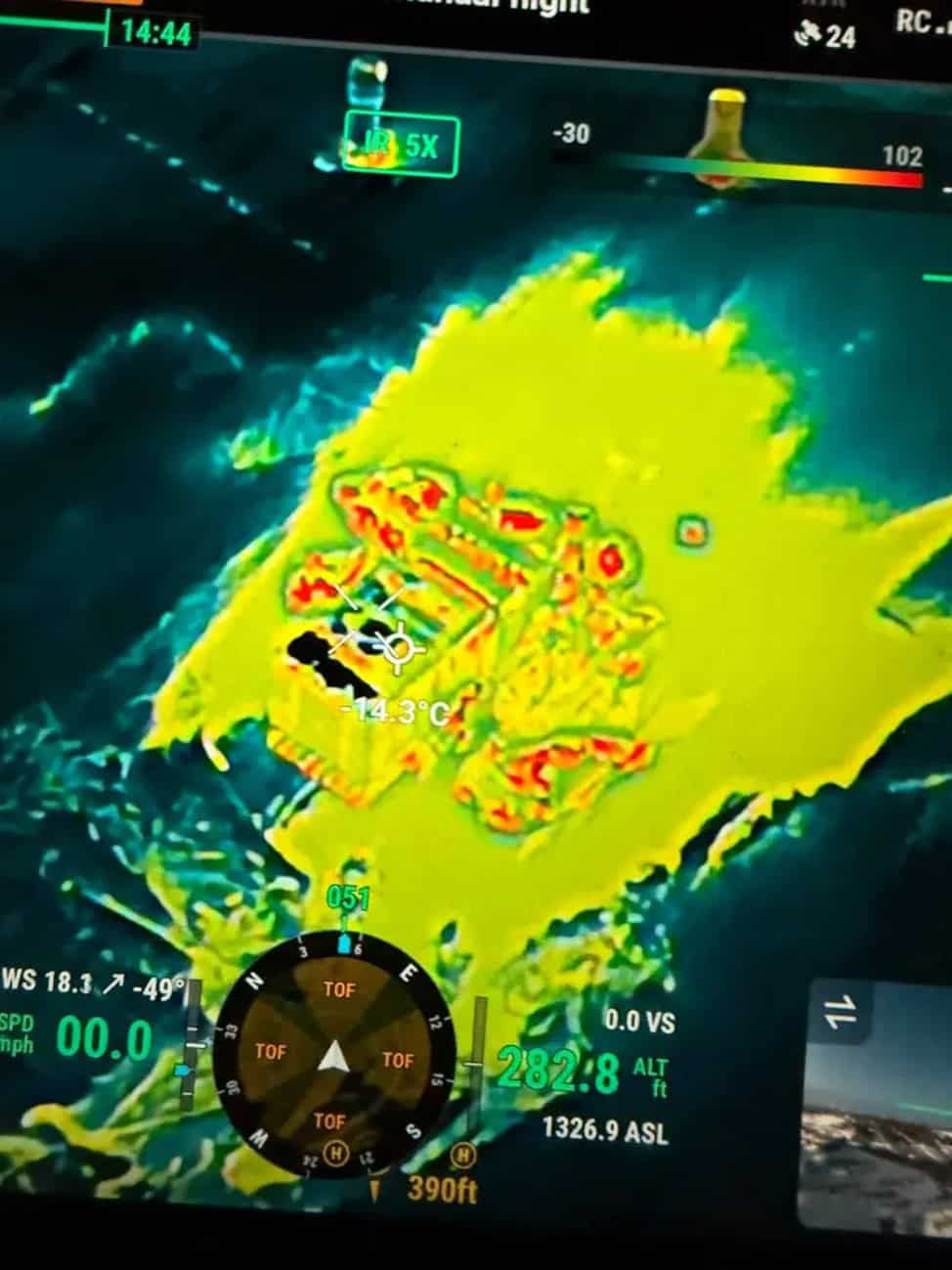
Drone-mounted thermal imaging reveals active hotspots and heat signatures across the industrial roofline during fire suppression operations.
Incident Overview & Risk Factors
Early reports indicate the fire was located within the building’s layered roofing system, which included a rubber membrane and insulation. Fires involving multi-layer roof assemblies often spread laterally beneath the surface before becoming visible, making them difficult to detect and control.
These roof systems can trap heat and allow fire to move through concealed spaces between membrane layers, insulation boards, and structural decking. Once fire enters these cavities, it may continue smoldering even after visible flames are extinguished.
Responding crews encountered several risk factors that complicated suppression efforts:
Layered roofing materials, including rubber membrane and insulation, which concealed heat sources.
Limited visibility of fire spread, making it difficult to identify active hotspots.
Slippery roof and ground conditions, which created safety hazards for firefighters working above the fire area.
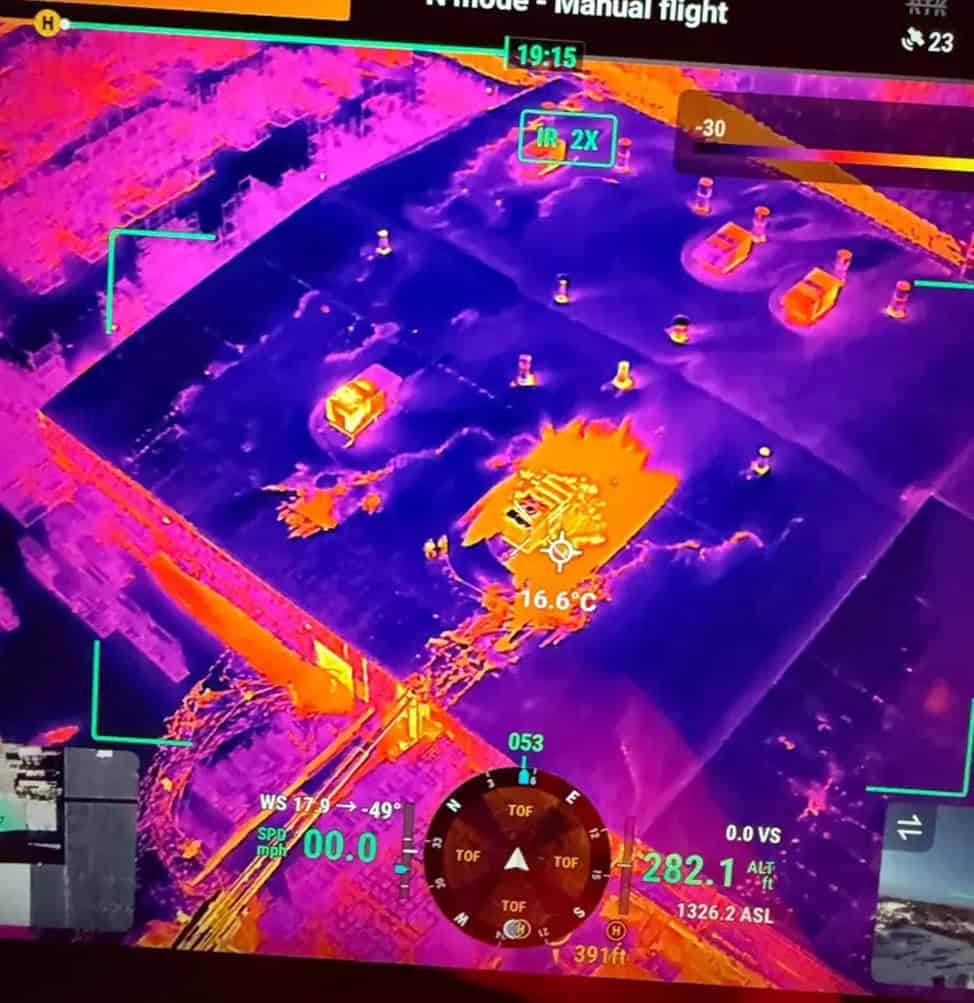
Thermal drone imagery identifies concentrated heat pockets beneath the commercial roof surface, guiding targeted suppression and overhaul efforts.
To improve situational awareness, the Oelwein Public Safety drone team deployed an unmanned aerial system equipped with thermal imaging. The drone provided real-time thermal data, allowing crews to identify hotspots beneath the roofing surface and confirm when concealed fire areas had cooled.
This aerial perspective helped firefighters direct suppression and overhaul operations more efficiently while reducing the need for personnel to operate directly on potentially unstable roof sections.
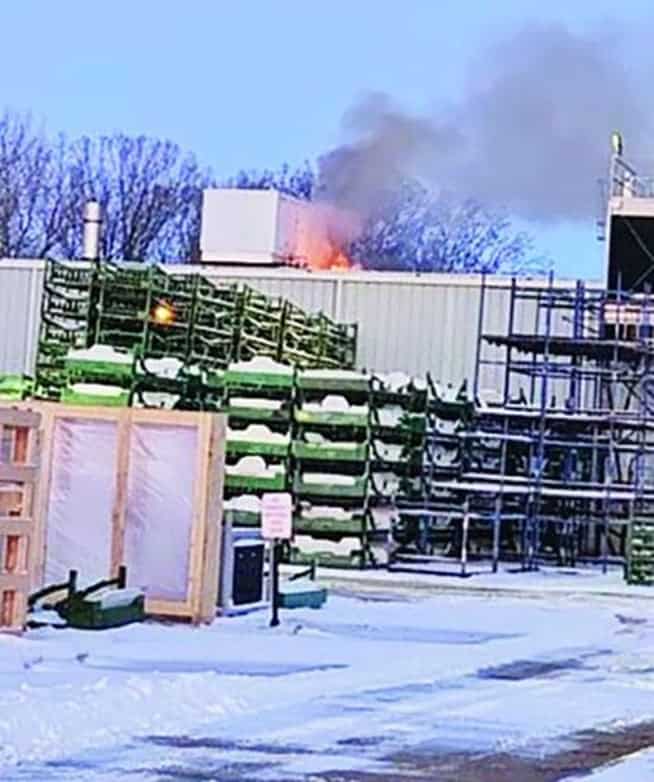
Flames and smoke rise from the roofline of Ashley Industrial Molding as crews respond to the winter industrial fire in Oelwein, Iowa.
Property Loss & Insurance Implications
Although structural damage was largely confined to the roof, fires involving concealed roof cavities can create significant hidden damage. Heat and smoke can compromise insulation materials, weaken structural components, and degrade roofing systems even when flames appear limited.
Industrial buildings with membrane roofing systems are particularly vulnerable to these exposures because the fire may spread beneath the surface before detection. In many cases, large sections of the roofing assembly must be removed and replaced to ensure that no residual heat damage remains.
Risk Logic Perspective: Concealed Roof Fire Risk
Roof assemblies in industrial facilities often contain multiple combustible or heat-retaining layers. When fire enters these concealed spaces, detection becomes difficult, and suppression operations become more hazardous.
Facilities should take proactive steps to reduce concealed fire risk and improve early detection.
Recommended prevention measures include:
Inspect roofing systems regularly for deterioration or moisture intrusion that may accelerate fire spread.
Maintain clear rooftop access for firefighting operations.
Evaluate ignition sources associated with rooftop equipment such as HVAC units or electrical components.
Ensure roof assemblies meet Class I/A fire resistance ratings.
Conduct periodic property risk assessments to identify concealed fire exposures.
Risk Logic engineers help facilities identify fire hazards and implement tailored loss prevention strategies. Contact Risk Logic to learn how engineering-driven fire protection planning can strengthen property resilience.
Bottom Line
Concealed roof fires can spread undetected within layered roofing systems, reinforcing the importance of Class I/A fire-rated roof assemblies and proper fire protection design in industrial facilities.