Understanding Processes, Risks, and Hazards of the Mining Industry - Part 3
A 2024 FM study found fire represented 27% of mining losses over five years, while mechanical and electrical failures made up over 33%. Explore mineral processing risks and safeguards.
Larry Moore, PE, Risk Logic Inc.
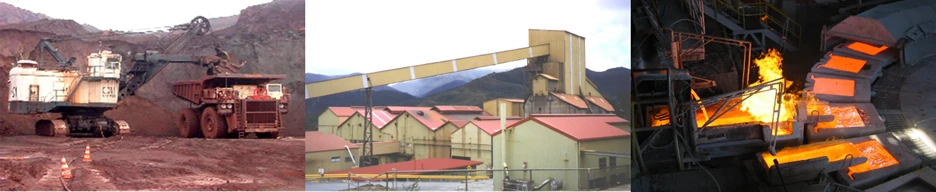
Part 3: Mineral Processing
Introduction
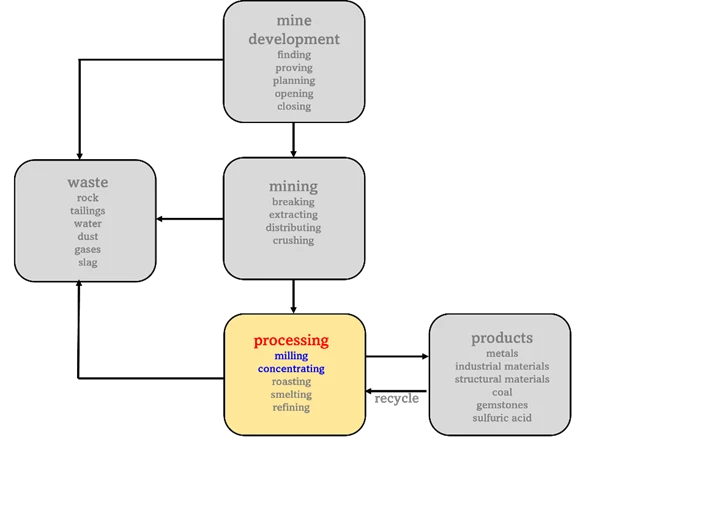
This is the third of a four-part series on the mining industry. This article focuses on mineral processes that prepare and concentrate a metal ore or coal so that it can be economically shipped to the next point of processing, such as a power plant or a metallurgical smelter. We explore processing methods, unique risks, loss scenarios, and safeguards that can limit property damage and business interruption. Effective loss prevention requires a site-specific evaluation by specialists familiar with the mining method and with applicable FM, NFPA, regulatory, and engineering guidance.
What is mineral processing?
Mineral processing - called beneficiation - is the practice of concentrating and recovering valuable minerals from their virgin ores by exploiting differences in physical properties.
Many metal ores are bound in a sulfide matrix (refractory ore), which has to be heat-treated at a smelter to remove the sulfur and other waste and recover the desired metal. This is only economical for very high-grade or concentrated ores because shipping long distances is expensive.
Ore is cleaned, prepared, and concentrated in an ore dressing or concentrator mill located near the mine. The goal is to increase a low-grade mineral to a higher grade. For example, metal values in copper ore typically increase from less than 1% leaving the mine (ROM) to 25 to 40% (concentrate) leaving a mill.
The mined rock is crushed, screened, and milled to increase its surface area. This process, called comminution, reduces the ore to a granular sand which is emulsified into a pumpable slurry (pulp) in water, weak acid, or other solutions.
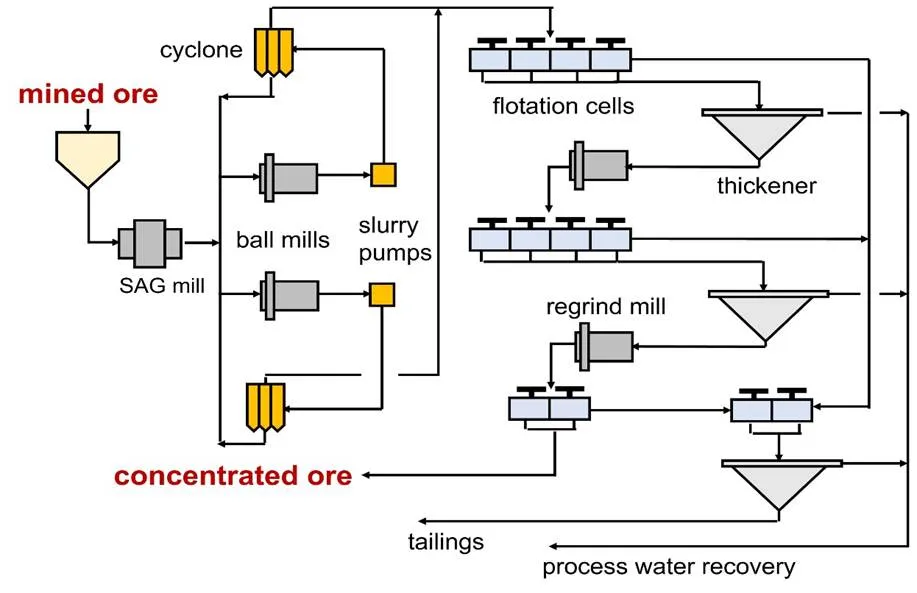
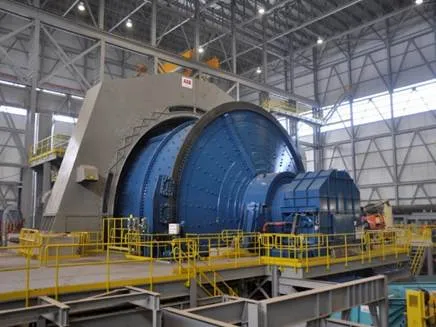
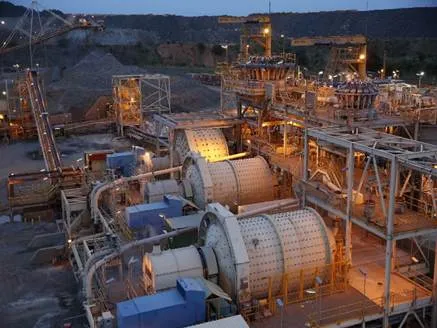
Most milling is done in rotating drums using iron balls about the size of a shot put. These pulverize the ore as they rotate, drop and impact the rocks inside the mill. These are called ball or semi-autonomous grinding (SAG) mills and there are usually two or more in a large plant. Mills of 12 to 18 ft (3.7 to 5.5 m) in diameter driven by conventional induction or synchronous electric motors of 10,000 – 20,000 hp (7.5 to 17.5 MW) with pinion and encircling ring (bull, girth) gears are common.
Mills now reach 42 ft (13 m) in diameter and can process 10,000 tons (9000 tonnes) of ore a day. Because most conventional induction motors cannot drive these large, heavy machines and electrical costs are high, operators often rotate them using annular synchronous (wraparound, gearless mill drive) motors. A GMD is a direct-drive system that rotates the mill without the use of mechanical ring gears. By mounting the rotor poles directly on the mill, the mill itself becomes the motor rotor. The largest GMDs are 40,000 hp (30 MW). It is estimated that 160 GMDs are in service globally as of 2026.
 |
 |
|
|
|
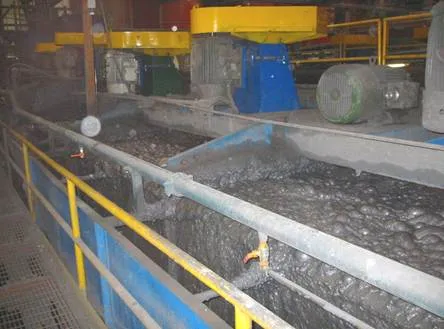
Following milling, the pulp is sent to a froth flotation circuit. Chemical reagents - some flammable - are added to the pulp in cells where desirable metal ores stick to bubbles and are skimmed off into a specific circuit. Waste (gangue) material is sent to a tailings circuit for disposal. Multiple flotation cells in series assure that essentially all valuable metal is captured. The resultant concentrate is thickened, filtered and dried before shipping.
|
|
|
|
|
|
Some lower-grade sulfide and oxide ores can go directly from the mine to leaching (lixiviation) processes without passing through a concentrator mill.
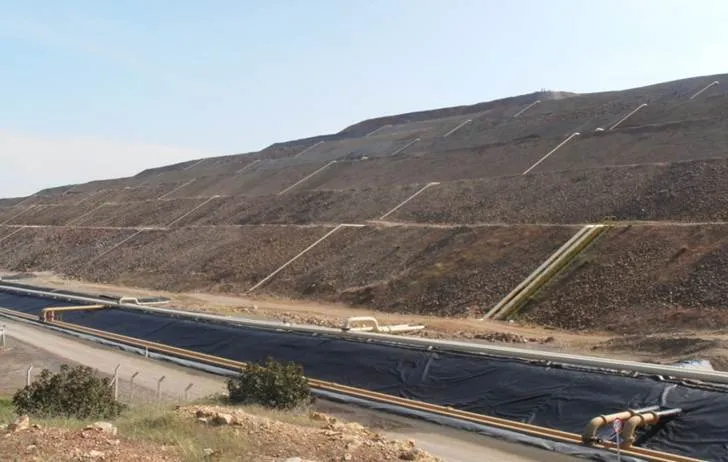
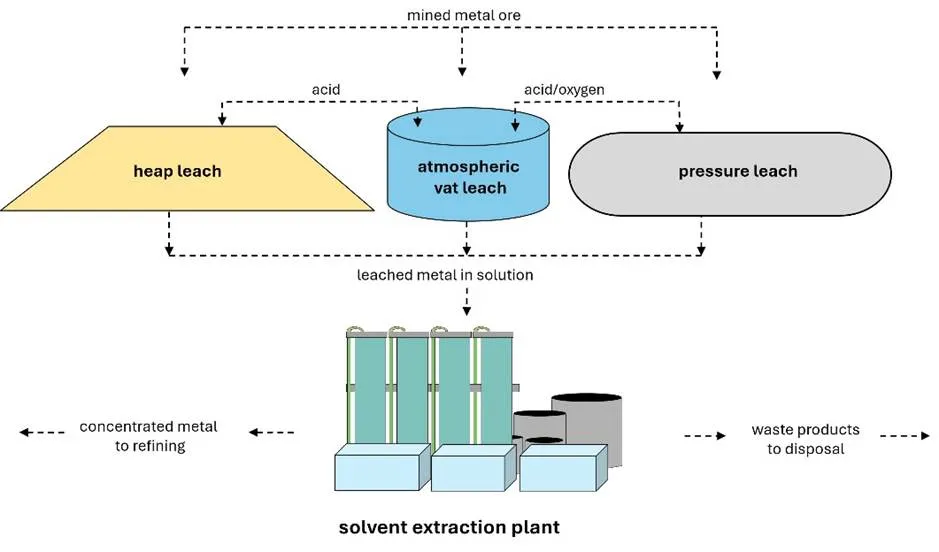
Leaching, where the ore is dissolved into a solution using sulfuric acid (copper) or cyanide (gold), is done in heated tanks or vats; pressurized autoclaves; or in large piles of ore called heap leach pads. These man-made mountains of ore rest on rubber or other leakproof liners. Acid or cyanide leachate flows through perforated irrigation pipes or is sprayed onto the top of the heap leach pile. Leachate percolates through the ore, dissolving the desired metal and leaving the spent waste gangue in place.
The metal-rich leachate flows into a processing plant. After the metal is recovered, the leachate is recycled to the leach pad. Heap leach pads are raised as lower levels of ore are depleted of metal value, and some pads are 100s of feet (m) high and thousands of feet (m) long.
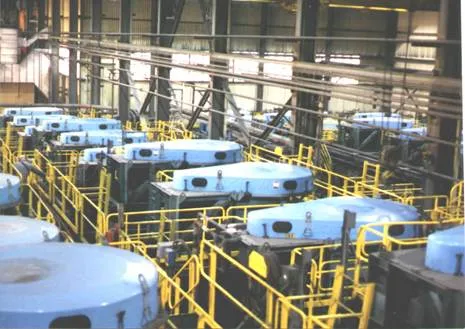
For copper, the metal-rich leachate is typically sent to a solvent extraction (SX) plant, where it is contacted with high-purity kerosene and other extractants in mixer-settler cells. The solution is flowed counter-current from cell to cell until it slowly increases the metal content in solution. The final concentrated electrolyte is pumped to a nearby electrowinning (EW) plant where cathode-grade copper, at 99+% purity, is produced in hundreds of battery-like cells.
Copper or other metal ions in the electrolyte transfer into the cell and plate onto metal sheets. This is done without smelting the ore and is a very economical route to metal if the mined mineral ore is suitable. SX is a common process for copper but is also used for uranium, nickel, lithium, and rare earths.
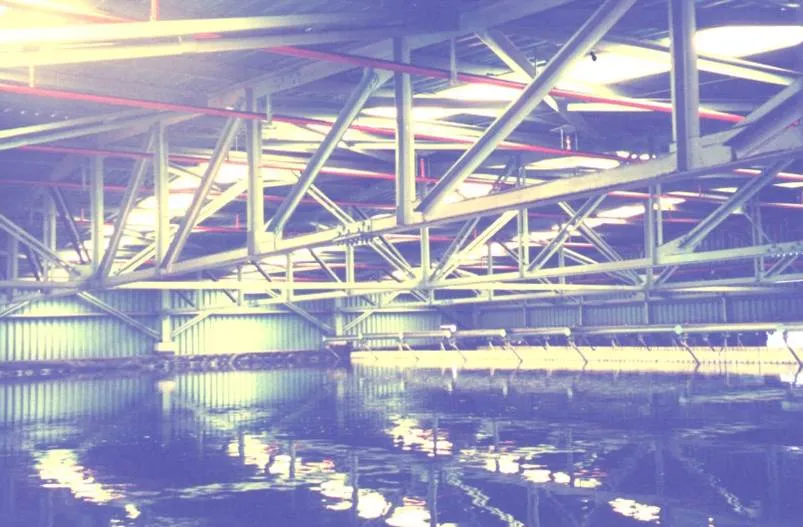
An SX plant uses large quantities of flammable solvents, often in fiber-reinforced plastic (FRP) or polyethylene plastic (PE) vessels and pipes. This presents severe fire risks. Some SX processes have hundreds of thousands of gallons (cu m) of solvent.
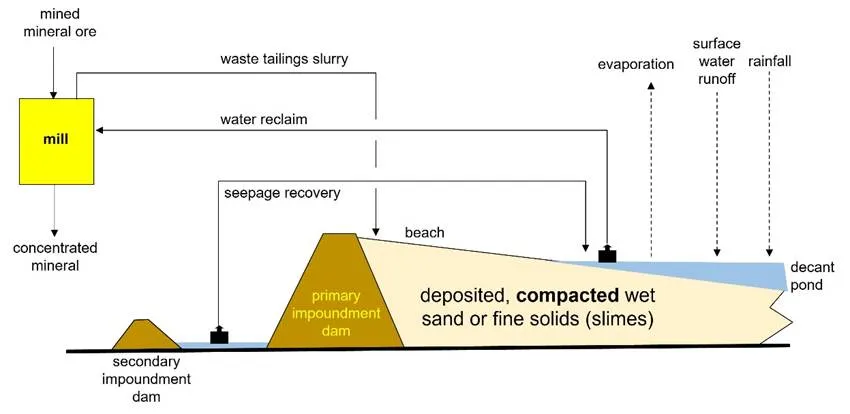
Concentration processes produce a waste stream called tails or tailings. The vast majority of the rock sent through a mill is gangue, and this ends up as finely ground mud (slimes) in the tailings circuit and must be safely disposed of.
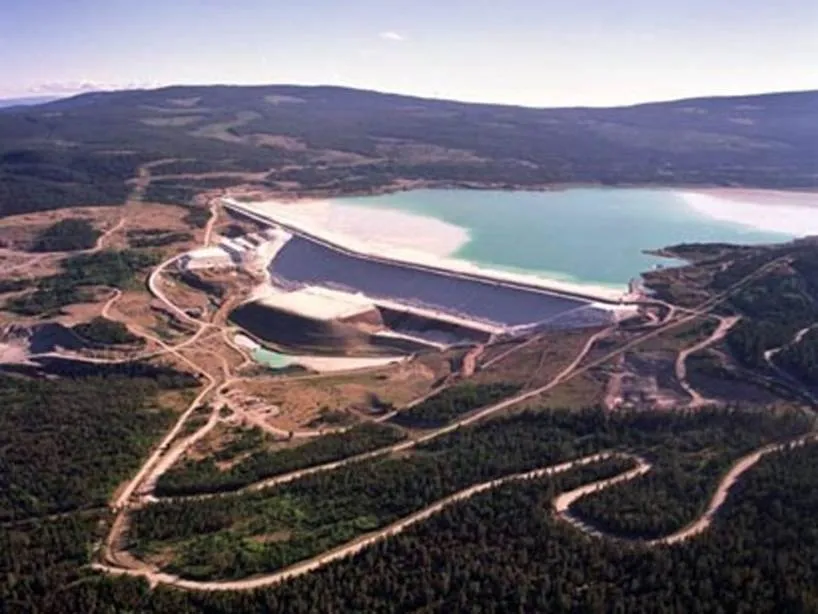
Tailings are sent to an engineered storage basin called a tailings storage facility (TSF), where solids separate, settle, and compact. Water is returned to the mill process. Tailings may contain residual reagents, chemicals, and heavy toxic metals such as arsenic and lead. A TSF is built near the concentrator and usually has an earthen impoundment which is constructed from local materials. As it fills, the TSF impoundment is raised at intervals to allow for increased storage as the mine continues to operate and produce more waste. This is called a sequentially raised earthen (SRE) impoundment.
Some impoundments are 100’s of feet (m) high and miles (km) long. Due to cost and defined operational lives, they are rarely built to conventional water retention dam standards, which require spillways and other overflow or failure protection. TSFs can fail suddenly with catastrophic consequences, including environmental impacts. Impoundment failure can result from poor design or construction; extreme weather conditions; inadequate foundations; poor water or beach management; and many other factors.
A TSF is a production facility, and a mine cannot dispose of waste, manage water resources, or continue to operate if it is out of service. Loss of the TSF will shut down a mine and mill indefinitely with significant business interruption. TSFs are permanent structures and must be managed and monitored for decades after retirement, abandonment, or shutdown.
Property risks and hazards in mineral processing plants
The primary risks in mineral processing are:
Fire and Explosion
Mechanical Breakdown
Tailings Disposal Facility Failure
Fire and explosion:
According to a 2024 FM loss study on the mining industry, fire is the most common single loss driver, representing 27% of all losses over a 5-year period. This increased from an average of 20% over a prior 20-year period and can be attributed to the expanded use of plastic in equipment and construction. Hot work is the most common ignition source.
Concentrator mills may have significant combustible loading, including “hidden” rubber-lined piping and vessels; rubber belt conveyors; plastic screens, filter presses, vessels and multi-story classification spirals; electrical cables in inaccessible vaults and tunnels; hydraulic fluids and lubrication oils; thermal oil drying systems; flammable reagents in flotation processes; and sometimes wood or plastic construction.
Localized automatic sprinklers are needed for areas or over equipment with rubber, plastic, and combustible or flammable fluids and may be warranted for the entire mill if combustibles are concentrated, widespread, or construction is combustible. Controlling ignition sources like hot work and labeling, and employee awareness of rubber-lined and plastic equipment, are critical risk-mitigation solutions.
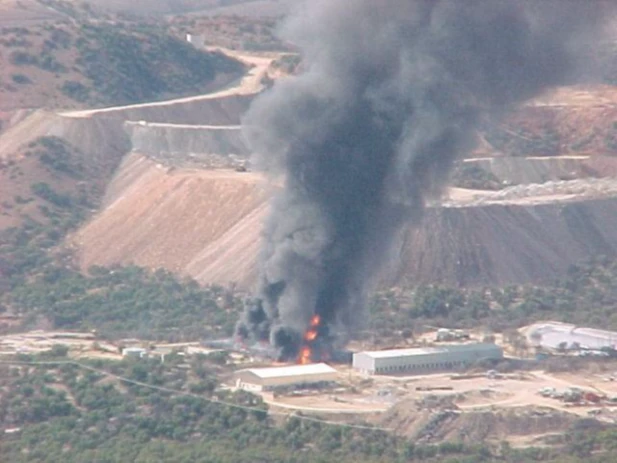
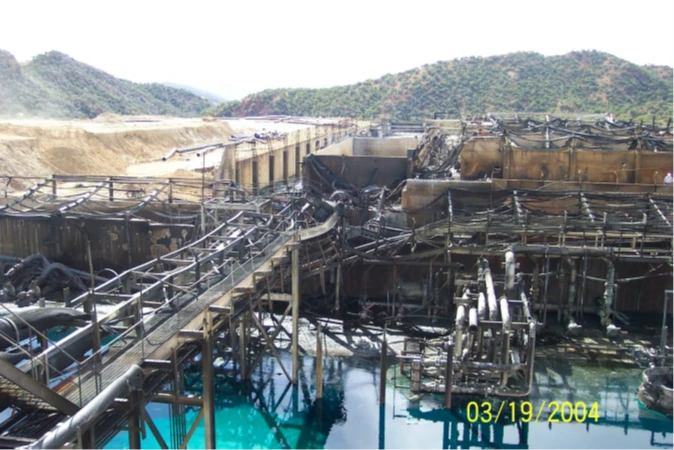
Solvent extraction plants have tens of thousands of gallons (cu m) of flammable solvents, often in arrangements that do not meet conventional fire protection standards. Most SX plants use FRP and PE vessels and piping because of acid corrosivity and the high cost of alternative, more suitable, fire-resistant materials like stainless steel. Plastic equipment is not appropriate for flammable liquid service due to issues of durability and combustibility.
Further, flammable liquid flow through plastic pipes causes static electrical build-up, an ignition source, without the ability to easily ground the nonmetallic system. Professional fire departments are rarely available near remote mine sites, and employees are not trained or equipped to fight large flammable liquid fires.
Protection of SX plants requires professional fire protection engineering expertise. Fire protection should, where practical during initial design, include inherent safe features where, for example, stainless steel is used rather than plastic for vessels and piping and subgrade spaces are eliminated; adoption of rigorous process hazard analysis (PHA) and process safety management (PSM) oversight; control of ignition sources, especially static electrical discharge; sophisticated, fast-acting automatic fire suppression systems such as water deluge or foam water requiring large fire water reserves and pumping capability; drainage and confinement of spills; and preplanning for emergency response.
Advanced protection solutions may include rapidly draining all process and stored flammable liquids to a remote pond. Electrowinning buildings may have plastic walls and roofs due to acid mist generated in the process, requiring special protection.
|
|
|
|
|
|
Mechanical breakdown:
According to the same FM 2024 loss study, mechanical and electrical breakdown equipment failures combined represent over 33% of all losses in the mining industry.
Common equipment in mineral processing plants includes hydraulic power packs, rectifier transformers, large motors, and MCC rooms. Ring gears and GMD motors on grinding mills are also notable.
The ring gear on a ball mill is one of the most critical components in a mineral processing plant. Most ring gears are forged from high-quality steel blanks that are cut to form teeth. A gear may have over 500 teeth, and it is precision-fitted to matching pinion gears. Ring gears endure extreme vibration, heavy loads, foundation movement, and constant service.
If one or more teeth break or bruise because of a foreign particle, an imbalanced load, lubrication failure, misalignment, or metal fatigue, the ball mill will need to shut down. Hardened teeth on forged steel are difficult to repair or weld, and losses have occurred where only a few broken teeth shut down a mill for months while waiting for a new gear set.
Gears need routine predictive and preventative maintenance at a frequency according to the manufacturer’s specifications. Nondestructive examination (NDE) of gear teeth is needed, as well as fixed vibration monitoring. A full spare ring gear set is the best-case “insurance” solution but is often not provided due to high cost.
Similarly, a GMD is a critical piece of equipment. Only two GMD original equipment manufacturers (OEMs) exist globally, and it takes 12 months to build a GMD after an order is placed and another 6 months to deliver, install, and test it. Due to its massive size, it must be shipped in segments and built on site. A single GMD may cost $10 million.
Proven methods exist to detect and prevent GMD failures, which are mostly electrical in nature. FM Loss Prevention Data Sheet 5-17, Motors, and Adjustable Speed Drives includes specific installation, inspection, maintenance, and testing guidelines. OEM’s provide additional technical advice and support.
Tailings disposal facility failures:
Sudden failure of a tailings disposal facility presents serious threats to a mineral processing operation, local populations, and the environment.
There are an estimated 3500 active tailings facilities globally and 15,000 abandoned, remediated, or inactive TSFs. According to the US Committee on Large Dams (COLD), approximately 300 TSF failures have occurred over the last 100 years, resulting in billions of dollars in financial losses, thousands of lost lives, severe environmental damage, and impacts on operators' business, sustainability, and social license to operate.
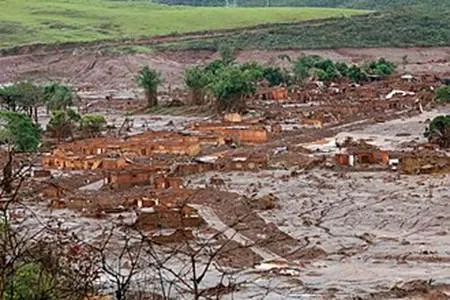
A recent example was the Mariana dam disaster in Minas Gerais, Brazil. On November 5, 2015, the Fundão tailings dam at the Germano iron ore mine suffered a catastrophic failure, resulting in flooding that destroyed two villages, killing 19 people. The dam failure released 1.54 billion cubic feet (43.7 million cubic meters) of mine tailings into the Rio Doce River, causing a toxic mudflow that polluted the river and beaches when it reached the Atlantic Ocean 17 days later. The incident produced an estimated $30 billion in direct damages and legal compensation.
|
|
|
|
|
|
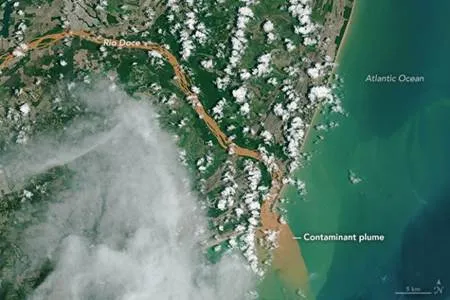
Control and prevention of TSF failure is accomplished by risk analysis of the initial site and subsequent raises, including geographical, earth movement, and weather event frequencies and severities; good engineering design of the impoundment appropriate to the terrain and operation; day-to-day management including filling and managing water and sand beaches; frequent inspections including seepage, cracks, and subsidence; automated real-time earth movement detection such as piezometers, inclinometers, pressure cells, seepage weirs, and satellite monitoring; and emergency response procedures.
In addition to many country regulations, voluntary TSF guidelines include the International Council on Mining and Metals (ICMM) Global Industry Standard on Tailings Management and the Mining Association of Canada (MAC) Tailings Guide. In 2019, the Church of England Pensions Board created the Investor Mining and Tailings Safety Initiative (IMTSI).
This includes over 100 mine industry investors with more than $25 trillion in assets that now require the mines they invest in to adopt tailings safety management principles. It sets a precedent for investor‑driven environmental governance.
Key Takeaways
The most frequent and common risks in minerals processing facilities are fire and breakdown of long lead-time equipment. The most severe risk is a TSF failure. A severe fire, critical-equipment breakdown, or tailings failure can disrupt the supply chain, damage difficult-to-replace assets, and interrupt production for months or years.
Effective risk evaluations should:
identify credible property-damage and business-interruption scenarios
determine whether critical systems contain single points of failure
evaluate the capacity, independence, and reliability of protective systems
consider equipment lead times, strategic spares, access, and repair capability
confirm that emergency plans include defined action thresholds
establish how production can be maintained or restored following a major loss.
Our Services
Risk Logic can help evaluate mineral processing industry risks and recommend protection solutions, preventive maintenance, and property loss control programs. Please contact us to schedule a property risk survey by one of our mining specialists.
Resources
For additional loss prevention and protection advice for the mining industry, refer to the following standards:
-
FM Loss Prevention Data Sheet 5-17, Motors, and Adjustable Speed Drives
-
FM Loss Prevention Data Sheet 7-12, Mining and Mineral Processing
NFPA 122, Standard for Fire Prevention and Control in Metal/Nonmetal Mining and Metal Mineral Processing Facilities
About the author:
Larry Moore, PE, spent over 50 years conducting fire and explosion risk surveys, hazard assessments, loss investigations and geotechnical studies in the mining and related industries while working for Factory Mutual Engineering and Research and FM Global (now FM). He visited over 2500 industrial sites including an estimated 400 mines and mineral and metal processing facilities in over 70 countries during his career. He developed mine and other industry fire protection standards for FM, the National Fire Protection Association (NFPA) and the American Institute of Chemical Engineers (AIChE) and was chair of the NFPA mining facilities standards committee for ten years.
He has made numerous presentations and published technical papers on processes and risks of the mining industries including solvent extraction. When he retired from FM he was corporate Staff Vice President and Principal Engineer for the mining and metallurgical refining industries. He is an elected Fellow of AIChE, a past member of the Society of Mining Engineers and is a registered professional engineer in Fire Protection Engineering, Commonwealth of Massachusetts. He now consults for Risk Logic Inc., specializing in the chemical, metallurgical and mining industries, and resides in Colorado.
Read more in: