Ankeny Lawn Care Facility Fire Highlights Need for Flood and Fire Risk Management
Flood and Fire Risk Management must go hand-in-hand to prevent localized emergencies from becoming significant property losses. The recent disaster at an Ankeny lawn care facility exposed a critical vulnerability: flash flooding completely cut off emergency access, leaving a major structure fire to burn unchecked for 13 hours. Protecting facilities means looking beyond water damage and preparing for the compound hazards that emerge when the water rises.
The Ankeny lawn care facility fire highlights the need for compound flood and fire risk management, particularly when rising water blocks emergency access and threatens critical utilities. On July 3, 2026, flash flooding from Fourmile Creek surrounded Nolte and Sons Lawn and Irrigation in Ankeny, Iowa, after heavy overnight rainfall across central Iowa. The business estimated that nearly 13 hours passed before floodwaters receded enough for firefighters to reach the property and extinguish the fire. Initial public reports focused on the destruction of the building and did not provide a casualty or environmental impact assessment.
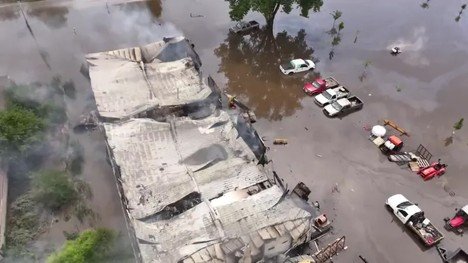 Flooding isolated the burning facility, creating significant challenges for emergency responders and highlighting the importance of integrated flood and fire emergency planning. (Image Source: Nolte and Sons Lawn and Irrigation via Yahoo)
Incident Overview & Risk Factors
The National Weather Service reported that rainfall totals of 5 to 10 inches were common across parts of northern Polk and southern Story counties during the overnight storms. Floodwater reached the business before the fire started, leaving roads and site access underwater. Once the fire developed, crews could not position apparatus close enough for effective suppression until water levels fell. The ignition source and status of any automatic fire protection were not publicly identified, making loss of fire department access the clearest confirmed factor in the severity of the property loss.
The incident also illustrates a broader exposure to flood-prone facilities. Rising water can impair hydrants, fire pumps, alarm equipment, sprinkler controls, electrical distribution, and emergency power if critical components are not protected above expected flood elevations. Flooded electrical equipment can create shock and arc-flash hazards that delay safe entry and complicate restoration. Even a properly designed sprinkler system may be compromised if its water supply, pump controller, power source, or alarm transmission equipment becomes unavailable.
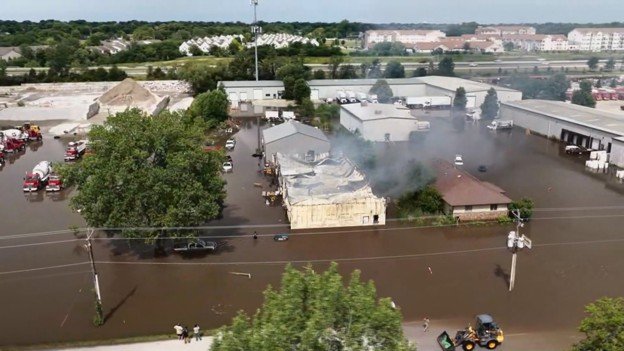 Floodwaters engulf roads and businesses surrounding the fire scene in Ankeny, where hazardous conditions delayed firefighting operations for nearly 13 hours. (Image Source: weareiowa.com)
Property Loss & Insurance Implications
Fire severity is shaped not only by ignition and fuel load, but also by the availability of suppression. When floodwater blocks primary and secondary access routes, a localized fire can spread through a building, increasing the likelihood of structural collapse, equipment destruction, inventory contamination, debris disposal costs, and prolonged business interruption. Insurers should evaluate flood access, utility vulnerability, and continuity of water-based fire protection together with construction, occupancy, and sprinkler design.
FM Property Loss Prevention Data Sheet 1-40, Flood, recommends combining permanent flood mitigation with emergency actions. FM Data Sheet 10-1, Pre-Incident and Emergency Response Planning, calls for coordinated planning across hazards, including fire, explosion, and flood, in partnership with local emergency services. NFPA 1660, Standard for Emergency, Continuity, and Crisis Management: Preparedness, Response, and Recovery, also supports an integrated approach to emergency planning and pre-incident response.
Facilities should:
-
Determine flood elevations and road-closure thresholds that could restrict fire department access.
-
Coordinate pre-incident plans, alternate apparatus routes, and staging locations with the local fire department.
-
Elevate or protect fire pump controllers, alarm panels, electrical switchgear, emergency generators, and fuel supplies.
-
Establish safe, selective utility shutdown procedures that preserve required fire protection and life safety systems.
-
Test fire pumps, valves, alarms, emergency communications, and flood barriers before severe weather season.
-
Maintain current utility and responder contact lists, including after-hours escalation procedures.
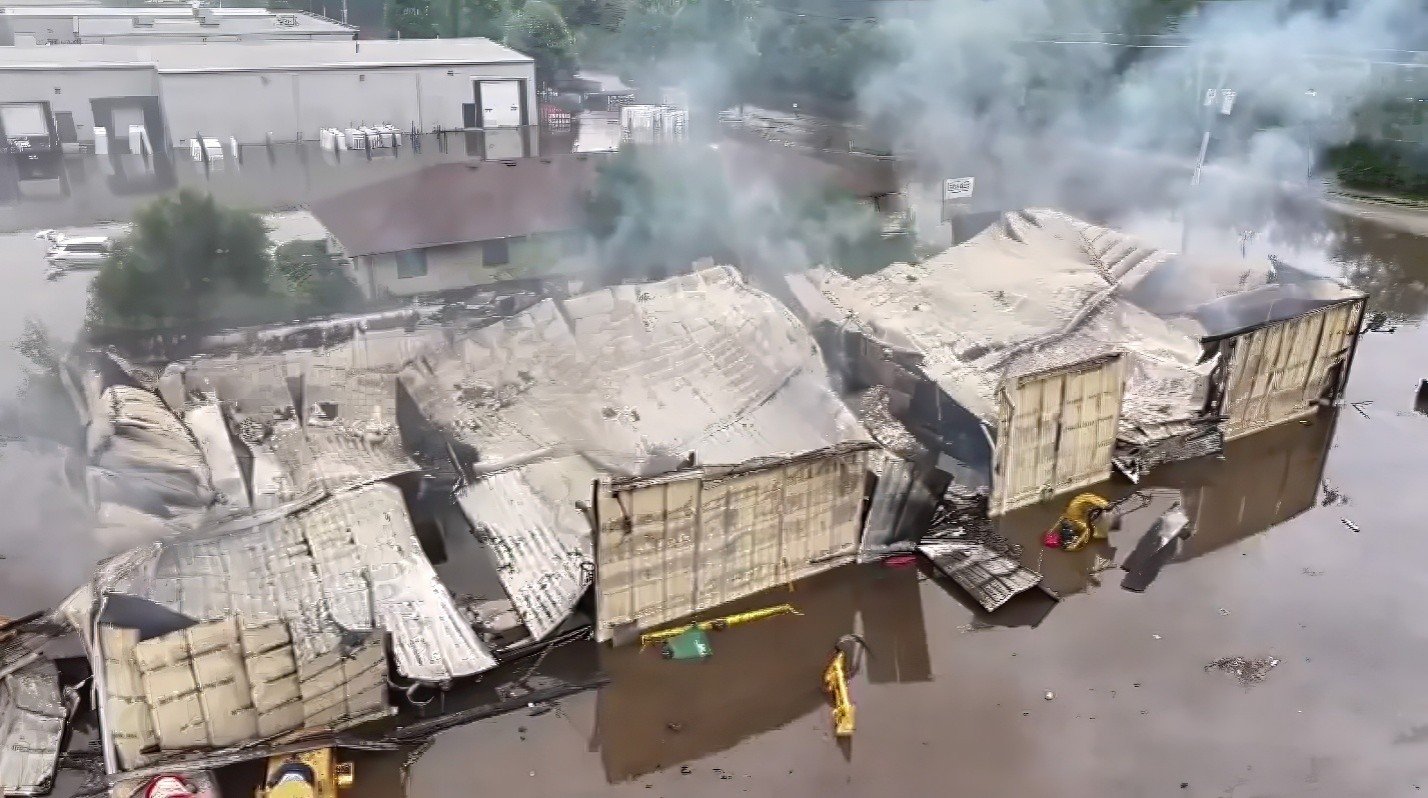 Floodwaters surround the burning Ankeny business as smoke continues to rise from the structure, with emergency crews unable to reach the fire due to submerged roadways. (image Source: Nolte and Sons Lawn and Irrigation via Yahoo)
Risk Logic Perspective: Compound Flood and Fire Risk Management
Flood emergency plans should explicitly address the possibility of a simultaneous fire. Utility isolation procedures should identify who may order a shutdown, how the electric utility will be contacted, and which fire protection loads must remain available. Electrical equipment in flooded areas should be approached only by qualified personnel, and water-exposed systems should be evaluated before re-energization. Facility risk assessments should also consider secondary water supplies, remote monitoring of sprinkler and fire pump status, and elevated locations for critical controls.
Annual drills should validate contact lists, decision thresholds, shutdown responsibilities, and coordination with first responders before severe weather arrives. Exercises should include flood conditions that occur outside normal business hours. Post-event reviews should document access failures, protection impairments, and corrective actions so the plan improves after each flood warning or emergency.
Risk Logic engineers help facilities identify where flood exposure can disable fire protection or delay emergency response, then develop practical loss prevention improvements. Contact Risk Logic to discuss a site-specific review of flood, utility, and fire protection resilience.
Bottom Line: Flood emergency planning must preserve fire protection, utility control, and responder access because delayed suppression can turn a localized fire into a total property loss.