Parkersburg Warehouse Fire Highlights Sprinkler Impairment and Plastic Commodity Storage Risks
A July 2026 fire at a Parkersburg, West Virginia warehouse complex highlighted the critical risk of automatic fire protection impairments. Although initial flames were controlled by local firefighters and the facility's suppression system, a hotspot reignited the following morning while the sprinkler system was offline for repairs. The resulting multi-day blaze underscores the importance of strict impairment procedures and routine risk management reviews for commercial storage facilities.
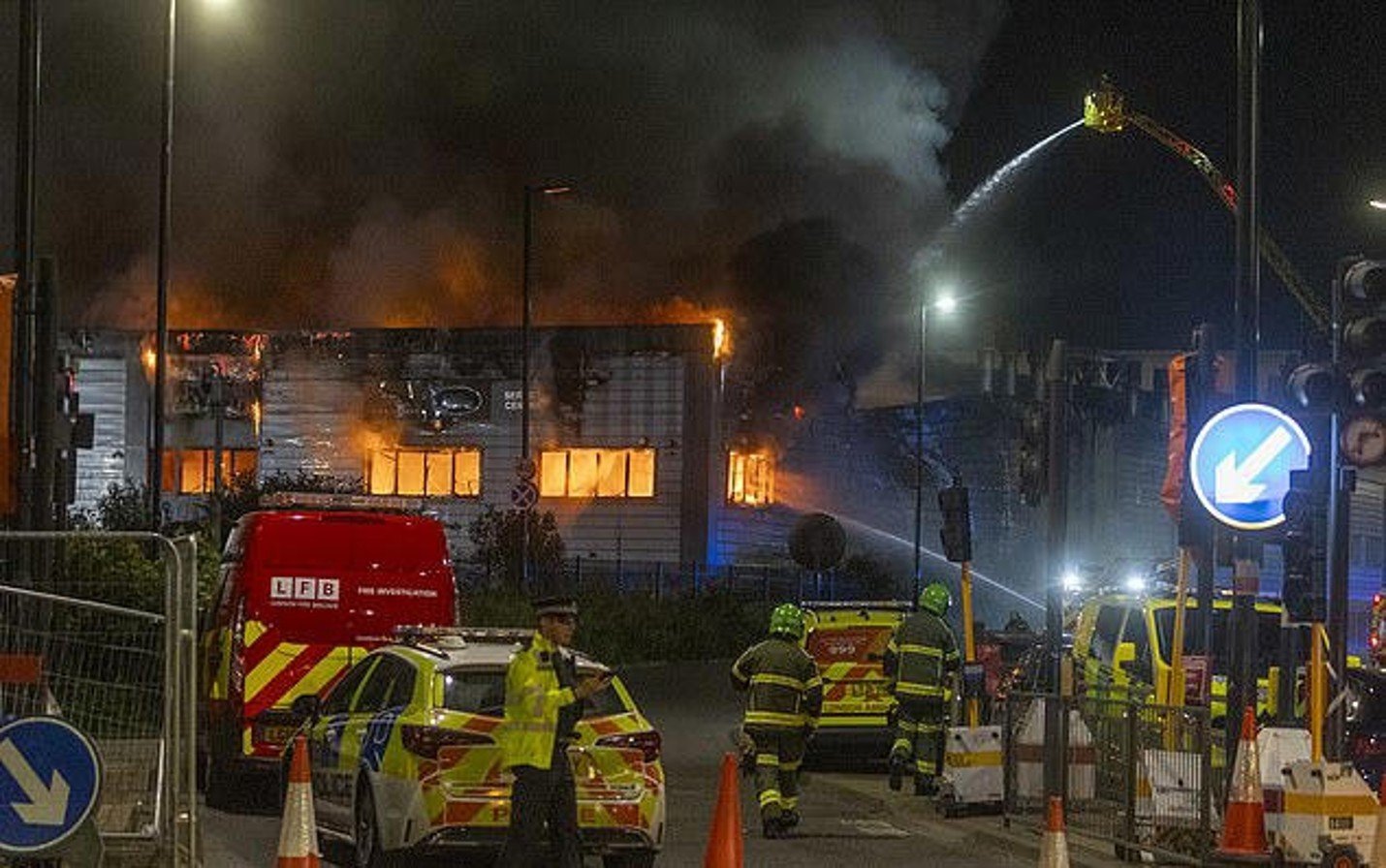
A July 4 and 5, 2026, fire at the Peoples Cartage Inc. warehouse complex on Camden Avenue in Parkersburg, West Virginia, damaged multiple storage buildings, drew responders from across Wood County and nearby jurisdictions, and prompted a state of emergency for Wood County. Parkersburg Warehouse Fire Highlights Sprinkler Impairment and Plastic Commodity Storage Risks because officials said an initial fire was controlled by the facility fire suppression system and local firefighters, then reignited the next morning while sprinkler protection was down. No injuries were reported, but authorities issued a precautionary shelter-in-place east of the site, environmental teams monitored conditions, and officials said the fire was extinguished by July 8.
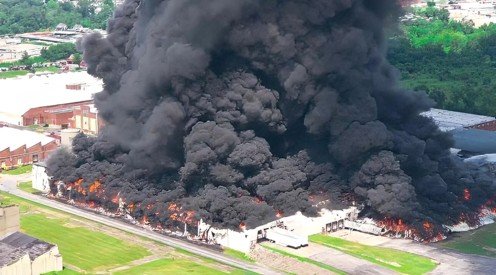 Heavy black smoke rises from the Peoples Cartage warehouse in Parkersburg, West Virginia, as firefighters respond to a storage occupancy fire involving combustible materials and impaired fire protection.
Incident Overview & Risk Factors
According to company officials and emergency responders, the incident began on Saturday, July 4, when a fire occurred inside one of the Camden Avenue warehouse buildings. The facility's automatic sprinkler system activated and helped limit the initial fire. After firefighters extinguished the blaze, the sprinkler system remained out of service because repairs were required before it could be safely reactivated.
Early the following morning, July 5, a hotspot reignited, allowing the fire to spread rapidly through portions of the warehouse complex. Fire departments from across Wood County and neighboring jurisdictions responded as thick black smoke blanketed the area. Officials issued a shelter-in-place advisory for nearby residents due to smoke conditions while emergency crews worked to contain the fire.
The exact cause remains under investigation. However, the sequence of events illustrates several common warehouse fire hazards, including combustible storage, concealed fire spread, rekindling after initial suppression, and the elevated risk created when automatic fire protection systems are impaired.
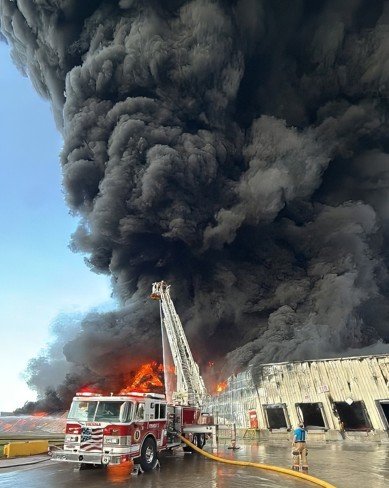 Aerial ladder streams are deployed against a rapidly growing warehouse fire, illustrating the challenges of controlling large industrial storage fires once they become fully involved.
Property Loss & Insurance Implications
Warehouse losses can extend beyond damaged buildings. Insured exposures may include inventory, racking, lift equipment, building systems, debris removal, environmental monitoring, business interruption, contingent business interruption, and third-party smoke or nuisance claims.
NFPA 13 addresses sprinkler system design and installation, while NFPA 25 provides the baseline for water-based fire protection inspection, testing, and maintenance. FM Data Sheet 8-9 provides storage protection guidance for plastic commodities, and FM Data Sheet 10-7 emphasizes that impaired sprinklers, pumps, or water supplies create an unusual fire hazard. Our article on 4 Critical Loss Lessons from Large Warehouse Fires also highlights preplanning and impairment audits for large storage facilities.
Key prevention measures include:
Verify that sprinkler design matches current commodities, storage heights, rack layouts, and ceiling heights.
Classify plastics, rubber, batteries, aerosols, flammable liquids, and other special hazards before layout changes.
Maintain aisle clearance, flue spaces, fire doors, firewalls, and firefighter access routes.
Use formal impairment procedures with tags, notifications, fire watch, ignition control, and insurer involvement.
Restore sprinkler protection quickly, then verify valves, alarms, pumps, and drains before ending the impairment.
Use thermal imaging, extended overhaul, documented fire watch, and follow-up inspections after storage fires.
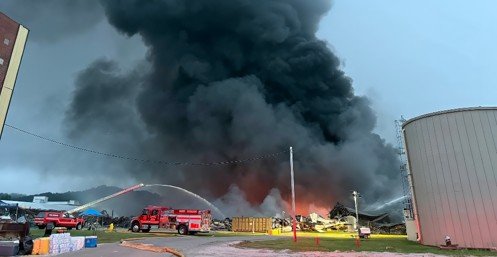 Smoke brings emergency response activity near the Camden Avenue warehouse.
Risk Logic Perspective: Sprinkler Impairment and Plastic Commodity Storage
Facility leaders should evaluate warehouse fire protection as an integrated system. Sprinklers, fire pumps, water supplies, valves, alarms, fire doors, storage layout, emergency response plans, and impairment procedures must function together during the early stages of a fire. A single disabled or unsuitable protection element can allow fire growth to exceed the capacity of manual firefighting.
Risk managers should review warehouse layouts whenever commodities, packaging materials, rack configurations, automation, or storage practices change. These reviews should compare actual storage against sprinkler design criteria and applicable NFPA and FM guidance. Where facilities store plastic or polymer-based commodities, engineering review is especially important because fire growth, smoke production, and water demand can increase rapidly.
Post-incident procedures deserve the same discipline as pre-fire prevention. After any fire, facility management should maintain fire watch, restrict ignition sources, and keep responders informed. A documented impairment plan should stay active until sprinkler protection and alarm supervision are fully restored.
Risk Logic engineers help facilities identify fire hazards, evaluate sprinkler and water supply reliability, and implement tailored loss prevention strategies. Contact Risk Logic to strengthen impairment management and warehouse fire protection programs.
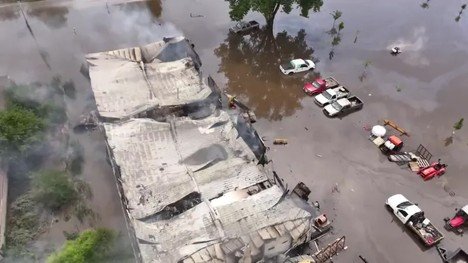
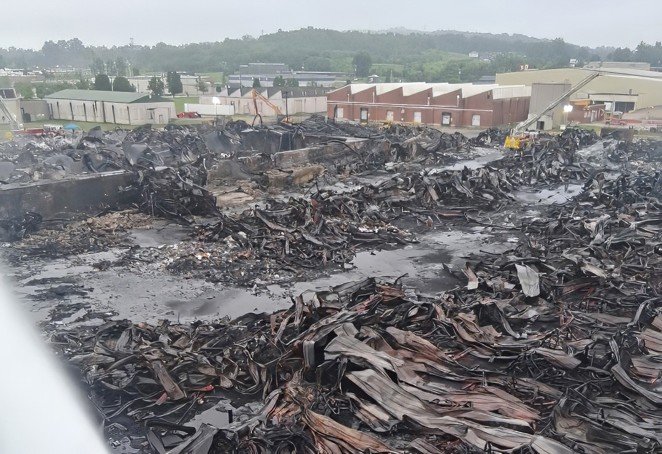 An aerial view of the damaged storage complex shows the large-loss potential of combustible commodities, concealed heat, and delayed restoration of automatic fire protection.
Bottom Line
The Parkersburg warehouse fire shows how quickly combustible storage can become a severe property loss when a rekindle occurs during a sprinkler impairment.