Gas City Distribution Center Fire Highlights Ammonia Refrigeration and Business Continuity Risks
A localized utility plant fire in Gas City, Indiana, triggered ammonia leaks and a specialized hazmat response. Explore key property loss insights, maintenance best practices, and emergency planning controls to prevent business interruption.
A July 15, 2026, fire involving a condensing unit at the Walmart Distribution Center in Gas City, Indiana, demonstrated how a localized refrigeration equipment failure can create fire, hazardous materials, and business interruption concerns. The Gas City Fire Department crews were dispatched at approximately 7:50 a.m. and encountered heavy smoke and fire on the south side of the building near the facility’s energy center.
Walmart personnel evacuated the building while firefighters attacked the fire and requested mutual aid from the Mill Township Volunteer Fire Department. Crews brought the fire under control within approximately 20 to 30 minutes. No injuries were reported. According to the Gas City Fire Department’s incident release, the fire remained confined to its area of origin, and the facility returned to full operation later that afternoon.
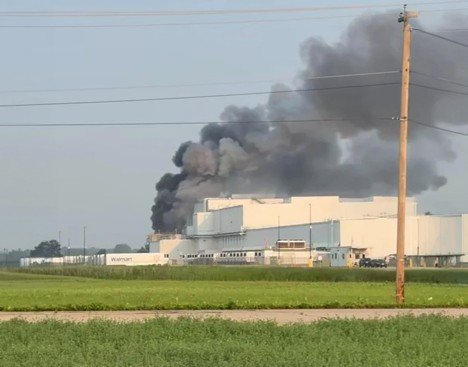 Refrigerated equipment Fire at distribution center. (Photo Credit: Gas City Volunteer Fire Dept.)
Incident Overview & Risk Factors
During the initial response, firefighters determined that the facility’s ammonia refrigeration system had been compromised and was leaking. Marion Fire Department Hazmat, the Indiana Department of Environmental Management, and Indiana Department of Homeland Security Hazmat assisted with containment and continuous air monitoring. Responders secured the leaks and tested the building’s air quality before clearing the structure.
The investigation remained open when the fire department issued its statement. Officials reported that the incident did not appear suspicious and appeared to involve a mechanical failure in the cooling system, but they did not identify the specific component or failure mode.
Industrial refrigeration systems depend on compressors, condensers, motors, fans, bearings, electrical equipment, controls, valves, and piping operating under demanding conditions. Deterioration or failure in any of these components can produce overheating, arcing, vibration, or physical damage. If a fire exposes ammonia piping or equipment, the incident can quickly expand beyond the original equipment loss and require evacuation, leak isolation, atmospheric monitoring, and specialized hazardous materials response.
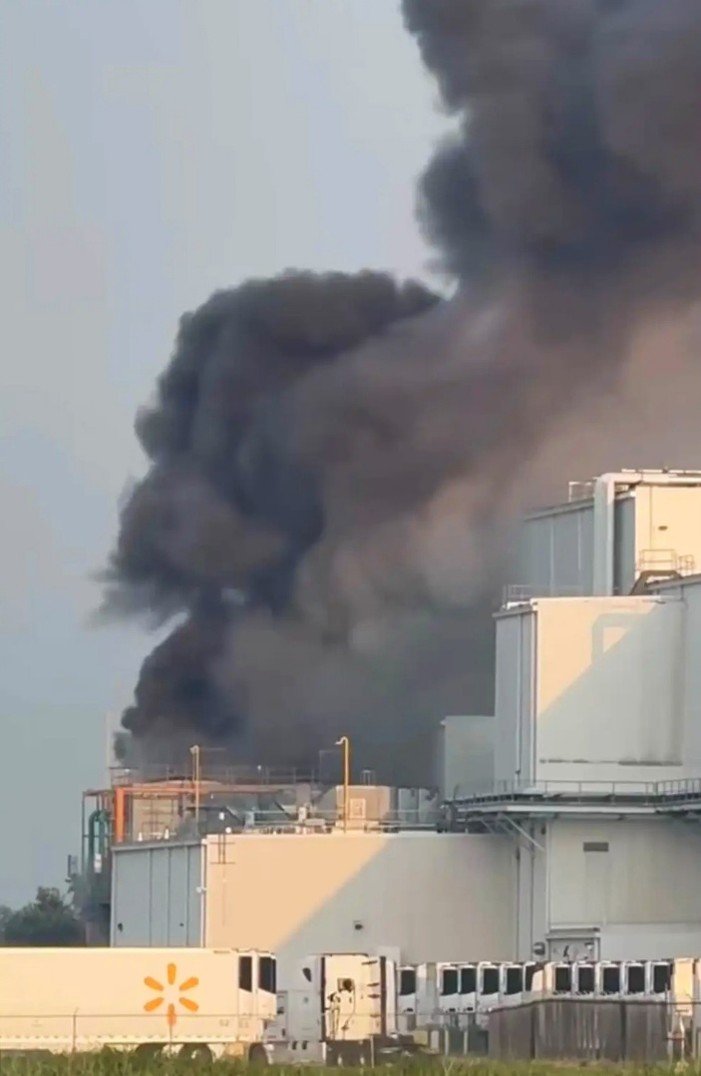 Refrigeration equipment fire. (Photo Credit: Gas City Volunteer Fire Dept.)
Property Loss & Insurance Implications
The Gas City distribution center fire illustrates how refrigeration equipment reliability can affect fire protection, product preservation, worker safety, and continuity of operations. FM loss experience documented in Data Sheet 7-13, Mechanical Refrigeration, identifies mechanical breakdown as the leading refrigeration loss category by frequency and includes machinery-room fires that resulted in ammonia releases.
Facilities should consider the following controls:
Include compressors, motors, condensers, fans, bearings, and controls in condition-based maintenance programs.
Use vibration analysis, infrared thermography, lubrication management, and electrical testing to identify developing equipment problems.
Inspect and maintain ammonia piping, valves, pressure-relief devices, gas detection, ventilation, and emergency shutdown systems.
Inspect, test, and maintain water-based fire protection systems in accordance with the adopted edition of NFPA 25.
Maintain documented impairment procedures and contingency plans for refrigeration or fire protection outages.
Coordinate pre-incident planning with the local fire department and hazardous materials responders.
ANSI/IIAR 6-2025 establishes inspection, testing, maintenance, and recordkeeping requirements for closed-circuit ammonia refrigeration systems. ANSI/IIAR 2 addresses safe system design, including detection and machinery-room ventilation.
Risk Logic Perspective: Refrigeration System Reliability
Facility owners should treat industrial refrigeration as both critical production equipment and a significant property-risk system. Maintenance strategies should reflect equipment condition, operating history, manufacturer recommendations, and the consequences of failure. Deficiencies involving abnormal vibration, elevated temperatures, refrigerant leakage, electrical deterioration, or impaired safety controls require timely evaluation and correction.
Emergency plans should identify system isolation points, shutdown responsibilities, evacuation procedures, responder access, and recovery priorities. Periodic drills and pre-incident reviews can help facility personnel and emergency responders manage a combined fire and ammonia release without unnecessary delay.
Risk Logic engineers help facilities evaluate critical equipment, fire protection, and business continuity exposures and develop practical loss prevention strategies. Contact Risk Logic to learn more.
Bottom Line: Reliable maintenance, effective fire protection, and coordinated emergency planning can prevent a localized refrigeration equipment failure from becoming a prolonged property and business interruption loss.