Circleville Wood-Processing Plant Explosion Highlights Combustible Dust and Equipment Risks
A machinery explosion and fire at a Circleville, Ohio wood-processing facility underscore the critical need to evaluate combustible dust, process equipment, and explosion isolation safeguards.
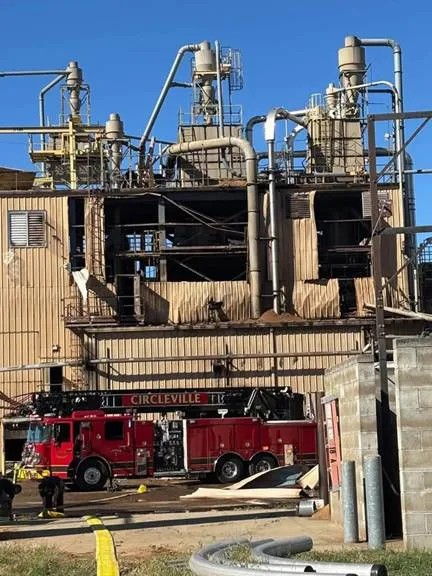
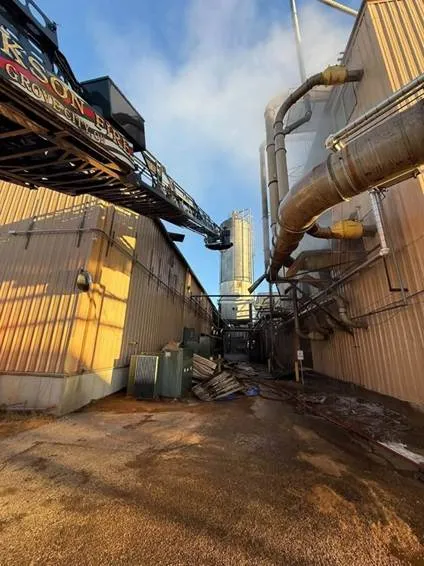
A reported machinery explosion followed by fire at a wood-processing facility in Circleville, Ohio, on October 18, 2026, highlights the need to evaluate process equipment, dust collection systems, and explosion safeguards in facilities handling wood fibers and other combustible particulate materials. The Circleville wood-processing plant explosion occurred at approximately 7 a.m. in a rear outbuilding, according to reporting based on information from the Pickaway Township Fire Department. Responding firefighters found debris scattered around the area along with smoke and flames coming from the structure.
Multiple fire departments responded, and crews used aerial ladder equipment to control the fire before conducting extensive overhaul to identify and extinguish remaining hot spots. The cause remains under investigation.
Incident Overview: Circleville Wood-Processing Plant Explosion Risks
Wood-processing facilities can generate significant quantities of sawdust, wood flour, fibers, and other fine particulate materials. When sufficiently fine combustible material becomes suspended in air at an ignitable concentration and encounters an ignition source, a deflagration can occur. NFPA identifies wood dust as a combustible dust hazard and notes that woodworking facilities can contain both substantial fuel loading and numerous potential ignition sources.
The exact equipment involved in the Circleville explosion has not been publicly identified. However, process machinery, pneumatic conveying systems, ducts, cyclones, dust collectors, storage equipment, bearings, and material-handling systems should all be considered during combustible dust and fire risk assessments.
FM Data Sheet 7-76, Combustible Dusts, specifically addresses wood dust and provides guidance for dust collectors, processing and storage equipment, explosion protection, and other combustible dust hazards. FM Data Sheet 7-10, Wood Processing and Woodworking Facilities, provides additional property protection guidance specific to these occupancies.
Property Loss & Insurance Implications
A localized explosion involving process equipment can develop into a much larger property loss if fire or pressure propagates through interconnected ductwork, conveying systems, collectors, or adjacent equipment. Secondary explosions can be particularly damaging when an initial event disturbs accumulated dust and creates additional combustible dust clouds.
NFPA 660, Standard for Combustible Dusts and Particulate Solids, is now the consolidated NFPA standard addressing combustible dust hazards, including wood and cellulosic material processing. The 2025 edition incorporated requirements that were previously contained in standards including NFPA 652 and NFPA 664.
Key loss-prevention measures include:
Conduct and periodically update a Dust Hazard Analysis for processes that generate or handle combustible particulate materials.
Capture dust at the point of generation and maintain effective local exhaust and dust collection systems.
Inspect ducts, collectors, cyclones, fans, bearings, conveyors, and process machinery for overheating, friction, wear, and material buildup.
Maintain rigorous housekeeping to prevent hazardous dust accumulations on equipment, floors, structural members, and concealed surfaces.
Evaluate explosion venting, suppression, or other damage-limiting protection where an equipment explosion hazard exists.
Provide explosion isolation where necessary to prevent flame and pressure from propagating through connected ductwork and equipment.
Maintain automatic sprinkler protection appropriate for the occupancy and combustible loading.
Control ignition sources through electrical maintenance, hot-work procedures, bonding and grounding, and preventive maintenance.
FM Data Sheet 7-17, Explosion Protection Systems, emphasizes explosion isolation and appropriately designed venting or suppression where deflagration hazards cannot otherwise be eliminated.
Risk Logic Perspective: Combustible Dust and Wood Processing
Combustible dust risk assessments should follow the entire material path, from the equipment that generates particulate material through ductwork, collectors, transfer systems, storage bins, and final disposal or reuse. A safeguard at one piece of equipment may not adequately protect connected systems from fire or explosion propagation.
Facility inspections should verify that the Dust Hazard Analysis reflects current processes, that explosion protection and isolation systems remain properly configured, and that preventive maintenance addresses bearings, motors, collectors, fans, conveyors, and other potential ignition sources. Changes in production rates, materials, equipment, or duct configurations should also trigger a review of existing safeguards.
Additional guidance is available in Risk Logic's Combustible Dust Hazard Analysis resource.
Risk Logic engineers help facilities identify combustible dust, process equipment, fire protection, and explosion hazards and develop practical loss prevention strategies. Contact Logic for a complete hazard review of your wood processing facility.
Bottom Line: Wood-processing facilities require coordinated dust control, equipment maintenance, explosion protection, isolation, and fire protection because a localized machinery event can escalate through interconnected processing systems.