Data Center Electrical Fire Protection: Lessons from the Hillsboro Incident
A localized UPS cabinet fire can trigger facility-wide outages and major business interruption. Explore key NFPA and FM Global standards to safeguard your data center's critical electrical infrastructure.
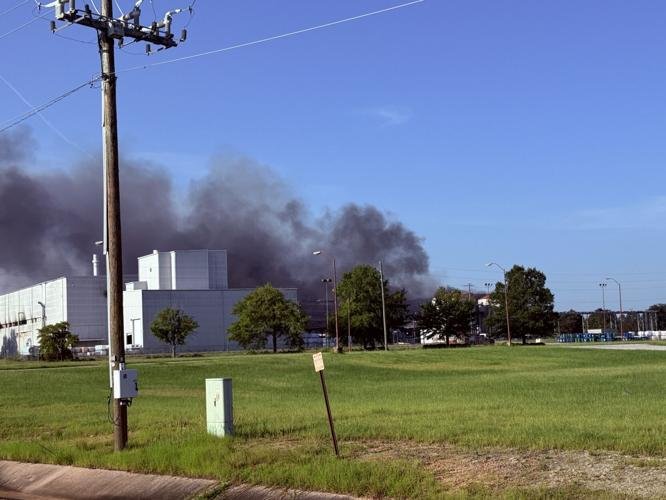
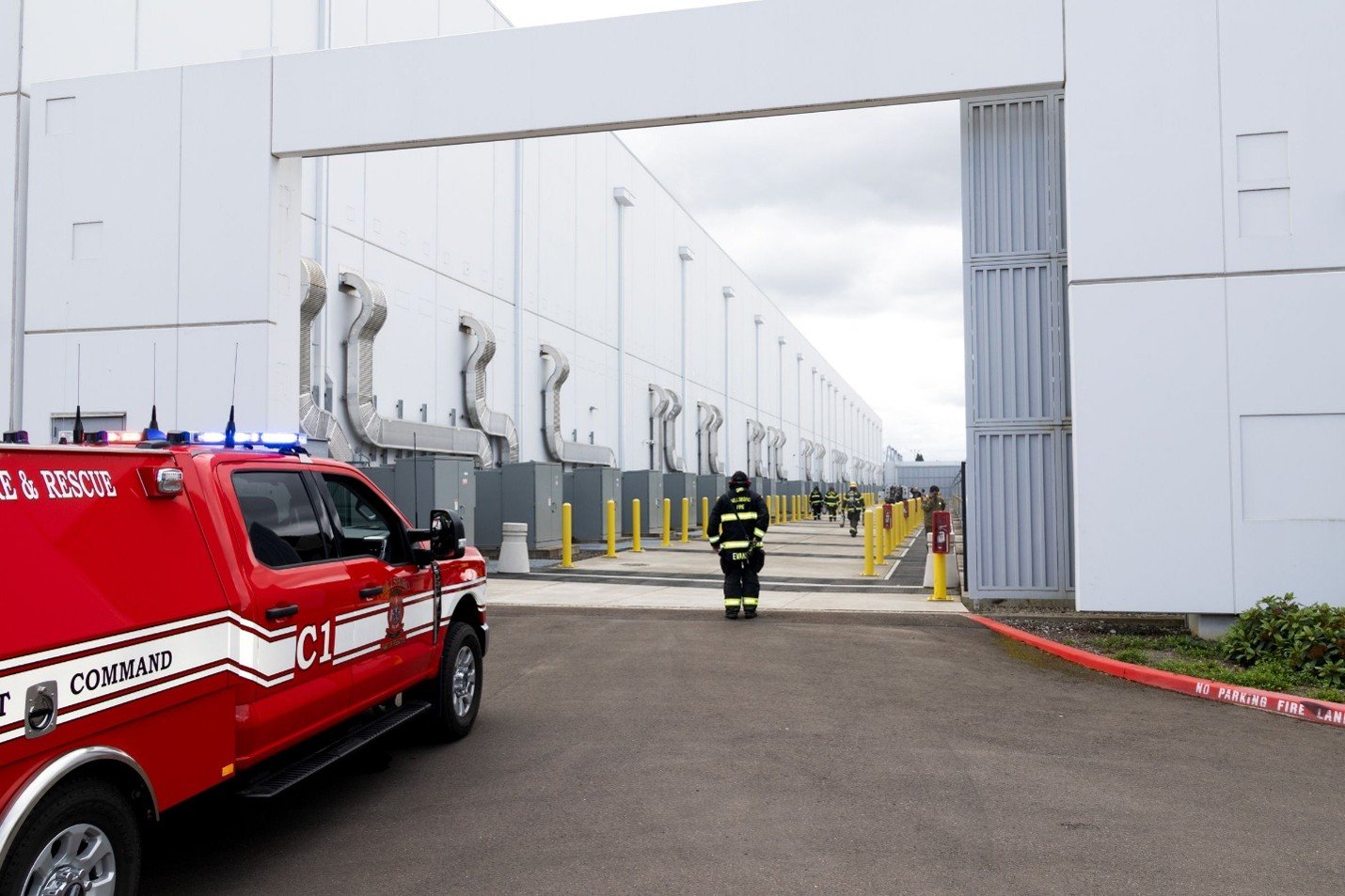
Implementing comprehensive data center electrical fire protection requires looking beyond servers and lithium-ion batteries. A May 22, 2025 fire at Digital Realty’s PDX11 data center in Hillsboro, Oregon, demonstrates how a localized electrical equipment fire can threaten the reliability of mission-critical operations. Hillsboro Fire & Rescue responded to the facility at approximately 10:20 a.m. after the building’s fire alarm system reported the incident. Crews encountered heavy smoke and an energized electrical cabinet burning inside a second-floor UPS room. All personnel were safely evacuated, and no injuries were reported.
The Hillsboro data center fire was initially reported as involving batteries. A subsequent fire investigation, however, traced the origin to a 250 kVA, 400/480 V power cabinet associated with the facility’s uninterruptible power supply system. Digital Realty later confirmed that the incident was electrical in nature and was not caused by lithium-ion batteries.
Incident Overview & Risk Factors
Firefighters entering the approximately 1,700-square-foot UPS room encountered dark smoke from floor to ceiling and heard small explosive sounds from behind the doors. The electrical equipment remained energized, requiring crews to use multiple CO2 and dry chemical extinguishers to control the fire while waiting for the system to be de-energized. The fire remained confined to the UPS room, but one power cabinet was heavily damaged, and adjacent equipment was also affected.
Investigators determined that the fire originated inside one power cabinet and appeared to vent upward through the enclosure. The exact ignition source could not be determined. The investigation did not rule out an electrical or mechanical failure, and combustible plastic components within the cabinet were identified as a likely first fuel.
Reported direct property damage was approximately $250,000 to $260,000; replacement time for the damaged equipment was unavailable. More importantly from a property insurance perspective, the incident caused an hours-long loss of power to the building. X, which was reported to use the facility, experienced service disruptions during the same period and acknowledged a data center outage, illustrating how damage to a relatively small portion of a data center's electrical infrastructure can create operational consequences far beyond the immediate fire area.
Property Loss & Data Center Electrical Fire Protection
Data centers concentrate substantial values in electrical distribution, UPS equipment, servers, networking equipment, and cooling infrastructure. Smoke from burning plastics and electrical components can also contaminate sensitive equipment outside the immediate fire area, increasing restoration costs and delaying return to service.
To improve data center electrical fire protection, FM Property Loss Prevention Data Sheet 5-32, Data Centers and Related Facilities, recommends regular inspection, testing, and maintenance of critical electrical systems, detailed power-isolation procedures, business continuity planning, and pre-incident coordination with the fire service. NFPA 75, Standard for the Fire Protection of Information Technology Equipment, and NFPA 70B, Standard for Electrical Equipment Maintenance, also provide relevant guidance for protecting and maintaining mission-critical electrical infrastructure.
Key loss prevention measures include:
Maintain a documented electrical preventive maintenance program for UPS systems, switchgear, connections, and associated distribution equipment.
Use infrared thermography and other condition-monitoring techniques to identify abnormal heating before equipment failure.
Provide appropriate automatic smoke detection for all areas.
Develop and periodically test a power-isolation plan that allows responders to quickly de-energize affected equipment without unnecessarily disabling unaffected redundant systems.
Physically separate redundant electrical trains and evaluate common-mode failure scenarios.
Maintain equipment contingency plans and critical spare-part strategies for UPS, switchgear, transformers, controls, and other long-lead electrical components.
FM DS 5-32 specifically identifies automatic water-based protection as providing the highest overall level of protection and recommends very-early-warning fire detection for data processing areas. It also emphasizes controlled electrical isolation and formal emergency response planning with the local fire service.
Risk Logic Perspective: Data Center Electrical Reliability
The Hillsboro incident demonstrates that comprehensive data center electrical fire protection cannot focus only on server equipment or lithium-ion batteries. UPS power cabinets, switchgear, transformers, bus systems, cooling equipment, and their associated controls represent critical ignition sources and potential single points of failure.
Facility assessments should evaluate electrical maintenance history, equipment loading, thermal monitoring, fire detection and suppression, equipment separation, power-isolation procedures, and the ability of redundant systems to survive a localized fire. Business interruption studies should also identify critical electrical components whose loss could prevent operation even when the remainder of the building remains physically intact.
Risk Logic's technical article, Property Loss Prevention in AI-Driven Data Centers and Cloud Computing Facilities, provides additional guidance on UPS systems, electrical distribution, fire protection, energy storage, and mission-critical infrastructure.
Risk Logic engineers help data center owners, insurers, and facility operators evaluate electrical fire hazards, fire protection, equipment redundancy, and business interruption exposures. Contact Risk Logic for assistance with data center electrical fire protection assessments and engineering reviews.
Bottom Line: A localized electrical fire can become a significant data center loss when energized equipment, smoke contamination, power interruption, or inadequate system redundancy extends the impact beyond the equipment that burns.