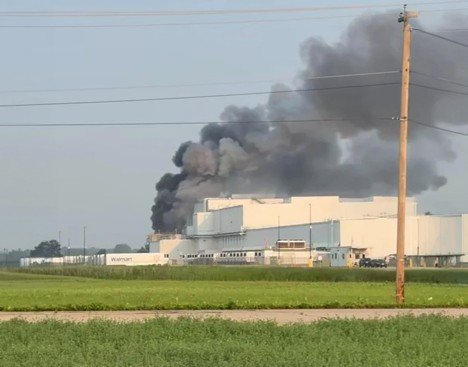
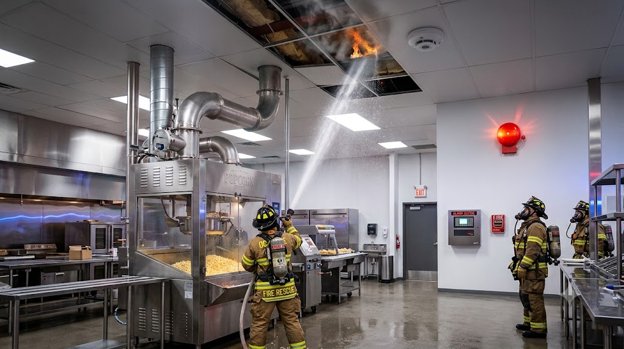
Gironde Wildfire: Protecting Industrial Facilities from Extreme Wildland Fire Exposures
The Gironde wildfire near Bordeaux highlights the growing threat extreme wildland fires pose to industrial, aerospace, and high-hazard facilities. Discover key risk factors, FM/NFPA guidelines, and practical controls to mitigate property damage and business interruption.
The Gironde wildfire highlights industrial wildfire exposure as flames advanced through southwestern France near Bordeaux in late July 2026. At the peak of the emergency, authorities evacuated approximately 220,000 people, while more than 2,200 firefighters and over 20 aircraft worked to control the fire. The wildfire affected approximately 42,000 hectares and threatened communities, transportation networks, military property, and a major aerospace and defense manufacturing corridor.
Emergency measures extended beyond residential evacuations. Several aerospace, defense, chemical, and energy facilities suspended operations, evacuated personnel, relocated sensitive materials, or activated enhanced fire-protection procedures as the fire approached industrial areas near Cestas, Saint-Jean-d’Illac, Saint-Médard-en-Jalles, Martignas-sur-Jalle, and Mérignac. Government and military resources also supported efforts to protect strategically important industrial sites.
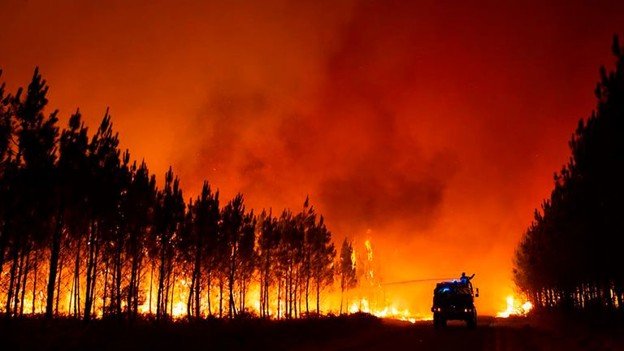 Firefighters battle the Gironde Wildfire near Bordeaux, FR. (Source: Sky News)
Incident Overview & Risk Factors
Extreme heat, dry vegetation, shifting winds, and prolonged drought created conditions for rapid wildfire growth and long-range ember travel. Firefighters reported that rising temperatures and afternoon winds could reactivate smoldering areas, carry embers across firebreaks, and establish new fire fronts. The fire also generated pyrocumulonimbus activity, sometimes called a fire thunderstorm, which contributed to erratic winds, lightning, and additional ignitions.
The industrial wildfire exposure increased the potential consequences. The Bordeaux region includes aerospace manufacturing, defense production, solid-propellant operations, chemical processing, energy infrastructure, and several Seveso-classified high-hazard facilities. While reporting did not indicate a major industrial fire or explosion, the proximity of wildfire to locations containing combustible materials, hazardous chemicals, critical equipment, and high-value production systems created the potential for severe property damage and prolonged business interruption.
Wildfire can ignite an industrial facility through direct flame contact, radiant heat, windborne embers, or burning vegetation and debris. Combustible roof assemblies, exterior insulation, rooftop equipment, plastic skylights, loading areas, idle pallets, outdoor storage, and vegetation near buildings can provide pathways for fire extension. Smoke, ash, utility interruptions, restricted transportation access, and employee evacuations can also halt operations even when flames never reach the facility.
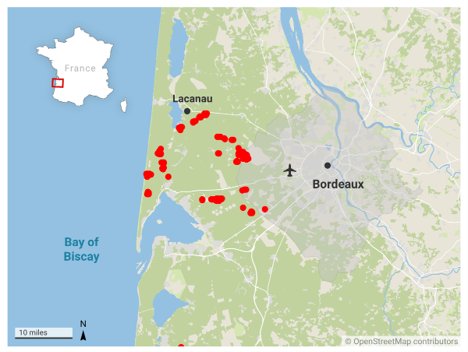 Map of Gironde Wildfire and hot spots.(Source: Mirror.co.uk)
Property Loss & Insurance Implications
The Gironde wildfire demonstrates that industrial wildfire exposure extends beyond traditional residential wildland-urban interface risks. Industrial facilities near forests, grasslands, and unmanaged vegetation require a property-specific assessment that considers building construction, combustible yard storage, critical utilities, emergency access, production hazards, and the availability of public firefighting resources.
FM Data Sheet 9-19, Wildland Fire, addresses wildfire exposure at industrial and commercial properties, while FM Data Sheet 10-1, Pre-Incident and Emergency Response Planning, provides guidance for coordinated emergency planning. NFPA 1140, Standard for Wildland Fire Protection, also addresses hazard assessment, ignition-resistant construction, infrastructure, mitigation, and emergency response planning.
Property owners and insurers should consider the following controls:
Maintain defensible space and remove dead vegetation, brush, and combustible debris around buildings and critical equipment.
Separate pallets, waste containers, vehicles, and outdoor storage from buildings and vegetated areas.
Evaluate roofs, vents, exterior walls, openings, and rooftop equipment for ember-entry vulnerabilities.
Protect flammable liquids, compressed gases, explosives, and hazardous materials from wildfire heat and ember exposure.
Confirm fire pumps, water supplies, emergency generators, and communications systems remain reliable during utility outages.
Establish shutdown, evacuation, material-relocation, and post-fire inspection procedures before wildfire season.
Coordinate pre-incident planning, access routes, and water-supply information with public fire services.
 Planes help fight the Gironde Wildfire. (Source: Sky News)
Risk Logic Perspective: Industrial Wildfire Exposure
Wildfire assessments should evaluate more than vegetation clearance. Facilities need an integrated review of construction, exterior combustibility, outdoor storage, fire-protection reliability, hazardous processes, utility dependencies, and emergency response capabilities. Inspections should also identify locations where embers could enter concealed spaces or ignite combustible materials on roofs, at loading docks, or against exterior walls.
Risk managers should update wildfire exposure assessments as vegetation, neighboring development, production processes, and climate conditions change. Preventive maintenance programs should keep roofs, gutters, yards, hydrants, fire pumps, and emergency equipment ready for severe conditions. Risk Logic’s wildland fire preparedness guidance provides additional considerations for protecting facilities in wildfire-prone areas.
Risk Logic engineers help facilities identify wildfire vulnerabilities, evaluate property protection and emergency response programs, and implement tailored loss prevention strategies. Contact Risk Logic to discuss wildfire exposure assessments and facility resilience.
Bottom Line: Managing industrial wildfire exposure requires defensible space, ignition-resistant construction, reliable protection systems, and coordinated emergency planning to prevent an external wildfire from becoming a major property and business-interruption loss.