Grand Forks Industrial Fryer Fire Highlights Importance of Early Detection and Fire Containment
An industrial fryer fire at a Grand Forks food-processing facility was contained to the equipment with no reported injuries. The event shows how early notification and effective fire containment can prevent a much larger property loss.
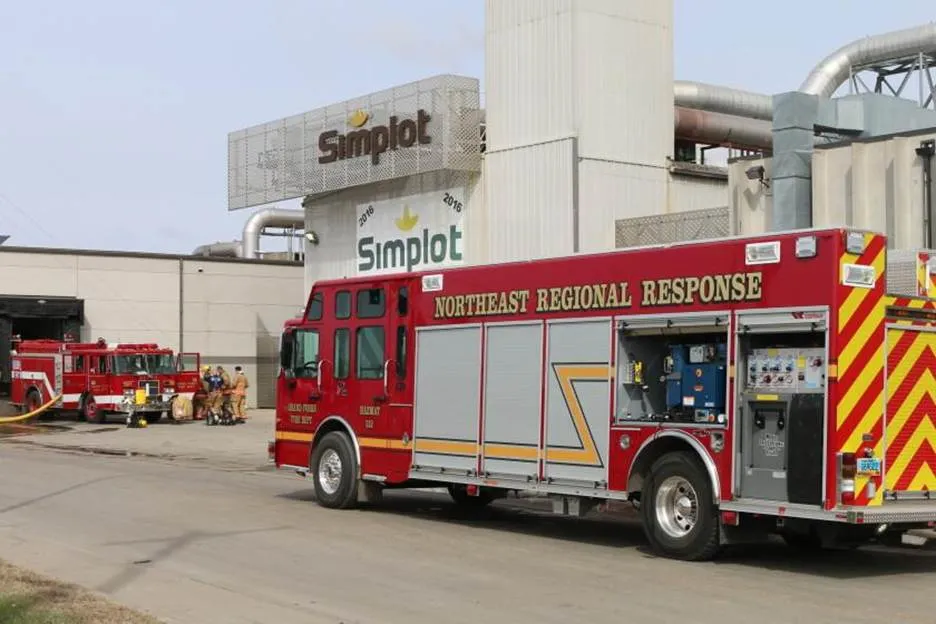
An industrial fryer fire at a food-processing facility in Grand Forks, North Dakota, on November 4, 2026, demonstrates how early alarm notification and rapid fire containment can prevent a high-hazard equipment fire from becoming a major property loss. The Industrial Fryer Fire was reported at approximately 12:29 a.m. after a waterflow activation alarm prompted the Grand Forks Fire Department response. While crews were en route, the incident was upgraded to a working structure fire.
Firefighters arrived to find smoke and flames visible from the roof and heavy smoke with an active fire around a large industrial fryer. Crews worked with on-site personnel to contain and extinguish the fire before it spread beyond the equipment. Fire damage was reportedly limited to the fryer; no injuries occurred, and investigators classified the fire as accidental. The specific mechanical or operational cause has not been publicly identified.
Incident Overview & Industrial Fryer Fire Risk Factors
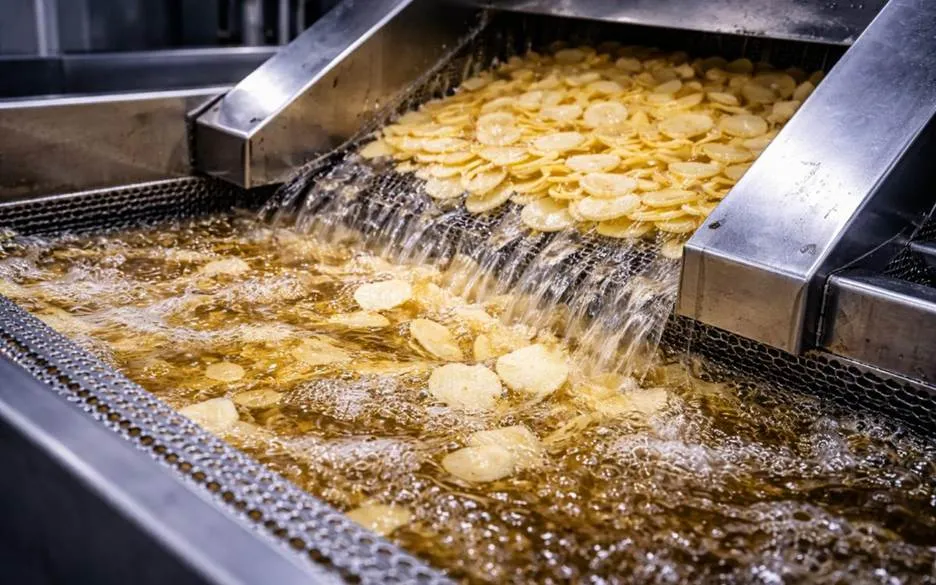
Industrial fryers can hold thousands of gallons of cooking oil and operate at elevated temperatures. Cooking oil represents a significant fuel source, while burners, heat-transfer systems, electrical equipment, conveyors, and hot surfaces introduce potential ignition sources. If oil overheats or is released from the fryer, fire severity can increase rapidly.
FM Data Sheet 7-20, Oil Cookers, identifies industrial oil cookers and fryers as serious processing hazards because cooking oils can be overheated to ignition, while product residue can self-heat and ignite surrounding oil. FM recommends controls addressing equipment arrangement, automatic protection, alarms and interlocks, preventive maintenance, emergency drainage, and ignition-source control.
The Grand Forks incident also demonstrates the value of prompt alarm transmission. The waterflow alarm initiated the fire department response before crews arrived to visible fire conditions, helping reduce the time between fire development and emergency intervention. The fact that damage remained confined to the fryer indicates the event was contained before fire spread to surrounding production equipment or the building.
Property Loss & Insurance Implications
Industrial fryers can represent both a severe fire hazard and a major business interruption exposure. A fryer may be a critical component of an integrated production line, and damage to the fryer, exhaust system, conveyors, utilities, or adjacent refrigeration and packaging equipment can interrupt production long after a fire is extinguished.
Risk Logic's guidance on Industrial Fryers recommends dedicated fryer protection using appropriately designed water spray or water mist systems, automatically actuated by suitable detection. Activation should also initiate appropriate interlocks to shut down oil heating and circulation, fryer exhaust, and conveyor systems. Ceiling sprinklers and protection for obstructed areas, exhaust ducts, crumb filters, and other associated equipment are also important.
Key loss-prevention measures include:
Provide automatic fire detection and dedicated suppression appropriate for the fryer design and cooking-oil hazard.
Interlock suppression with shutdown of oil heating, circulation pumps, conveyors, and other equipment that could continue feeding the fire.
Provide manual emergency shutdown and suppression activation capabilities.
Test waterflow alarms, detection, suppression systems, and equipment interlocks at required intervals.
Maintain high-temperature and low-oil-level alarms and shutdowns.
Inspect fryers, burners, piping, pumps, exhaust systems, and heat-transfer equipment through a documented preventive maintenance program.
Clean oil and food residue from fryer surfaces, exhaust ducts, surrounding equipment, floors, walls, and roof areas.
Provide automatic sprinkler protection around the fryer and in areas that may be obstructed from ceiling sprinkler discharge.
Maintain emergency drainage and containment so released burning oil does not expose adjacent equipment.
Risk Logic Perspective: Industrial Fryer Fire Protection
Evaluate industrial fryer protection as a complete system rather than as an individual piece of production equipment. The fryer, heating source, oil circulation system, exhaust, conveyors, surrounding building protection, alarms, and shutdown logic must function together to prevent a localized event from escalating.
Risk engineering inspections should confirm that detection and suppression systems remain appropriate for the current fryer configuration and that alarms, shutdowns, and interlocks are functionally tested. Housekeeping and preventive maintenance are equally important because accumulated oil and food residue can allow fire to spread outside the protected fryer enclosure.
The Grand Forks incident provides a useful example of loss containment. Despite visible flames and heavy smoke, the fire was confined to the fryer and did not develop into a broader plant loss. For property owners and insurers, that difference can separate an equipment repair from a significant building, production, and business interruption claim.
Risk Logic engineers help food-processing facilities evaluate fryer protection, automatic suppression, sprinkler systems, equipment safeguards, and preventive maintenance programs. Contact Risk Logic to discuss facility-specific fire and property loss prevention strategies.
Bottom Line: Industrial fryer fires can escalate rapidly, but reliable alarm notification, effective suppression, equipment shutdowns, and rapid response can keep a high-hazard equipment fire from becoming a major property loss.