Managing Scrap Metal Recycling Fire Hazards: Lessons from Brampton
Outdoor storage yards are often treated as low-exposure areas, until a disaster proves otherwise. Using the June 2026 industrial blaze in Ontario as a case study, we dive deep into the evolving world of scrap metal recycling fire hazards, including the terrifying rise of lithium-ion battery intrusions. From drone-assisted suppression to strict NFPA pile controls, discover the essential loss-prevention strategies risk managers must implement to identify hidden heat buildup and prevent catastrophic property loss.
On June 2, 2026, Brampton Fire and Emergency Services responded to a major industrial fire at a commercial scrap metal recycling facility near Goreway Drive and Intermodal Drive in Brampton, Ontario. This incident vividly illustrates the complex scrap metal recycling fire hazards associated with bulk material handling, as it involved scrap metal and mixed materials stored in large outdoor piles, producing heavy smoke visible across surrounding roadways. Fire officials later reported the fire was under control, with no injuries, while crews remained on site and the cause and origin remained under investigation.
The incident raised concerns about smoke exposure for nearby residents and businesses. Officials advised people in the area to keep windows closed, and the Ministry of the Environment was notified as a precaution. The fire also required a substantial response, with 14 fire trucks deployed at the height of the incident.
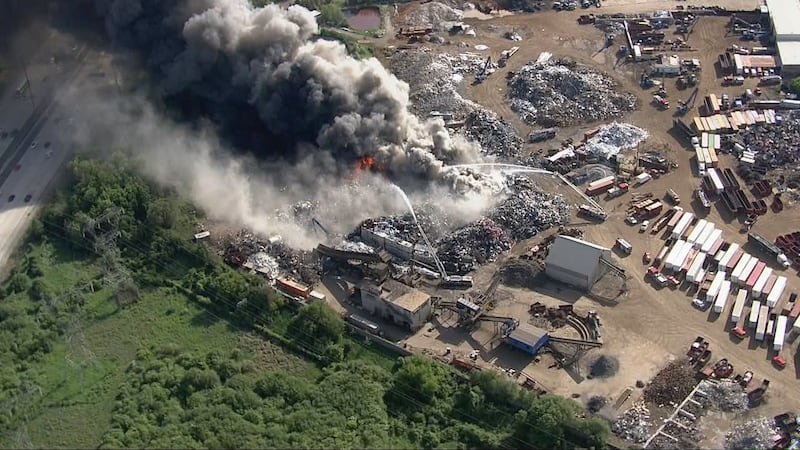 Firefighters battle a deep-seated scrap metal recycling fire in Brampton, Ontario.
Incident Overview & Risk Factors
Firefighters encountered a difficult outdoor storage fire concentrated deep in the center of the scrap pile. Deep-seated fires in bulk recycling yards can resist conventional hose streams because the burning material sits below the visible surface, protected by dense material, void spaces, and uneven pile geometry. In this case, Brampton fire officials described the fire as very stubborn and used an aerial drone to locate hot spots and guide suppression efforts.
Modern scrap and recycling operations face a growing ignition challenge from lithium-ion batteries hidden in consumer products, electronics, tools, mobility devices, and mixed scrap streams. Authorities have not confirmed that batteries caused the Brampton fire, but the hazard is directly relevant to the occupancy. Waste and recycling industry groups have warned that misplaced lithium-ion batteries continue to drive fires in recycling streams, especially when batteries are crushed, punctured, or damaged during handling.
Large outdoor piles can also intensify property loss by delaying access to the seat of the fire. Excessive pile height, inadequate separation, limited fire department access, and combustible contamination can allow a small ignition source to develop into a prolonged yard fire.
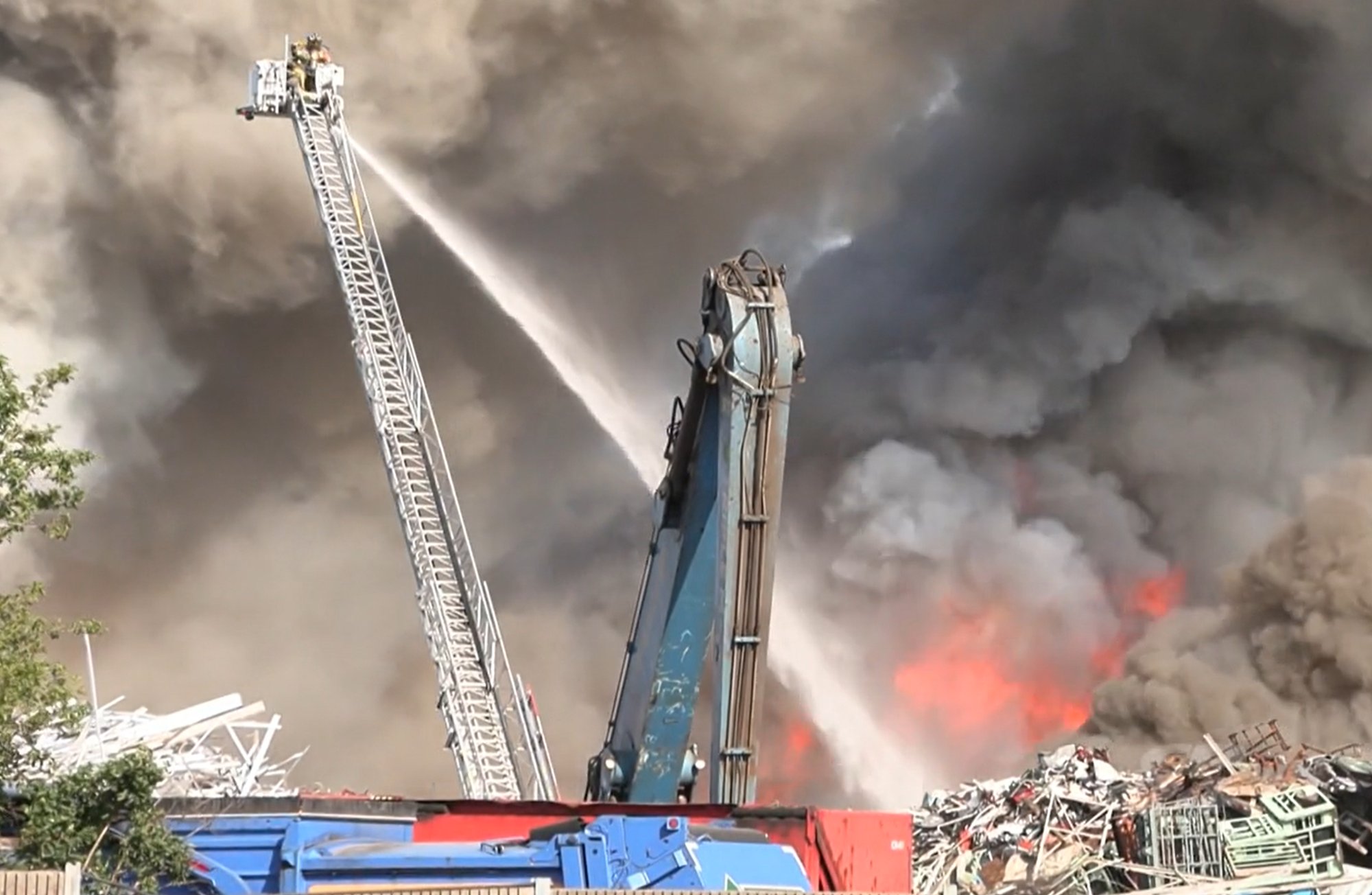 Elevated master stream operations attack a scrap metal pile fire at an industrial recycling facility.
Property Loss & Insurance Implications
For property owners, risk managers, and insurers, this event reinforces that outdoor recycling yards are not low-exposure areas simply because storage is outside. Fires in scrap piles can disrupt operations, damage mobile equipment, expose nearby buildings, generate smoke complaints, create runoff concerns, and require extended emergency response. They can also affect business interruption, pollution liability, fire protection adequacy, and underwriting views of yard management practices.
NFPA 1, NFPA 1660, and applicable FM Property Loss Prevention data sheets (1-20, 10-1) should be used to evaluate emergency response planning, equipment reliability, and outdoor storage controls.
Key prevention measures include:
Limit pile height, width, and volume, and maintain clear fire breaks, including 25-foot separation where required by the authority having jurisdiction or insurer.
Screen incoming loads for lithium-ion batteries, e-waste, sealed cylinders, fuel tanks, aerosol containers, and other prohibited materials.
Use fixed radiometric thermal cameras, patrol inspections, and drone surveys to identify heat buildup before visible flame develops.
Maintain fire lanes, hydrant access, pre-incident plans, and staging areas for loaders and excavators.
Store recovered batteries and suspect e-waste in designated, noncombustible, weather-protected areas away from main scrap piles.
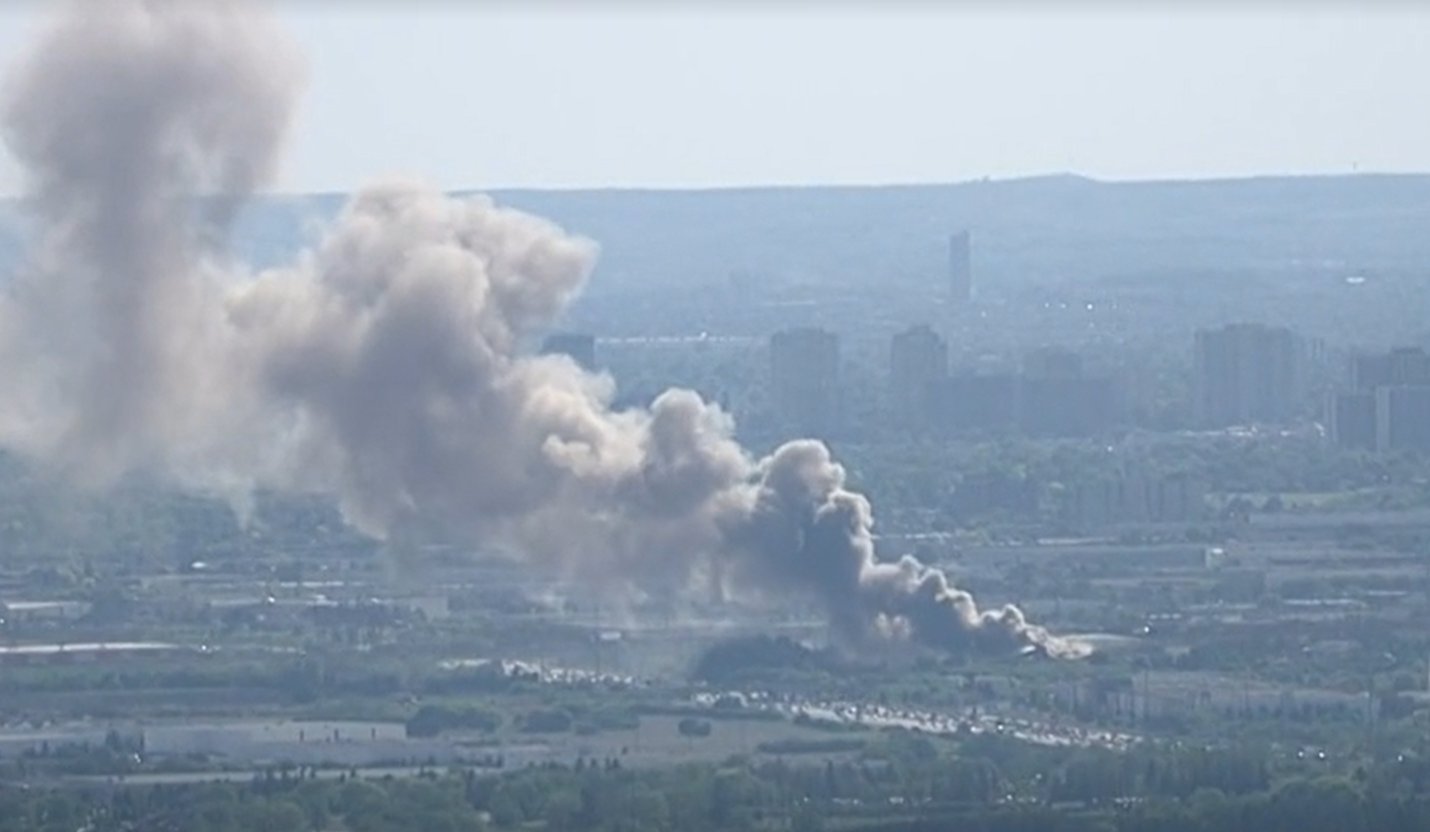 Smoke plume seen from an aerial image in Brampton, Ontario.
Risk Logic Perspective: Bulk Recycling and Outdoor Storage Protection
Recycling facilities should treat outdoor storage as an active fire protection zone rather than open yard space. Daily inspections should verify pile dimensions, separation distances, fire lane clearance, housekeeping, and the location of mobile equipment needed for emergency pile breakdown. Incoming material controls should include employee training, customer signage, load rejection authority, and documented procedures for isolating batteries and other high-risk contaminants.
Facilities should also pair detection with response planning. Thermal imaging is most valuable when alarm thresholds, notification protocols, and excavation plans are already defined. Preventive maintenance on shredders, conveyors, loaders, grapples, and gearbox-driven equipment should be part of the same loss control program because mechanical failure, friction, and hot surfaces can add ignition sources to an already challenging yard environment.
Risk Logic engineers help facilities identify fire hazards, evaluate outdoor storage arrangements, and implement tailored loss prevention strategies. Contact Risk Logic to strengthen inspection programs, fire protection planning, and property risk controls.
Bottom Line: Outdoor recycling piles require disciplined pile control, battery screening, and early heat detection because deep-seated fires can become long-duration and have extended impacts.
Photo Credit: Chopper 24