Mattawa Wine Storage Facility Fire Highlights High-Value Commodity and Agricultural Processing Risks
A fire that destroyed millions of gallons of stored wine near Mattawa, Washington, is more than an isolated industrial loss. We break down what drove the fire’s rapid escalation and outline the key lessons facility owners, insurers, and risk managers should take from this event.
On May 4, 2026, a major fire broke out at a wine storage and production facility near Mattawa, Washington, causing extensive damage to a structure reportedly containing approximately 4.5 million gallons of wine. Heavy smoke was visible throughout the surrounding area as multiple fire agencies responded to contain the incident and protect nearby structures. Early reports indicate the fire may have originated near an electrical panel, although the official cause remains under investigation.
The Mattawa wine storage facility fire highlights the significant exposure associated with industrial agricultural processing operations that combine large commodity concentrations, extensive utility systems, and warehouse-style occupancies. Events involving food and beverage production facilities often generate complex property, business interruption, and contamination losses that extend well beyond direct structural damage.
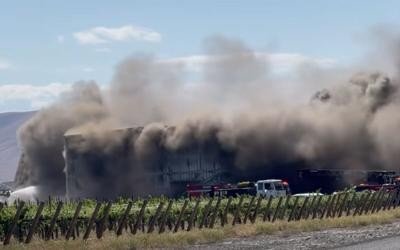 A fire erupted at a facility near Mattawa, Washington, that was storing 4.5 million gallons of wine.
Incident Overview & Risk Factors
Fire crews encountered heavy fire conditions upon arrival, with flames rapidly extending through portions of the storage and production areas. Due to the scale of the incident and deteriorating interior conditions, suppression operations transitioned to a defensive strategy focused on confinement and exposure protection.
Several key property risk factors likely contributed to the severity of the loss:
Large concentrations of stored wine inventory within a single structure
Electrical distribution systems supporting industrial operations
Combustible pallets, packaging, and plastic storage materials
Open warehouse-style building configurations
High-value production and refrigeration equipment
The reported involvement of an electrical panel underscores the ongoing fire risk posed by industrial electrical infrastructure. Food and beverage processing facilities frequently rely on continuous electrical loads to support refrigeration, pumping systems, automated production equipment, and climate-controlled storage. Failures involving switchgear, electrical panels, or distribution equipment can create ignition sources that can spread rapidly through combustible industrial environments.
Wine production and storage facilities present unique property considerations. Although finished wine is not typically considered highly combustible, associated storage and processing operations often involve substantial combustible loading through pallets, cardboard packaging, hoses, insulation materials, and processing infrastructure. High-density storage arrangements can further increase the potential for fire spread and operational challenges during suppression activities.
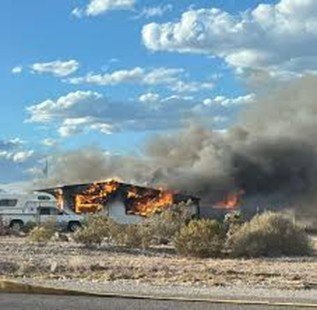 Heavy flames and smoke engulf the wine storage facility as firefighters work to contain the rapidly spreading industrial fire.
Property Loss & Insurance Implications
The reported loss involving approximately 4.5 million gallons of stored wine represents a significant insured value concentration with multiple layers of exposure for property insurers and facility operators.
Key insurance considerations include:
Commodity and inventory loss involving concentrated high-value product storage
Business interruption impacts tied to production downtime and supply chain disruption
Damage to specialized processing equipment, refrigeration systems, and utility infrastructure
Smoke contamination affecting adjacent inventory or production areas
From a property loss prevention perspective, this event reinforces the importance of maintaining robust fire protection and electrical reliability programs within agricultural processing occupancies. FM and NFPA guidance consistently emphasize the importance of properly maintained electrical systems, adequate fire protection, commodity-specific storage arrangements, and effective impairment management procedures in industrial storage facilities.
Critical mitigation efforts include:
Routine infrared thermography and electrical maintenance programs
Properly designed automatic sprinkler protection systems
Segregation of high-value commodity concentrations where practical
Fire separation between production and storage areas
Preventive maintenance for refrigeration and utility equipment
Emergency response and business continuity planning
Large food and beverage processing facilities can generate catastrophic losses when operational dependencies, commodity accumulation, and infrastructure exposures combine within a single occupancy.
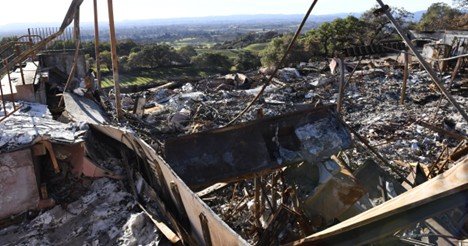 The aftermath of the fire reveals extensive structural damage and the significant loss potential associated with large-scale industrial storage facilities.
Risk Logic Perspective: Industrial Storage and Processing Risk
Industrial agricultural processing facilities require a layered risk management approach focused on ignition prevention, fire protection reliability, and operational resiliency. Facilities storing concentrated commodity values should regularly evaluate electrical system conditions, storage configurations, suppression capabilities, and exposure protection strategies.
Electrical system assessments remain particularly important in facilities operating continuous production schedules or refrigeration-intensive processes. Aging panels, overloaded circuits, deferred maintenance, and inadequate monitoring programs can significantly increase ignition risk.
Facility owners and risk managers should also evaluate how warehouse layouts, commodity accumulation practices, and equipment arrangements may influence fire growth and business interruption severity. Large open industrial occupancies can rapidly transition from localized ignition events into major property losses if compartmentation and suppression systems are insufficient.
Risk Logic engineers help facilities identify fire hazards and implement tailored loss prevention strategies. Contact us today to request an on-site risk survey of your facility.
Bottom Line
This wine storage facility fire demonstrates how fires can escalate into major property and business interruption losses when high-value commodities and expansive warehouse environments are involved.