Transformer Plant Fire Highlights Recurring Paint Booth Hazards in Laurel, Mississippi
A recent fire at Howard Industries in Laurel, Mississippi, highlights the severe property hazards associated with industrial spray-finishing operations. Explore key FM and NFPA safeguards, ventilation interlocks, and risk engineering strategies to prevent recurring paint booth losses.
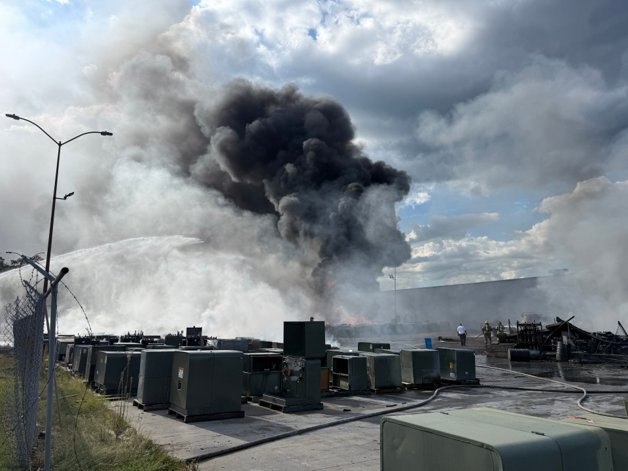
A fire at Howard Industries in Laurel, Mississippi, on August 31, 2026, highlights the significant property hazards associated with industrial spray-finishing operations. Understanding and managing paint booth fire hazards is critical, as the fire reportedly originated in a paint booth, producing heavy black smoke and prompting the evacuation of employees. More than a dozen fire departments responded, and crews had largely contained the fire by approximately 8 p.m. No injuries were reported, and the cause and extent of property damage remain under investigation.
The event occurred at Howard Industries' Laurel manufacturing operations, which include a 2.3-million-square-foot transformer manufacturing plant with extensive automated and robotic production equipment. Mayor Johnny Magee also reported that the paint booth was located next to a tanker truck carrying what he described as an explosive substance. Current reporting has not established whether the tanker contributed to the fire or its severity. Understanding flammable liquids hazards and bulk storage separation is essential in mitigating catastrophic exposure in heavy manufacturing facilities.
Incident Overview & Paint Booth Fire Hazards
Spray-finishing operations present concentrated paint booth fire hazards because they can combine ignitable liquids, combustible overspray residues, ventilation equipment, electrical components, and potential ignition sources within a relatively confined area. If fire protection, ventilation, interlocks, housekeeping, or liquid-control systems are inadequate, a localized ignition can rapidly involve the booth, exhaust system, nearby equipment, or surrounding manufacturing areas.
This fire is particularly noteworthy because Howard Industries has experienced previous fires involving paint operations in Laurel. In May 2023, firefighters responded to a paint booth/oven fire that produced heavy smoke and required approximately three hours to extinguish. In February 2025, another fire was contained within a primer paint booth, with investigators initially considering a leaking tank and nearby heat source as possible factors.
These incidents have not been shown to share the same cause or equipment. However, repeated fires involving similar operations should trigger a comprehensive engineering review of the process rather than simply repair and replacement of damaged components. Establishing robust industrial fire prevention guidelines across all production shifts helps prevent recurrent operational breakdowns.
Property Loss & Insurance Implications
FM Data Sheet 7-27, Spray Application of Ignitable and Combustible Materials, identifies ventilation, automatic shutoffs, sprinkler protection, ignition-source control, and overspray management as key safeguards against paint booth fire hazards. FM recommends automatic sprinkler protection within spray booths or rooms, associated drying areas, and at ceilings above booths. For critical equipment where fire damage could cause extended business interruption, FM also recommends considering enhanced protection such as automatically actuated deluge protection, alongside routine fire sprinkler system testing and maintenance.
NFPA 33, Standard for Spray Application Using Flammable or Combustible Materials, provides complementary requirements that address spray areas, ventilation, fire protection, electrical equipment, and the handling of flammable or combustible materials.
Key loss-prevention measures include:
Verify sprinkler protection is provided inside spray booths and associated concealed or residue-collection areas.
Interlock spray equipment with ventilation and automatically stop material flow when required.
Maintain rigorous housekeeping to prevent combustible overspray accumulation in booths, plenums, and exhaust systems.
Limit quantities of ignitable liquids near spray operations and properly protect storage and dispensing systems.
Maintain appropriate separation between spray-finishing operations and bulk ignitable-liquid or tanker exposures.
Periodically test emergency shutdowns, ventilation interlocks, detection, and fire protection systems.
Risk Logic Perspective: Spray-Finishing Operations
A paint booth should be evaluated as a specialized process hazard within the larger property-risk program. Facility inspections should include reviews of booth construction, sprinkler coverage, ventilation performance, hazardous-location electrical equipment, liquid piping and pumping systems, curing equipment, housekeeping, and emergency shutdown controls.
Repeated losses involving similar operations also warrant a formal loss history and root cause review. Risk assessments should determine whether previous corrective actions addressed the underlying hazard and whether changes to equipment, production rates, coatings, or operating procedures have introduced new exposures.
Risk Logic engineers help facilities evaluate specialized manufacturing hazards and identify practical improvements to fire protection, equipment reliability, and loss-prevention programs. Contact Risk Logic to learn more about controlling paint booth fire hazards and our property risk engineering services.
Bottom Line: Repeated paint-booth fires demonstrate why spray-finishing operations require reliable fire protection, ventilation, automatic shutdown controls, disciplined maintenance, and thorough investigation of previous losses.