Tottenham Vehicle Maintenance Warehouse Fire Highlights Auto Service Occupancy Risks
A devastating commercial fire at a Tottenham vehicle maintenance warehouse highlights the complex fire hazards inherent to auto service occupancies and industrial estates. This incident underscores the critical need for robust property loss prevention strategies, including proper sprinkler design and strict ignition controls, to protect high-value commercial assets.
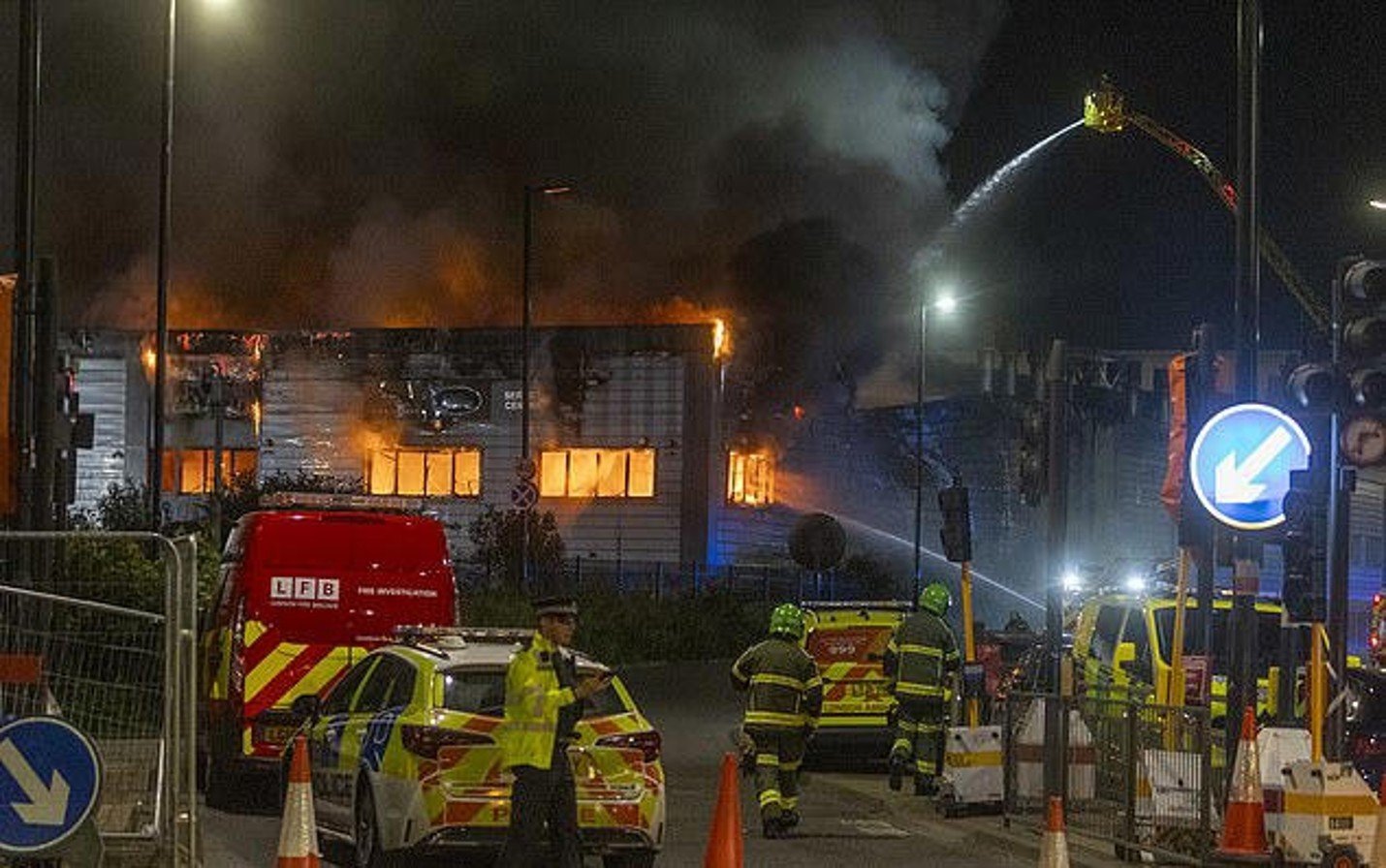 Fire crews battle vehicle maintenance warehouse fire.
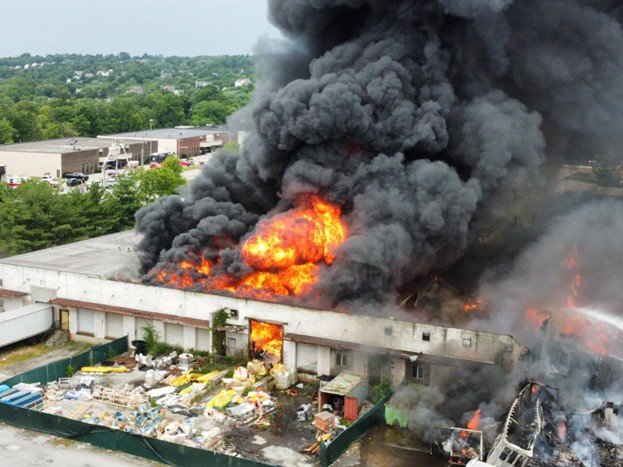
A large commercial fire destroyed a vehicle maintenance warehouse on Watermead Way in Tottenham, London, late on July 2, 2026, highlighting the fire risks associated with auto service occupancies and industrial estate exposures. London Fire Brigade reported that 15 fire engines and about 100 firefighters responded to the fire, which involved a two-story warehouse used for vehicle maintenance. The building was destroyed, part of an adjoining building was damaged, about 20 vehicles inside the workshop were destroyed, and one vehicle on the forecourt was damaged by heat. No injuries were reported, and the cause remains under investigation.
Incident Overview & Risk Factors
The Tottenham vehicle maintenance warehouse fire produced significant smoke, prompting London Fire Brigade to advise people in the Haringey borough area to keep windows and doors closed. Crews worked through the night, using three 32-meter turntable ladders as water towers to attack the fire from above. London Fire Brigade also deployed its drone team to improve situational awareness for the incident commander, and the fire was brought under control at 3:01 a.m.
Although the cause has not been released, vehicle maintenance facilities present a challenging property fire profile. These occupancies often contain vehicles, tires, plastics, lubricants, fuels, solvents, batteries, aerosols, tools, lifts, and electrical equipment in close proximity. Repair activities can also introduce ignition sources such as grinding, welding, battery charging, electrical faults, and hot work.
The loss also shows how industrial estate fires can affect more than the original tenant space. Heat damaged a vehicle outside the building, and part of an adjoining building was destroyed. In multi-tenant or closely spaced commercial properties, fire separation, sprinkler protection, exterior exposure control, and emergency access can determine whether a single occupancy fire becomes a broader property loss.
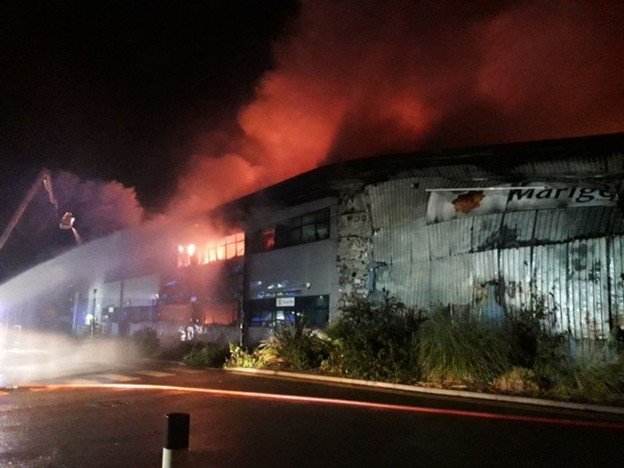 Jaguar and Land Rover Service Center fire damages adjoining building.
Property Loss & Insurance Implications
For property owners, risk managers, and insurers, vehicle maintenance warehouse fire risk extends beyond the building shell. A severe fire can destroy customer vehicles, repair equipment, diagnostic tools, lifts, parts inventory, records, utilities, and leased tenant improvements. These losses can create complex claims involving building damage, contents, business interruption, smoke contamination, debris removal, and potential impact to adjoining occupancies.
Auto service occupancies also require careful underwriting because the hazard can change quickly. A facility that begins as light maintenance may later add body work, welding, tire storage, EV charging, battery handling, fuel transfer, or larger parts inventories. Each change can alter sprinkler demand, ignition control needs, ventilation requirements, electrical classification, and housekeeping expectations.
NFPA 30A, Code for Motor Fuel Dispensing Facilities and Repair Garages addresses fire and explosion hazards associated with motor fuel dispensing facilities and repair garages, while FM Property Loss Prevention Data Sheet 7-15, Garages recommends automatic sprinklers throughout repair garage areas, appropriate sprinkler design, tire storage protection, and ignition source control in garage occupancies.
Key prevention measures include:
Install and maintain automatic sprinkler protection designed for the actual occupancy and storage arrangement.
Control flammable and combustible liquids in approved containers and cabinets.
Segregate tire storage, aerosols, batteries, and combustible parts inventory.
Establish hot work permitting, fire watch procedures, and ignition source controls.
Coordinate pre-incident information with the local fire service, including access points, hydrants, utility shutoffs, and hazardous materials.
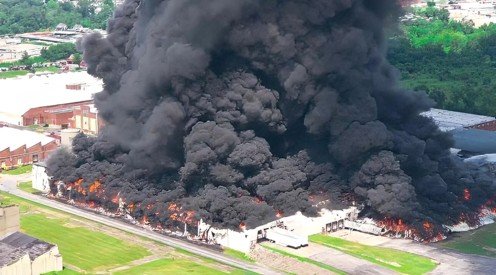
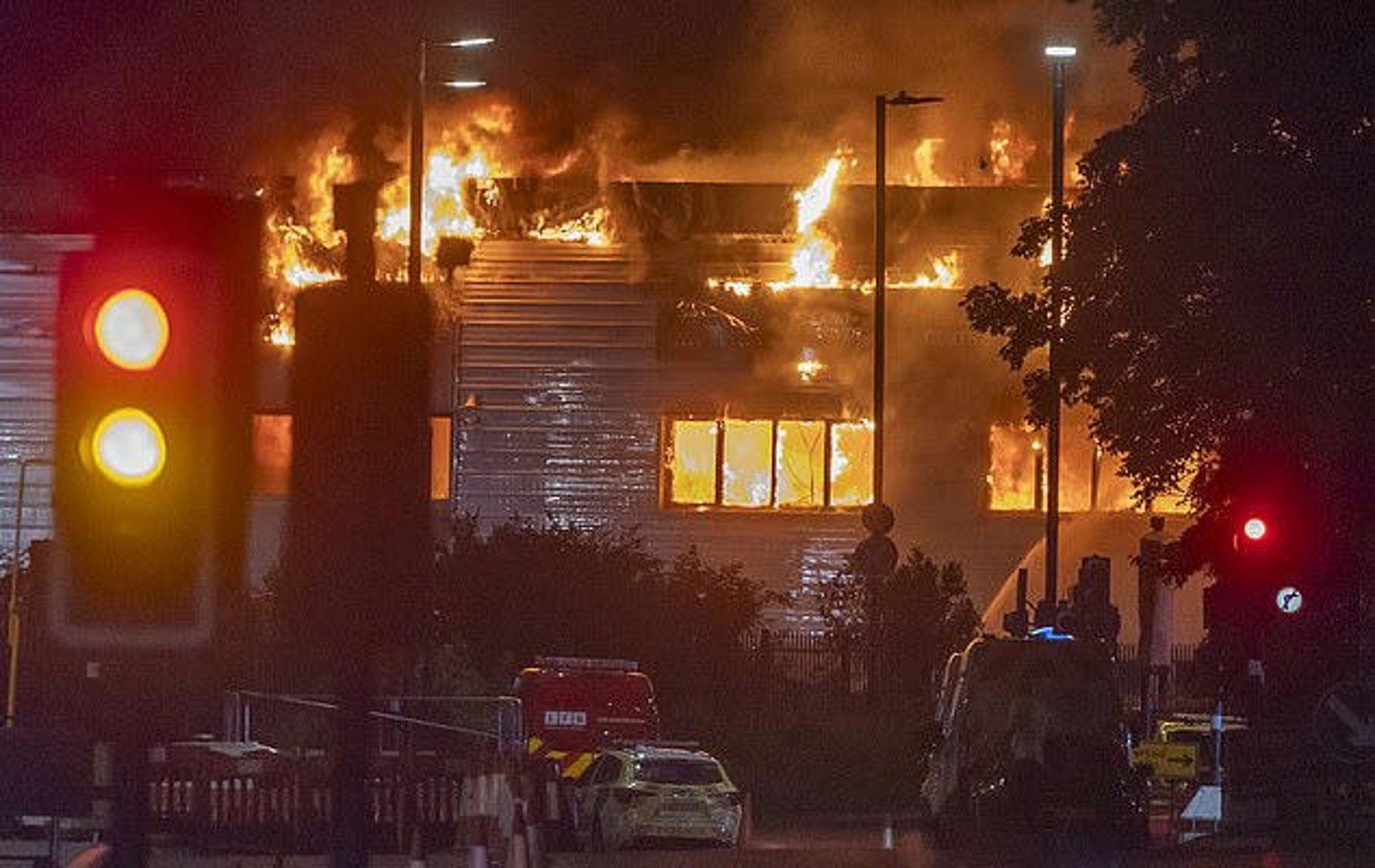 Vehicle maintenance warehouse fully engulfed by flames.
Risk Logic Perspective: Vehicle Maintenance Warehouse Fire Risk
Vehicle maintenance facilities require active loss prevention because they combine high-value contents with combustible materials and repair-related ignition sources. A strong fire protection program should begin with a property condition assessment that verifies the occupancy, construction, sprinkler design, fire alarm coverage, tenant separation, storage practices, and emergency response access.
Risk managers should also review whether the facility’s protection still matches its current operations. Changes in vehicle type, parts storage, battery charging, tire inventory, flammable liquid use, or repair processes can make older fire protection designs inadequate.
Routine inspections should focus on housekeeping, liquid storage and use, electrical hazards, fire protection impairments, and exterior storage. Insurers should evaluate business interruption potential, customer vehicle exposure, tenant fit-out values, and the condition of shared building systems.
Risk Logic engineers help facilities identify fire hazards and implement tailored loss prevention strategies. Contact Risk Logic to evaluate fire protection, occupancy hazards, and property exposure controls for vehicle maintenance and industrial warehouse facilities.
Bottom Line
The Tottenham vehicle maintenance warehouse fire shows that auto service occupancies require carefully maintained fire protection, ignition control, housekeeping, and tenant separation to prevent a workshop fire from becoming a broader industrial property loss.