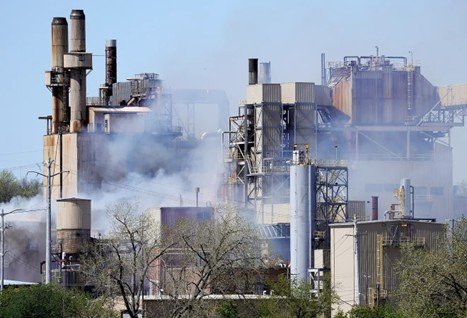
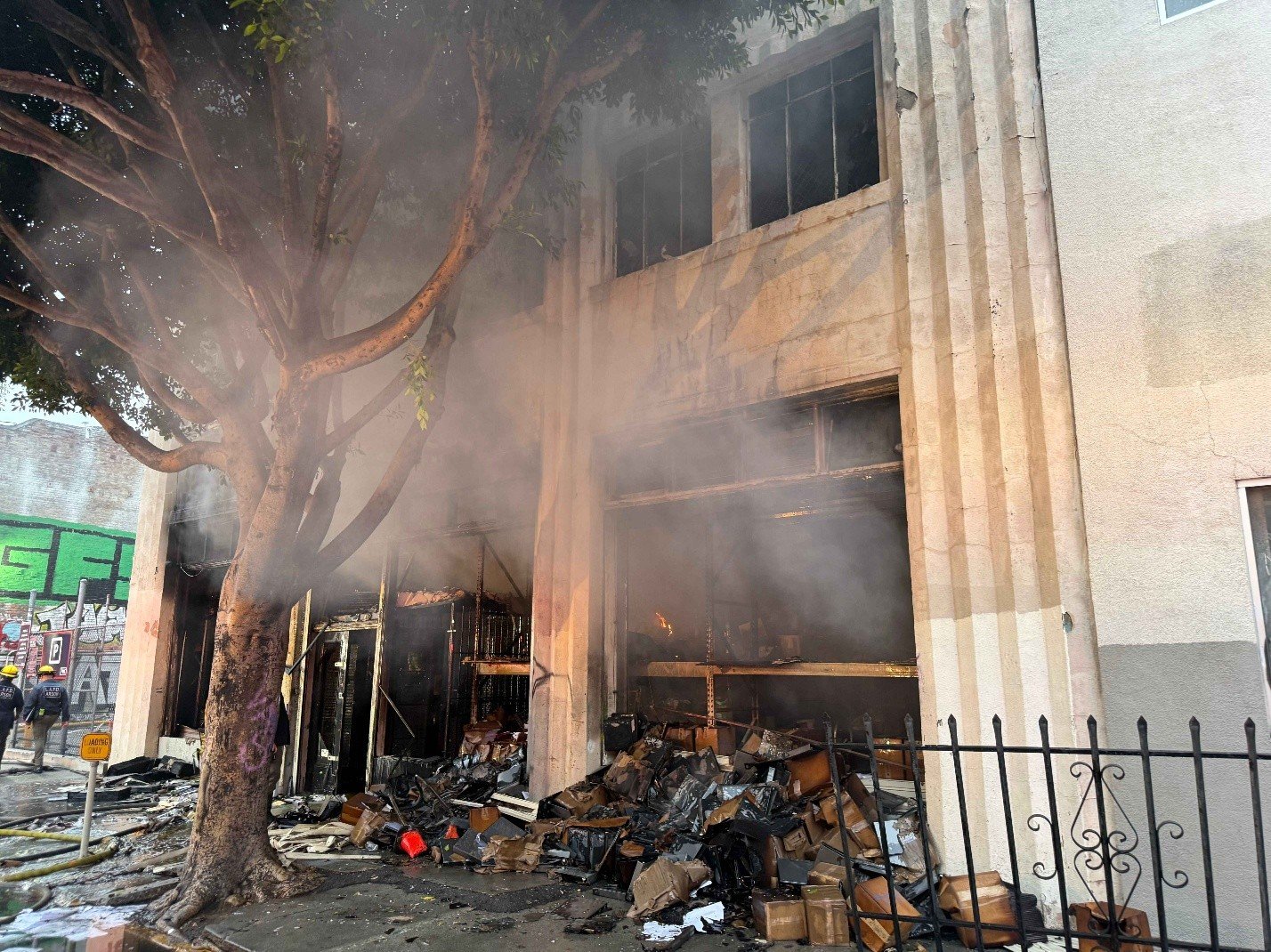
Scrap Metal Fire in North Carolina Highlights Recycling Facility Fire Challenges
We review the property loss and insurance implications of the May 2026 large scrap metal pile fire at Foss Recycling in Reidsville, North Carolina. Plus, find out how Risk Logic can help asses your facility.
A large scrap metal pile fire at Foss Recycling in Reidsville, North Carolina, drew an extended emergency response after the Reidsville Fire Department was dispatched just before 9 p.m. on Monday, May 18, 2026. The Reidsville scrap metal fire highlights recycling facility fire challenges because crews had to attack the fire while protecting nearby structures, equipment, and machinery on the property. The fire took approximately six hours to bring under control, and firefighters remained on scene for more than 16 hours to complete overhaul and extinguish hot spots. No firefighter or civilian injuries were reported, and investigators later determined the fire was accidental.
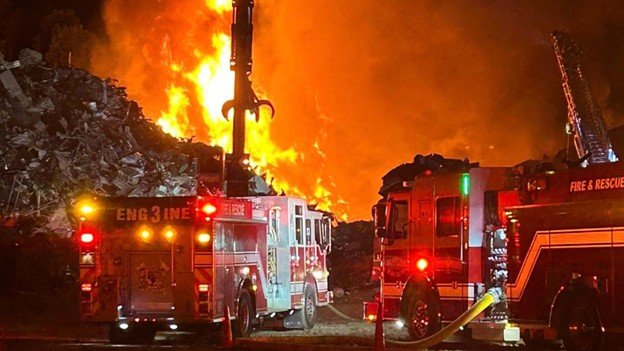 Scrap metal fire at Reidsville recycling facility burns for over 16 hours.
Incident Overview & Risk Factors
Scrap metal may appear noncombustible, but recycling operations often handle mixed material streams that can conceal significant fire hazards. Residual fuels and oils, plastic and rubber components, wiring, small batteries, pressurized containers, and other contaminants can collect inside piles and create hidden ignition points. Once a fire develops inside a dense scrap pile, water penetration becomes difficult and heavy equipment may be needed to break apart material for full extinguishment.
The Reidsville incident also reflects a broader challenge for recycling and waste operations. EPA analysis has noted that materials recovery facilities and other waste facilities have seen increased fires tied to lithium-ion batteries, although officials did not publicly attribute this specific fire to batteries. Battery detection, load inspection, and contaminant segregation remain critical because a single damaged battery or hidden hazardous item can ignite surrounding combustibles and create repeated flare-ups.
Property Loss & Insurance Implications
Recycling facility fires can create insured losses beyond the burned scrap stock. Heat, smoke, and suppression water can damage balers, shredders, conveyors, loaders, electrical equipment, and building exposures. Outdoor pile fires can also threaten nearby buildings or yard storage, making spacing, access, and exposure protection important loss prevention considerations.
FM property loss prevention data sheets provide engineering guidance intended to reduce property loss from fire and other hazards, and FM Data Sheet 8-9 addresses fire protection recommendations for certain solid-piled and palletized storage arrangements involving Class 1 through 4 and plastic commodities. Where enclosed storage, process areas, or combustible commodities are present, NFPA 13 should guide sprinkler system evaluation, while NFPA 51B should govern welding, cutting, grinding, and other hot work that may generate sparks or flames.
Key prevention measures include:
-
Screen incoming loads for batteries, aerosols, pressurized cylinders, fuels, and hazardous contaminants.
-
Limit pile size and maintain separation between scrap piles, buildings, equipment, and property lines.
-
Keep fire lanes, hydrants, and emergency access routes clear at all times.
-
Use thermal imaging or other hotspot monitoring after processing, load handling, and end-of-shift operations.
-
Maintain preventive maintenance programs for shredders, conveyors, mobile equipment, electrical systems, and hydraulic equipment.
-
Establish pre-incident plans with the fire department, including water supply, runoff control, loader access, and mutual aid coordination.
Risk Logic Perspective: Recycling Facility Fire Risk
Facilities that process scrap metal should treat material management as a primary fire protection control, not simply an operational housekeeping task. Written plans, employee training, and defined response procedures help facilities identify and mitigate lithium-ion battery fires and other ignition hazards before they escalate. Industry guidance also identifies daily hotspot monitoring and attention to ignition areas such as shredders, tipping floors, conveyors, balers, storage bins, truck storage, and secondary fire areas.
Risk assessments should review pile dimensions, separation distances, fire department access, water supply reliability, combustible accumulations, equipment maintenance, and emergency response procedures. Facility operators should also evaluate whether changes in accepted materials have increased the presence of batteries, plastics, rubber, or flammable residues. Insurers and risk managers should confirm that fire protection, storage controls, and impairment procedures match actual operations, not outdated assumptions about metal-only hazards.
Risk Logic engineers help recycling and industrial facilities identify fire hazards, evaluate suppression and water supply adequacy, and implement practical loss prevention strategies. Contact Risk Logic for facility-level support with fire protection reviews, risk assessments, and property loss prevention planning.
Bottom Line: Scrap metal fires at recycling facilities demand rigorous material screening, controlled storage, and emergency planning to limit prolonged suppression and property loss.