West Norriton Playground Equipment Warehouse Fire Highlights High-Plastic Commodity Storage Risk
A four-alarm fire completely destroyed the Superior Play Systems facility in West Norriton, Pennsylvania, highlighting the severe property-loss risks associated with high-plastic commodity storage. The fast-moving blaze forced firefighters into defensive operations and resulted in the building's demolition the following day due to widespread structural collapse. For risk managers and insurers, this incident underscores the critical necessity of matching warehouse fire protection systems and water supplies to specific material hazards.
On June 22, 2026, a four-alarm fire destroyed the Superior Play Systems facility in West Norriton Township, Pennsylvania, creating a severe playground equipment warehouse fire involving combustible finished goods, plastics, packaging, and manufacturing operations. The fire broke out at the Industry Lane facility shortly after 11 a.m., sending thick black smoke over the industrial area and prompting a regional emergency response. Approximately 130 fire trucks responded, and nearby businesses were evacuated as a precaution. No injuries were reported, and the cause remains under investigation by local officials, Pennsylvania State Police, and ATF.
The West Norriton playground equipment warehouse fire highlights the property-loss challenges associated with storing high-plastic-content commodities, particularly when fire growth outpaces initial suppression efforts. Crews initially entered the building but withdrew as conditions deteriorated and the structure became unsafe. Firefighters shifted to defensive operations, used exterior streams, and later relied on heavy equipment to reach deep-seated hotspots within the collapsed structure.
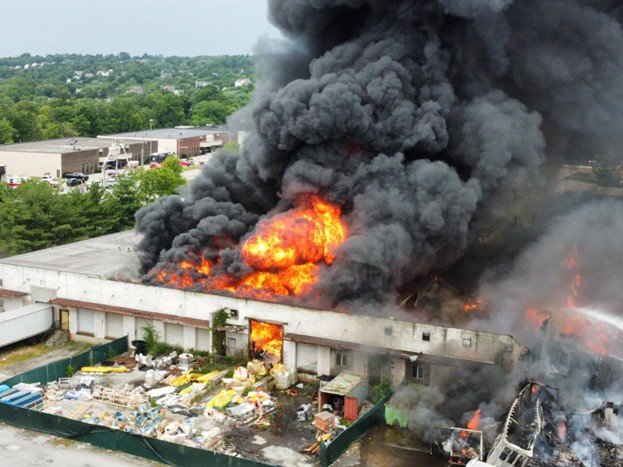 Widespread structural collapse and intense fire conditions illustrate the significant property loss potential associated with combustible warehouse occupancies.
Incident Overview & Risk Factors
Superior Play Systems manufactures and stores playground equipment, a product category that can include plastics, coatings, rubber materials, composite components, cardboard packaging, and wood pallets. These materials can create a high fire load and produce dense smoke once ignited. NBC10 reported that officials believed the fire started outside at the rear and then spread into the building, which reportedly had no sprinklers, although the final cause remains under investigation.
Several property risk factors likely increased the difficulty of fire control:
High-plastic commodity storage and combustible finished goods
Open warehouse and manufacturing areas that can support rapid fire spread
Potential exterior storage or rear-yard exposure concerns
Reported lack of automatic sprinkler protection
Dense smoke production and elevated heat release
Firefighters also faced water supply challenges. CBS Philadelphia reported that crews had to run lines about a half mile to Trooper Road to supplement the hydrant supply near the building. That detail reinforces the importance of matching fire protection demand, hydrant availability, and emergency response planning to the actual commodity hazard.
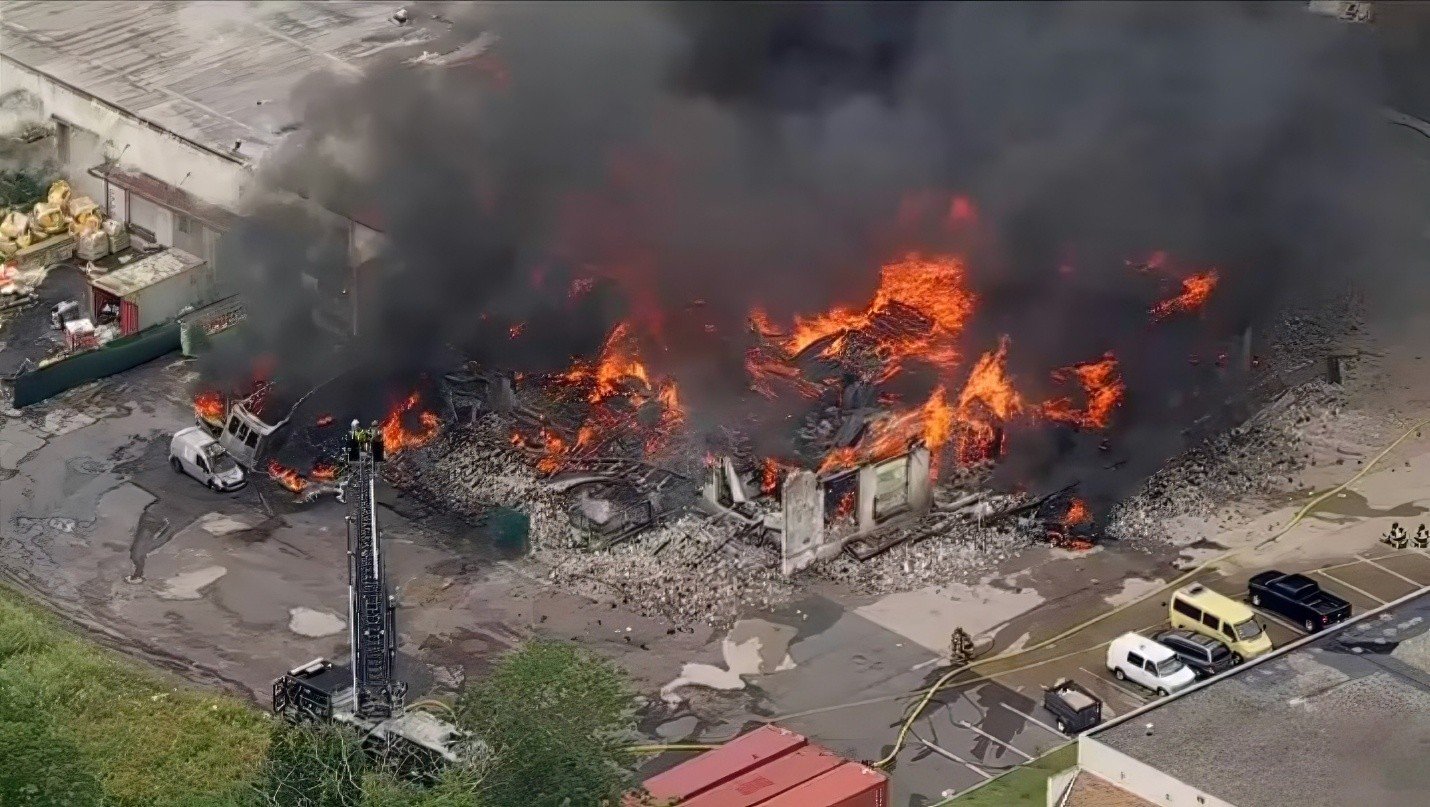 An aerial view of the incident shows extensive structural collapse and active fire conditions, underscoring how rapidly large-loss warehouse fires can escalate once suppression efforts are challenged or compromised.
Property Loss & Insurance Implications
The building was demolished the day after the fire, confirming the severity of the structural damage and the likely scope of debris removal, demolition, and site restoration costs. Even though the company stated it remained operational, a loss of this type can create substantial insurance exposure beyond the building itself, including inventory, equipment, tooling, records, utilities, cleanup, and temporary operating costs.
For insurers and risk managers, this incident reinforces the need to evaluate commodity classification, storage height, water supply, fire department access, and sprinkler adequacy as operations change.
Key prevention measures include:
Verify commodity classification for plastics, packaging, pallets, and finished goods.
Review sprinkler design criteria against current storage height and arrangement.
Maintain adequate fire pump, hydrant, and hose stream water supply.
Control exterior storage, waste accumulation, and ignition sources near the building.
Maintain clear access for fire apparatus and aerial operations.
Update pre-fire plans with local emergency responders.
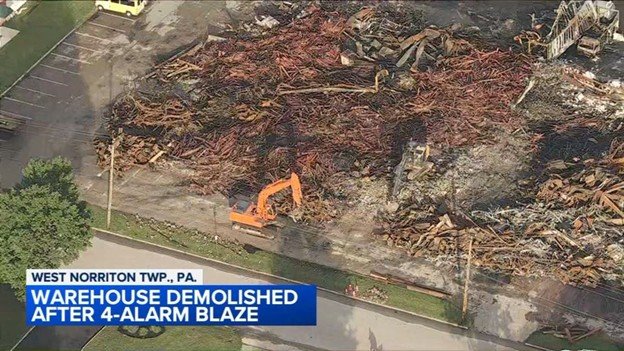 The warehouse was demolished after a 4-alarm blaze destroyed Superior Play Systems in West Norriton Twp.
Risk Logic Perspective: Plastic Commodity Storage
Facilities that manufacture or store plastic-based consumer products should not assume that a general warehouse fire protection approach is adequate. Plastic commodities can burn with greater intensity than ordinary combustibles, and fire protection systems must be designed for the specific commodity, storage arrangement, building height, and available water supply.
Risk managers should regularly compare actual operations to the assumptions used in the original fire protection design. A building that once stored lower-hazard materials may become underprotected when plastics, rubber components, foam products, packaging, or higher storage heights are introduced. Changes in inventory mix, rack layout, pallet type, and seasonal stock levels can all affect sprinkler design requirements.
Routine inspections, fire protection system testing, preventive maintenance, housekeeping reviews, and emergency response coordination can help reduce the likelihood that a developing fire results in a total property loss. Risk Logic engineers help facilities identify fire hazards and implement tailored loss prevention strategies. Contact Risk Logic to evaluate the adequacy of fire protection, storage hazards, and property loss prevention priorities.
Bottom Line
Warehouses and manufacturing facilities storing high-plastic commodities need commodity-specific fire protection, adequate water supply, and disciplined storage controls to prevent rapid fire growth and severe property loss.