Understanding Processes, Risks, and Hazards of the Mining Industry
Mining is the backbone of global industry, yet it faces some of the most extreme geographical and operational risks on the planet. In Part 1 of our series, we examine the unique hazards of mining operations—from high-altitude extraction to the complex standards of FM and the NFPA.
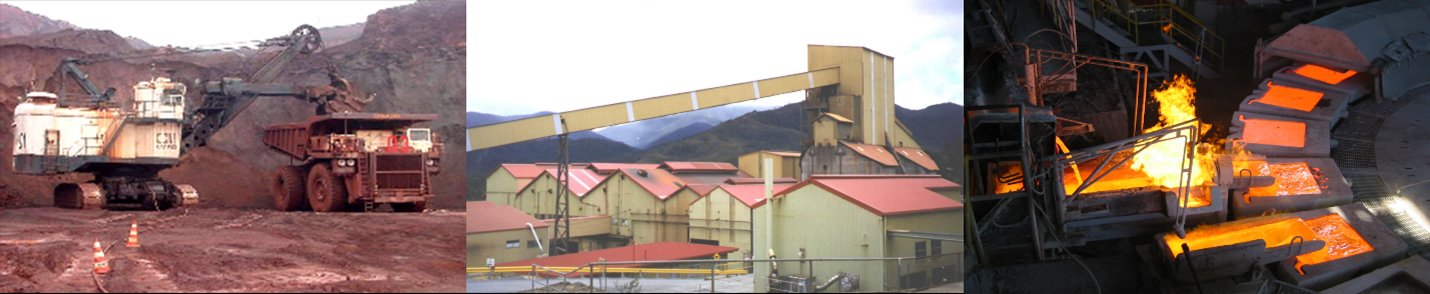
Part 1: Mine Industry Overview
By Larry Moore, PE, Risk Logic Inc.
Mining is the most critical global industry supporting our day-to-day life. Essentially all technology, construction, and power come from products extracted from the earth, air, and water. While these extraction processes are vital, they are inseparable from the hazards of the mining industry. Understanding these unique risks is essential as we look toward the future of resource gathering, both on Earth and in outer space.
Important mined materials include:
-
oil and gas, which are feedstocks for chemicals, fuels, power generation, plastics, fertilizers, and medical products.
-
air, which is mined using cryogenic separation processes, produces gases such as oxygen, nitrogen, and argon.
-
fossil minerals like coal for fuel, power, and steel making.
-
metal minerals like copper, aluminum, nickel, and iron for construction, electricity generation and distribution, and all our land-based vehicles and aircraft.
-
precious metals such as gold, silver, and platinum, used in jewelry, photovoltaic panels, semiconductors, and catalytic converters.
-
nonmetal minerals like limestone, silica, lithium, potash, and salt are used in fertilizers, cement, batteries, glass, semiconductors, food, and industrial additives.
-
rare earth minerals with unpronounceable names like Yttrium, Praseodymium, Neodymium, and Gadolinium used for high technology and green energy solutions like wind turbines, solar collectors, semiconductors, batteries, and cell phones.
And there are many more, over ten thousand different minerals, that are exploited for our use.
This is the first of several articles exploring the many and highly varied processes, as well as the unique hazards and risks — some of which are societal and political — of mining, which will include: the extraction and distribution of the mined mineral; processing and concentrating; metallurgical refining; and waste disposal, such as tailings disposal facilities. We might even “dive deep” into undersea mining and “explore” metals on asteroids.
Historical overview of the mining industry
Mining and metallurgy are the oldest applied sciences on earth and can be traced back over 8000 years ago to 6000 BCE*. Through chance, trial, and error, humanity discovered and extracted the metals that fuel the economies of both ancient kingdoms and modern nations.
The most significant surviving technical historical treatise on mining and metallurgy is De Re Metallica, by Georgius Agricola, written in Latin in 1556. It was translated into English in 1912 by US President Herbert Hoover, a mining engineer at the time, and his wife, Lou, who was fluent in Latin.
“I have now come to the greater task, that is, to the description of how we extract metals.
First of all, I will explain the method of preparing the ore, for since Nature usually creates metals that are in an impure state, mixed with earth, stones, and solidified juices, it is necessary to separate most of these impurities from the ores as far as can be, before they are smelted, and broken with hammers, burnt, crushed with stamps, ground into powder, sifted, washed, roasted and calcined.”
Abstracted from De Re Metallica
Georgius Agricolae
Seven metals, known as the Metals of Antiquity, were the metals upon which civilization was based:
gold – fragments were found in Paleolithic caves as early as 40,000 BCE. Common for jewelry by 3000 BCE.
copper - 8000 – 10,000 BCE – originally found and used in its native state
lead - 6500 BCE
silver - 5000 BCE
tin - 3200 BCE – the Bronze Age started when copper and tin were alloyed into a stronger metal
iron - 3200 BCE - first use was from meteoric iron; smelting of iron ore started around 1500 BCE. This started the Iron Age, which replaced the Bronze Age
-
mercury - 1500 BCE
Of these, only gold, silver, copper, meteoric iron, and mercury could be found in their native (metallic) state.
When in a native state, the conversion to a usable material is very simple – pick up the metal and heat, melt, cast, or pound it into a shape. This was done for millennia; however, metals in native form are rare, the readily accessible supply was rapidly exhausted, and our ancestors had to develop methods to find, mine, and produce the metal from raw ore using crude smelting and refining technologies. The first smelting is believed to have occurred around 6500 BCE to produce copper and lead metal from their mineral ores. Iron bloomeries were common by 3000 BCE.
These metals were well known to the Chinese, Indians, Mesopotamians, Egyptians, Greeks, Romans, and many ancient African cultures. Bronze, an alloy of copper and tin, was first produced around 3200 BCE in the Middle East and remained the primary industrial and defense metal until the Iron Age 1700 years later. The Egyptians widely used mercury for pigments, facial makeup, and as an amalgam alloy.
Coal, as a fuel and for making iron, was also well known to the ancients, as were gemstones. The Romans were the first to mine limestone to produce and use cement for construction, and to use lead for water pipes.
Mining life cycle
Mines typically have a finite life, and operations are conducted based on a life-of-mine cycle as shown in Figure 1.
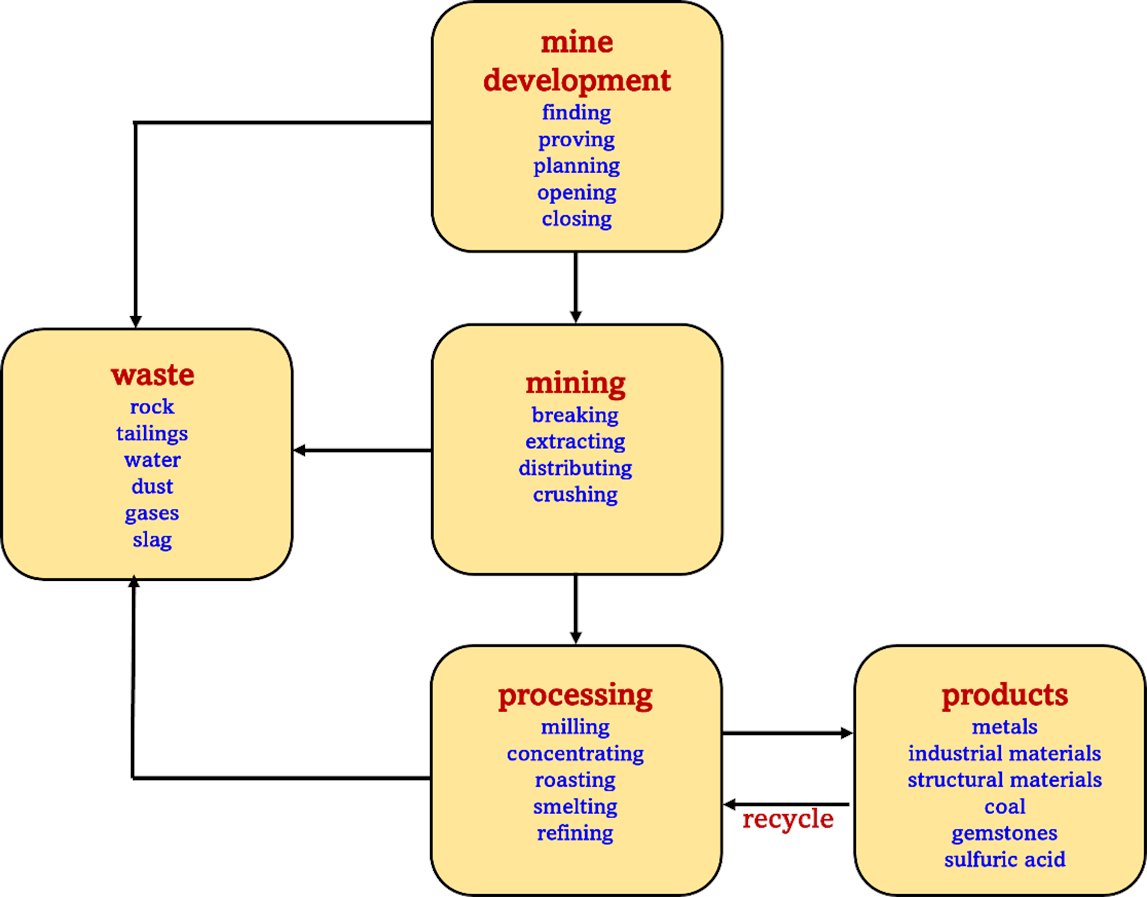 Fig. 1: The mining life cycle. Sketch by the author
The term mine industry encompasses the following supply chains:
-
Mining: Physical extraction of mineral ore in underground or surface mines. Collection and distribution of the mined material within and out of the mine using mobile haulage and loading equipment, dredges, conveyors, railways, pipelines, and other conveyance devices.
-
Ore processing and conditioning: Concentration and preparation processes such as crushing, milling, flotation, filtration, solvent extraction, electrowinning, and pressure leaching.
-
Refining: Production of a metal or other marketable product - often done in a hot or molten state - like silicon, aluminum, lithium, and iron using kilns, roasters, smelters, blast furnaces, chemical extraction, and electrical energy.
-
Waste handling: Removal, disposal, or sale of waste products such as tailings and sulfuric acid.
There are thousands of processes and mining methods, depending on the mineral, its physical and chemical composition, and the geological formation in which it occurs.
Property risks and hazards of the Mining Industry
Many mines are in the most remote areas of the world. They may be in the jungles of the Amazon or at 17,000 ft (5000 m) in the Andes. They may sit at the base of a glacier, on the sides of a dormant volcano, directly on an earthquake fault, or float on a body of water. They may be 10,000 ft (3000 m) deep in the earth, where gravitational and geotechnical forces are immense, or spread over miles of land in an open-cut coal mine. Simply put, the mining industry finds and follows the valuable mineral regardless of where it is located, to satisfy mankind’s insatiable appetite and to make a profit for investors. When the ore is exhausted or of too low a grade to be economically extracted, when the civil, political, or regulatory climate becomes too onerous, or when the operation becomes unprofitable due to market conditions, the mine owner might temporarily close or permanently abandon the mine and move on to the next venture. If market conditions or technology improve, they may reopen the mine.
A classic example of this is the Mountain Pass rare earth metals mine in California, US. It has operated on and off for almost 100 years under multiple owners and has produced a range of minerals, including gold, molybdenum, and, finally, rare earths. It was closed due to the market and the political climate, then reopened with new technologies. This has been repeated several times, and it is now reopening as it is considered an important, politically strategic mine.
Because of this, the mining industry represents a wide variety of potential and in some cases extreme risks, many of which are unique to this industry and are difficult to evaluate and quantify.
Some of the unique property risks and hazards of the mining industry that a mining company may face and that Risk Logic engineers visiting mining facilities may need to evaluate are:
environmental and natural hazards where mines are in remote, extreme, or high-altitude areas, such as from glacial and avalanche flow, subsidence and landslide, earthquake, volcanic eruption, flood, tsunami, and wildfire.
geotechnical exposures like underground roof fall and sudden water inundation, surface pit wall collapse, and tailings disposal facility failures.
fires in combustible ores like coal and sulfides; haul trucks and other fueled extraction vehicles like shovels and loaders; plastic ducts, vessels, and rubber-lined equipment in mills, concentrators, and smelters; flammable liquids in solvent extraction plants; grouped electrical cables and large rectifier transformers; combustible construction; rubber belt conveyor systems; and chemical reactions.
explosion exposures from combustible coal dusts; production and use of blasting agents; sudden overpressure of ore process vessels like those in corrosive acid service for pressure leaching; process gases such as hydrogen; molten metal-water reactions; and finely powdered metals.
chemical exposures from the production of sulfuric acid from smelter waste gases or hydrogen gas reduction processes to produce nickel or iron.
sinking of dredges, ships, and other waterborne mining equipment.
sea port exposures with large cranes, loaders, and conveyors, and possible long-term ingress and egress limitations due to port blockage.
miles-long slurry pipelines used to move ore from high altitudes or remote mines to sea level ports or mills, subject to high-pressure rupture, landslide, flood, and civil or political attack.
cyber risks due to the evolving use of autonomous mining equipment and process control systems.
-
equipment breakdown hazards such as large, long lead time gearless motor-driven (GMD) grinding mills or giant stacker/reclaimers.
Societal and political risks that may impact underwriting and risk improvement
Risk managers, property insurance companies, brokers, and mine owners also need to fully understand and manage the societal, political, and business risks of this industry. These can directly impact underwriting and risk improvement.
Generally speaking, mines:
are speculative ventures, and the financial risk is often transferred
are highly susceptible to mergers and hostile acquisitions
are market and stockholder driven
are subject to labor activity such as strikes
may be operated “on the edge”, are entrepreneurial, and have a “Boom or Bust” mentality
-
have finite lives which may, as ore resources are depleted, or market conditions change
adversely impact risk improvement
adversely impact maintenance frequency and budget
cause corners to be cut on risky operations
reduce employees from a small local population, causing strife or physical harm to the operation
-
have harsh operating and environmental conditions, which may
rapidly degrade or shorten the life of mechanical and electrical equipment
impact maintenance requirements and schedules
expose the site to unusual, severe, and potentially uncontrollable natural or geotechnical exposures
-
may be located in extremely remote, high altitude, and developing nations, which adversely impacts
access
-
cost and extension of timelines for risk improvement or delivery of parts for damaged equipment
emergency response
product delivery to market
supply chains
exposure to local conflicts, civil and political disorder, and physical attacks against the operation
theft potential where high unit-value precious metals or gemstones are stored or processed
exposure to cyber-attacks on large autonomous haul truck fleets and process control systems, where the risk of attack may be exacerbated by loss of local jobs to AI and automation
Series Roadmap and Resources
In the next few months, several articles will dive a bit deeper into specific processes, risks, and the hazards of the mining industry and protection solutions for these challenges. The next issue will specifically explore underground and surface mining.
For additional loss prevention and protection advice for the mining industry, refer to the following standards:
-
FM Loss Prevention Data Sheet 7-12, Mining and Mineral Processing
-
FM Loss Prevention Data Sheet 7-40 Heavy Duty Mobile Equipment
-
NFPA 120, Standard for Fire Prevention and Control in Coal Mines
-
NFPA 121, Standard on Fire Protection for Self-Propelled and Mobile Surface Mining Equipment
-
NFPA Fire Protection Handbook, 20th Edition, Chapter 16, Mining and Mineral Processing, L. Moore, 2008
Our Services
Risk Logic can help evaluate risk and recommend protection solutions, preventive maintenance, and property loss control programs at your mine, mineral processing plant, or metallurgical refinery. Please contact us to schedule a property risk survey by one of our mining specialists.
About the author:
Larry Moore, PE, spent over 50 years conducting fire and explosion risk surveys, hazard assessments, loss investigations, and geotechnical studies in the mining and related industries while working for Factory Mutual Engineering and Research and FM Global (now FM). He visited over 2,500 industrial sites, including an estimated 400 mines and mineral and metal processing facilities, in over 70 countries during his career. He developed mine and other industry fire protection standards for FM, the National Fire Protection Association (NFPA), and the American Institute of Chemical Engineers (AIChE), and served as chair of the NFPA mining facilities standards committee for 10 years. He has made numerous presentations and published technical papers on processes and risks of the mining and chemical industries. When he retired from FM, he was Corporate Staff Vice President and Principal Engineer for the mining and metallurgical refining industries. He is an elected Fellow of AIChE, a member of the Society of Mining Engineers, and a registered professional engineer in Fire Protection Engineering in the Commonwealth of Massachusetts. He now consults for Risk Logic Inc., specializing in the chemical, metallurgical, and mining industries, and resides in Colorado.
*BCE stands for Before Common Era. It begins with year 1 in the Gregorian calendar. ↩ Back to reference
Read more in: